THE LOSS OF THE ROYAL SHOW at Stoneleigh really hit home as I walked around the trade stands and stock lines at the thriving Royal Welsh Show.
The first day saw a packed Builth Wells showground, overflowing with both the general public and farmers from both sides of the border. Members were, for the most part, positive and upbeat and there was a palpable feeling that farmers are needed and central to the success of the Welsh economy. To underpin this confidence the presence of so many youngfarmers at the show suggests a vibrant future for the industry.
But (and there’s always a but) the High Court ruling preventing the badger cull in Wales, and the reopening of the Mercosur talks dampened those predominantly upbeat moods.
The appeal court ruling is of course a major set back, especially for those farmers whose businesses are being destroyed by this horrendous disease and I encountered many who were quite understandably cross and frustrated. For Wales this issue will now become entwined in politics, as there is a Welsh Assembly election in May next year and any new proposal will need another consultation and this will almost certainly rule out any cull this season.
For England, the coalition government commitment to introduce a carefully managed and science-led policy of badger control in areas with bovine TB means that the new Defra team will be hard at work, continuing to examine the options as I write this. The ruling in Wales will not only help to make sure that these arguments are well articulated but also that the procedure is legally watertight.
The eradication of TB remains a top priority for all of us at the NFU.
The other issue on farmers’ lips was the re-opening of the Mercosur trade discussions; the threat of a bilateral trade deal between the EU and Brazil, Argentina, Uruguay and Paraguay. Livestock board chairman Alistair Mackintosh has robustly driven home the dangers of a deal that has the potential to destroy large chunks of our beef, pig and poultry sectors. I have met with John Bryan of the Irish Farmers Association and will continue to liaise with other European countries to highlight the risks of such a deal, while Deputy President Meurig Raymond will head up our lobbying of MEPs.
So much for my positive and upbeat messages at the Royal Welsh! However, there was good news; livestock entries have gone from strength to strength and one barn manufacturer talked of meeting 2010 sales targets in just three months. And vitally our annual general public favourability survey showed farmers’ ‘very favourable’ rating had increased from 68% in 2005 to 75% now.
Our work in winning over our customers is essential if lower standard products are allowed to compete in our markets, and goes hand in hand with the promotion of the Red Tractor logo to demonstrate both our standards and traceability. In ten years from a standing start, with until recently a shoestring marketing budget, The Red Tractor appears on over £10bn of products today; an NFU initiative that is envied by many of our international competitors.
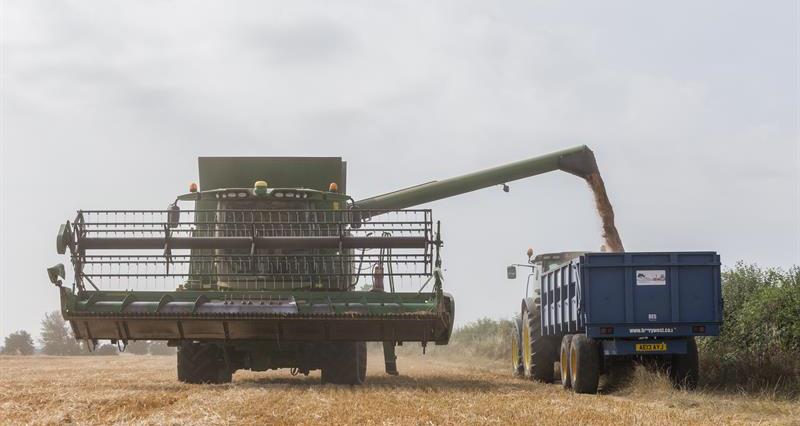
Having travelled the length and breadth of the country in late July I have seen many combines working across the country, harvesting drought-stricken crops which have sparked a real rally in prices. We hope to start on the rape at home in a week’s time and the wheat looks set to follow straight on. We now wait nervously to see what the yields will be.
Before I sign off, the chairman of the HSE, Judith Hackitt, spoke to NFU Council in late June and provided us with the latest accident figures for agriculture. We all know someone who has been killed or seriously injured on farm but these figures send a chilling reminder to us all. Please take care in the busy weeks ahead.
Here’s wishing for an easy, uneventful but, above all else, safe harvest!

No comments have been made.