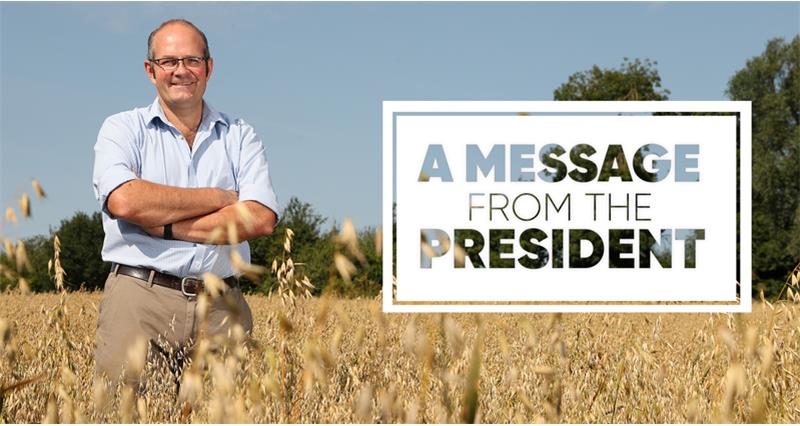
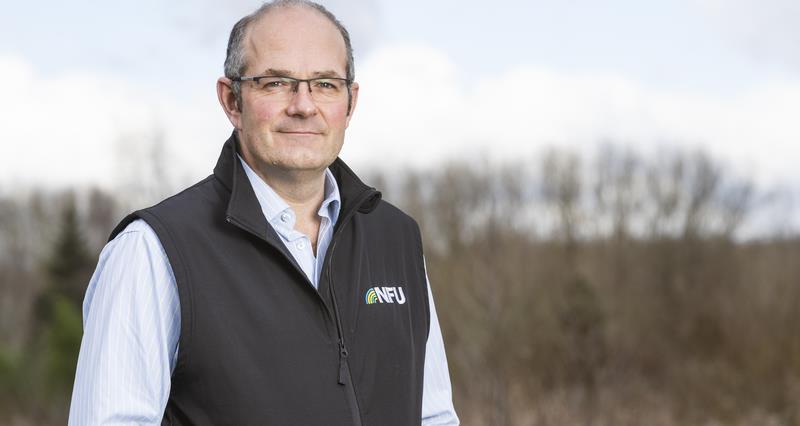
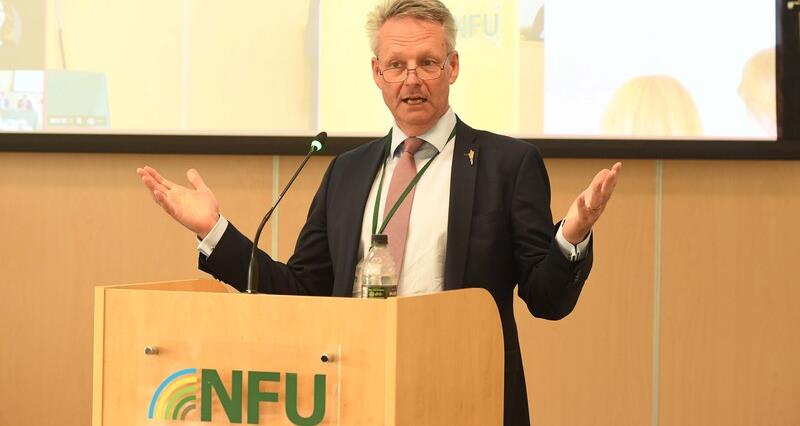
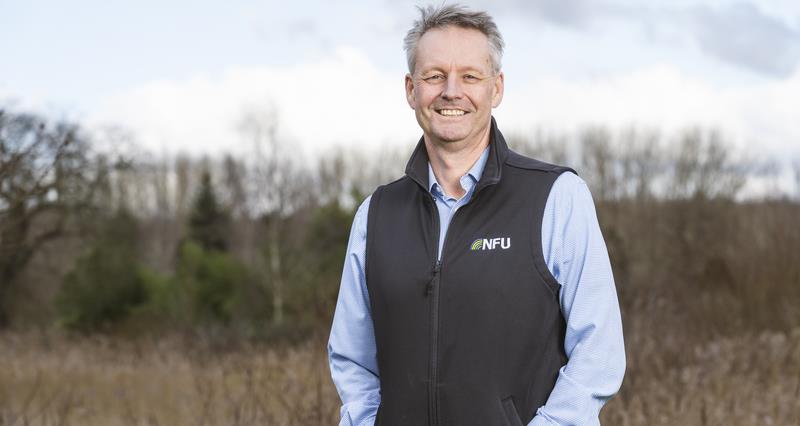
Government should switch its focus from bio-diversity and concentrate on farm productivity if it wants to make the most of British agriculture’s potential as an engine for growth, Peter Kendall said today.
Speaking at the Agricultural Industries Confederation annual conference in Peterborough, the NFU President warned that a combination of many years of low profits and chronic underinvestment in production-related research and development had left the productivity of British farming lagging behind its major overseas competitors.
“This current situation must be turned around if the industry is to make its full contribution to rebalancing the economy and getting the country back on to the path to growth,” he argued.
Mr Kendall also questioned the government’s stance on CAP reform.
“Defra Secretary of State Caroline Spelman said on Monday in Brussels that she wanted the Commission to be aware of the impact of its reform proposals on Wales, Scotland and Northern Ireland. No mention of England, you will note.
“What we, or the government, cannot afford to see is English farmers used as guinea pigs in some sort of Darwinian experiment in whether the withdrawal of agricultural support kills or cures. We are happy to move towards reform as fast as the rest of Europe, and no faster.
“Even as it is, we face the prospect of seeing an area the size of Northamptonshire mothballed, and almost half the arable farmers in the country having their crop rotations disrupted, and yet still Defra ministers seem to remain interested in transferring money away from food production and towards the environment.
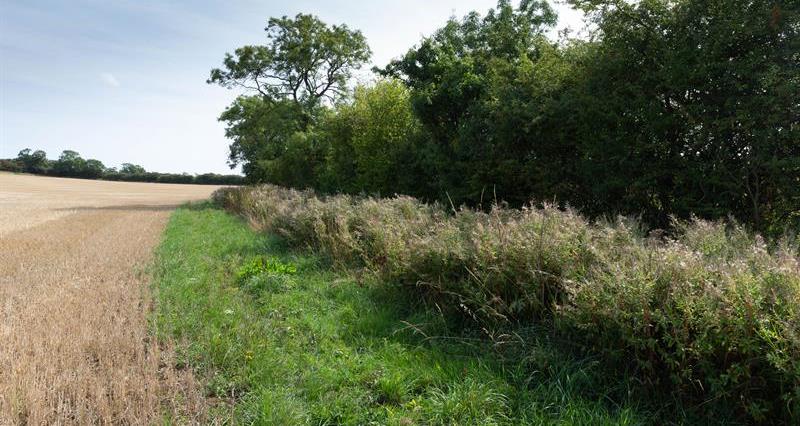
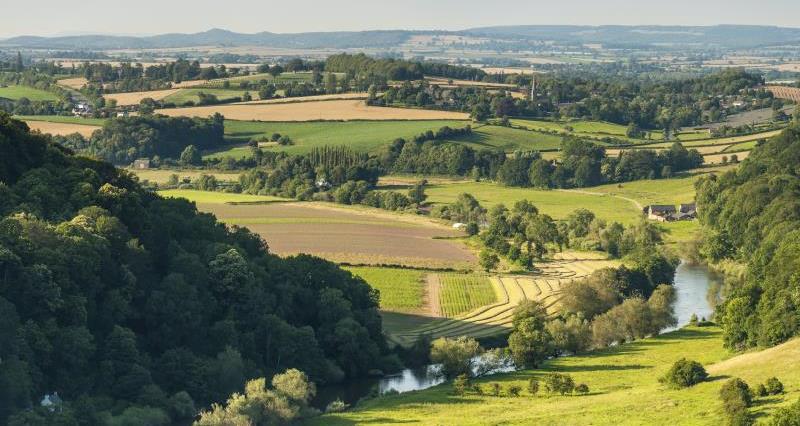
“The point is we haven’t got a bio-diversity crisis in this country. Most of the key environmental indicators have been moving in the right direction and almost 70 per cent of farmland is covered by an agri-environment scheme.
“However, what we do have is a productivity crisis. Wheat yields have been flat-lining for 25 years, and we have been falling behind competitors like the USA, Spain and Denmark, where governments have been prepared to invest in production-related research.
“British agriculture has the potential to be an engine for growth in the economy. In the past five years we have increased output from £15 to £20 billion a year, while acknowledging some of this will be due to currency gains.
“Our gross value added has been rising by 6.2 per cent year on year. Food exports this year will show their seventh successive annual increase. In the first half of this year, they reached £5.8 billion, up by 13 per cent on the same period in 2010, and making food and drink the fourth largest exporting sector.
“These are not the figures of some sort of cottage industry, pottering around on the fringes of the economy. They are the figures of a major national industry, for which any other sector of the economy would give their eye teeth; figures which, for the wider economy, George Osborne can only dream of.
“And the really great thing about them is that they are the sort of figures that we can carry on delivering, provided the frameworks are in place to encourage farmers to invest and equip them with the tools to achieve sustainable growth.”
- anthony gibson - 24/11/2011
Sue asks for the evidence that there is no 'biodiversity crisis'. Well, here it is:
- The decline in plant species richness in arable fields recorded between 1978 and 1990 has been reversed, with increases of 22% and 24% recorded between 1998 and 2007 in food species for, respectively, birds and butterflies (Countryside Survey 2007);
- Similarly, although there has been a small (8%) decline in plant species richness in woods, moors and heaths, no reduction was recorded in the most recent period covered by the Countryside Survey, which was 1998-2007;
- 96% of SSSIs were classified as being in “favourable or improving condition” in 2010, compared with only 57% in 2003 (Natural England);
- The number of ponds on farmland increased by 11% between 1998 and 2007 (Countryside Survey 2007);
- Otters have returned to every English county, after almost becoming extinct in England in the 1970s (Mammal Society);
- Populations of other wild mammals, such as badgers, deer, foxes are flourishing, whilst bat numbers have increased by 20% since 2000 (Biodiversity Indicators in your pocket 2010);
- Numbers of the “farmland generalists” included in the Farmland Birds Index have increased by 2% since the base year of 1970, whilst numbers of many other species of farmland birds not included in the FBI, such as buzzard, kite, siskin, collared dove, mallard, barn owl, green woodpecker, jay and wood pigeon have all increased significantly (The State of the UK’s Birds 2010 RSPB). The situation is still far from ideal, but it is improving. What we are facing is a biodiversity challenge, not a biodiversity crisis.
GMs may be part of the answer to increasing production sustainably, but there is much that can be done even without them by employing 'smart farming' techniques (old as well as new)to produce more from less with a smaller environmental footprint.The main theme of Peter's speech was the need for more production-related r and d and better systems of knowledge transfer. As was stated in the Foresight report: "Investment in food production research needs to focus on raising yields in conjunction with improving sustainability and maintaining ecosystem services".
- Sue - 21/11/2011
What planet is PK on? Suddenly he's an expert in biodiversity is he? What on earth is his evidence for saying there is no biodiversity crisis when all the science points to the opposite? And why are wheat yields flat lining? Perhaps it is the fact that block cropping, cocktails of chemicals and continuous mining of the soil for organic matter and nutrients over the 30 years has something to do with it. On one farm just a month ago I was discussing with the owner/farmer the loss of six inches of soil there over the past couple of decades. Hence it is now being put back into permanent grass. This level of soil loss is not untypical. And if PK thinks GM is the answer, then think again and take a look what is happening in the US. The GM crops are using twice the water, leading to increases in Fusariam head Blight and other nasties, and US millers are now having to source wheat from outside the US, owing to the mycotoxin levels in their home grown stuff. The place where yields could be substantially increased with benefits all round is on land close to towns where we should have more small farms and horticultural crops. But of course small farmers are being completely sidelined by bigger outfits and are in essence priced out of the equation as those with money continue to speculate on land as a financial asset. We need more farmers and more sustainable farming and the NFU aint got a clue about how to achieve that because it just isn't interested.