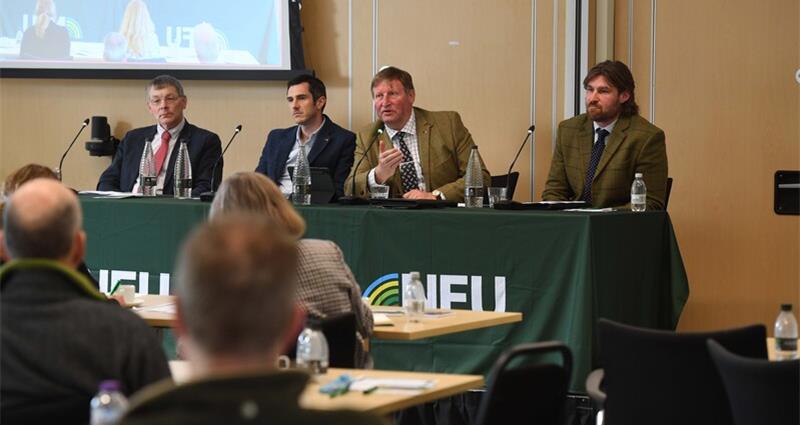
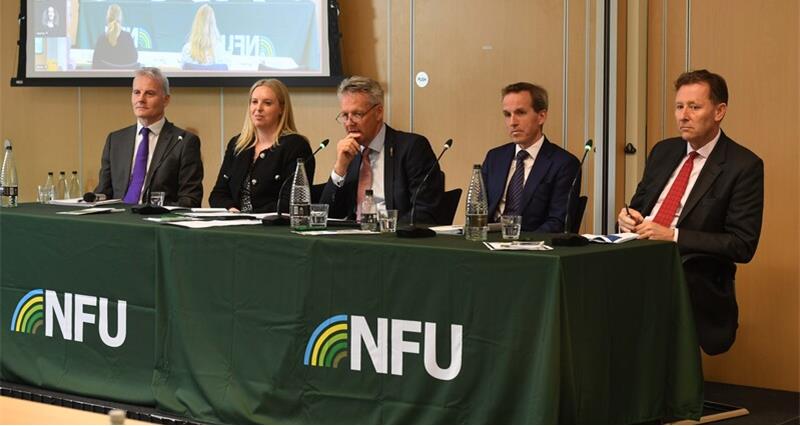
The chairman of the NFU Combinable Crops Board, Ian Backhouse, has briefed the farming press on the prospects for wheat and oilseed yields at the Cereals Event.
NFU members were surveyed across England and Wales during May and early June, with the majority of responses coming from East of the A1. The results showed that the wheat and oilseed rape yield was likely to be significantly down on the five year average.
With very poor growing conditions in eastern parts, the NFU responses suggest the average English wheat yield in 2011 will be down by 14% on 2010 to around 6.5 tonnes per hectare (ha), which would rank among the lowest since the late 1980s.
On a similar planting area to last year, English wheat production is therefore likely to be considerably lower due to some severe drought pressure on crops this spring.
Production could be down on the five year average by around two million tonnes to below 12 million tonnes or 15% below the five year average of 13.738mt.
Winter oilseed rape appears to be in a slightly stronger position, with farmers forecasting English yields at 3.1t/ha, nine per cent down on the five year average of 3.4t/ha. Plantings are believed to be significantly up on the five year average, at 655k/ha in 2011, indicating a potential total production of 2.028mt against the five year average of 1.762mt in England.
NFU combinable crops chairman Ian Backhouse said: “I believe this year’s forecast yield decrease was largely due to poor growing conditions since winter. With the East of England experiencing its lowest rainfall for the first half of the year in over 100 years, farmers are clearly concerned about the impact on the ground of this abnormally dry spring.
"There is a vast range of tonnage prices and with the recent rainfall we fear the damage has already been done. Although not covered in the survey, it's likely that barley is most likely to be affected by the weather in terms of quality.
"I know pig farmers are concerned about straw availability, I'd urge livestock farmers to talk to their suppliers and merchants as early as possible.
"I’d like to thank NFU members for completing this survey. Watching crops wither has meant a difficult time for many of our farmers and growers, particularly in the worst affected parts of the country.”
Responses have pointed to large variability in potential yields, often linked to almost complete lack of rainfall as well as soil type and capacity to hold water. Indications falso suggest that other cereal crops will be similarly affected, particularly spring-sown crops such as spring barley and spring wheat.
National analysis of the survey was weighted to include crops grown in areas where less crop damage was reported.
Mr Backhouse also outlined some NFU concerns over the current CAP negotiations.
He said: "The proposed CAP reforms do not encourage production capacity. On greening measures, if we take the land out of production then the danger is someone will have to grow the crop somewhere else in the world. Proposed Pillar 1 measures such as crop diversity, set-aside and SSSIs will undermine Pillar 2 measures with the possible results for England and Wales of a net loss for the environment not a net gain.
"The current income from the SFP allows arable farmers to make investment decisions in a volatile market."
According to board member Mark Legott, the option of green cover couldn't be policed.
Visit our Cereals 2011 channel here.
Visit the picture stream here.
No comments have been made.