This was a year of record milk volumes, dry weather, delayed grass growth for many, the introduction of the fair dealing regulations for all milk purchase agreements, and, at its end, significant milk price drops as volumes around the world picked up.
Volume management
Once again, dairy markets are in flux, with the GDT Price Index down seven times in a row at time of writing and milk processors signalling the need to reduce volumes ahead of the ’26 spring flush.
Volume management is important. It’s also something I believe processors and producers are starting to work together more closely on, in part driven by more explicit terms and conditions in many milk contracts, and in part through a joint need to avoid the sort of volatility the industry has seen in the past.
Dairy demand rising
It would be easy to have a pessimistic outlook given the challenges dairy businesses continue to face, whether that be down to the markets, succession concerns, investment requirements or the need to keep up with an ever-changing regulatory landscape.
However, time and time again when speaking with traders, market analysts and organisations tracking production and demand on a global level, the message is clear.
While it may not be evident in the markets right now, long term the demand for dairy continues to rise globally and the worry is that by 2035 production won’t be able to keep up with a growing population turning to dairy as an accessible, nutritious and comparatively affordable protein.
“We must work better as a supply chain to demonstrate that, as an industry, we are the ones best placed to drive improvement and create a truly sustainable industry.”
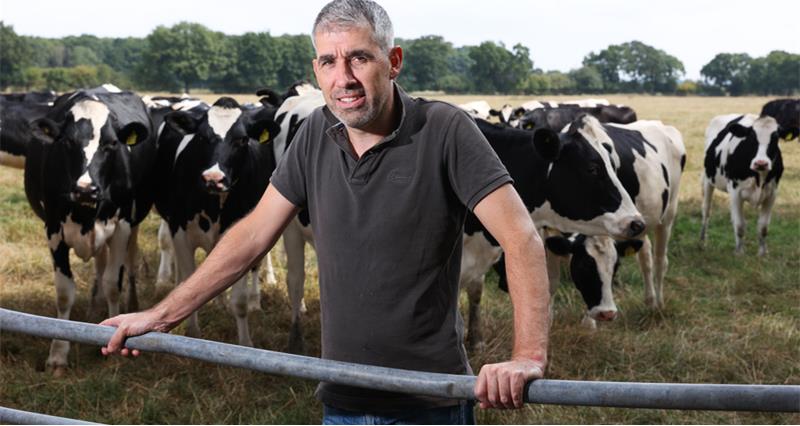
NFU Dairy Board Chair Paul Tompkins
Capitalising on reputation
UK producers continue to be well placed to meet this demand.
We produce safe, traceable, high-quality, sustainable and trusted products, recognised around the world.
This reputation is a selling point that we must continue to capitalise on, supported by a regulatory and trade framework that allows businesses and the wider agri-supply chain to grow and prosper.
Collaboration is key
Collaboration is at the heart of this growth.
We must work better as a supply chain, through initiatives such as the Dairy Roadmap, to ensure that the needs of our sector are heard around Whitehall and to demonstrate that, as an industry, we are the ones best placed to drive improvement and create a truly sustainable industry – one that delivers environmentally, economically and socially.
I and the whole dairy board remain up for the challenge in 2026 and will continue to represent the interests of NFU dairy members across the country.