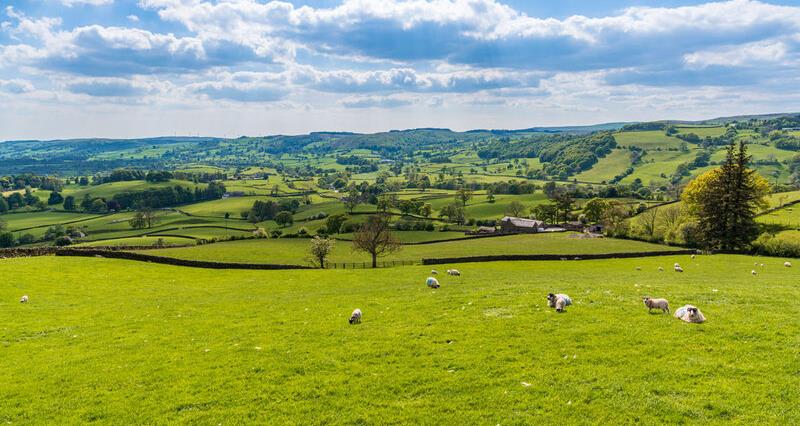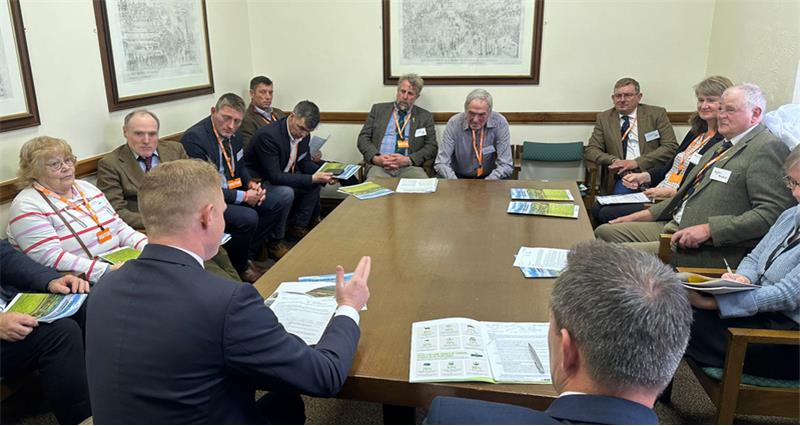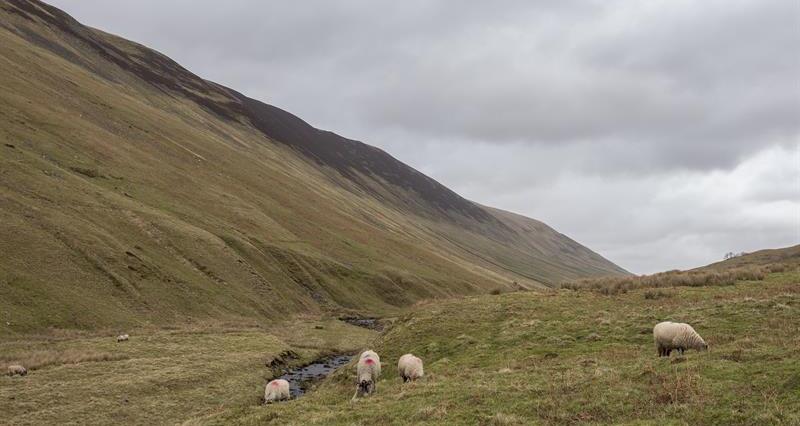
Defra commissioned social entrepreneur and innovator Dr Hilary Cottam to undertake a review into the challenges facing English upland farmers and communities in 2024. The review extends beyond farming, covering the role the uplands play in national life.
Dr Cottam’s report, ‘Towards a flourishing uplands: phase 1’, was done via a series of walks and workshops with a wide range of people who live and work in the upland areas. This method, Dr Cottam explains is not about gathering stats, but “rather to observe, to listen deeply to a range of voices and to actively seek out both those with power and influence and those who are seldom heard”.
The resulting review identified 19 ‘insights’ to the challenges facing the upland areas, aimed at achieving a system-wide change. The NFU engaged with the work via its Uplands Groups.
“But, we don’t have seven years to wait for the project to conclude. It’s vital government addresses the themes set out in the report now.”
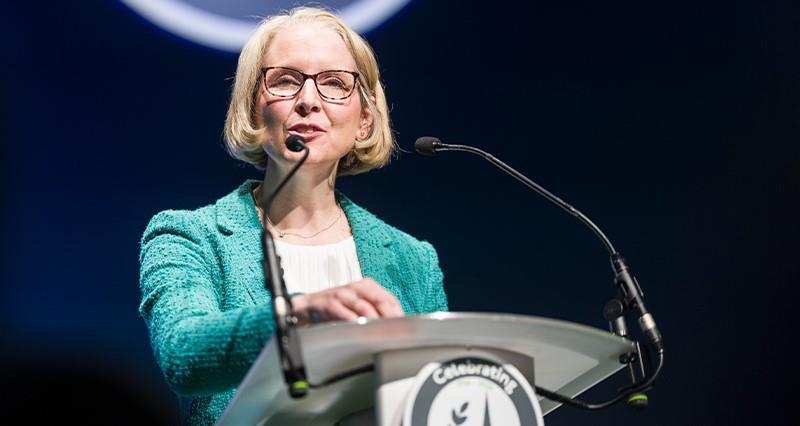
NFU Vice-president Robyn Munt
Dartmoor focus of transformative project
Defra Secretary Emma Reynolds has asked Dr Cottam to build on the review’s work, working with first Dartmoor and then Cumbria to develop new ways forward and structural change that works in practice. Described as a ‘collective experiment’, the project will bring together upland communities and government in a ‘seven-year collaboration’, with funding secured for the first two years.
This was first announced at the Oxford Farming Conference in January 2026, where the Defra Secretary said: “The overall vision is to develop a place-based approach for what these communities need; co-designing solutions to specific problems,” adding that, key to this, was that “communities lead change from the ground up”.
NFU Vice-president Robyn Munt welcomed recognition within the report of “the long-standing complexities and challenges of farming in these iconic landscapes”. She said Dr Cottam had identified many of the problems farmers face, including “a lack of long-term policy approaches, top-down policy implementation and the need to have farming and environmental delivery working together”.
“But, we don’t have seven years to wait for the project to conclude,” she added. “It’s vital the government addresses the themes set out in the report now and collaborates with other departments across Whitehall to help deliver a better future for upland farmers who face serious threats to their viability.
“In the short-term, this means ensuring upland areas, including common land, have access to the revamped SFI scheme – tailored appropriately with actions that support much-loved landscapes, as well as ensuring upland areas can transition into the new Countryside Stewardship Higher Tier offer.
“We know this process will take time, but it is essential that Dr Cottam’s work with farming communities in Dartmoor, followed by Cumbria, results in meaningful policy change. The NFU looks forward to fully engaging in this process and ensuring the voice of uplands farmers is clearly heard and central to shaping the way forward.”
Last year, the NFU published a new report outlining its vision for the uplands, demonstrating how government, farmers and partners can work together to achieve a confident, sustainable future for the businesses at their heart.
System-wide change needed
Key insights Dr Cottam gathered from participants include challenges around how new entrants access land, either as owners or tenants, and a perception that ‘farmers are locked in expensive vertical relationships of power’, with farmers unable to see how their local insights and knowledge play a role in the design of current systems.
Dr Cottam observes that farmers face ‘extreme anxiety’ in terms of what Defra will do next, and there is widespread resentment among farmers that they are forced to pay the high costs of environmental problems made elsewhere, despite identifying themselves as guardians of the natural environment. There was widespread support for FiPL (Farming in Protected Landscapes), despite the fact it is short-scale, due to the principles of innovation, partnership and local decision-making that guide it.
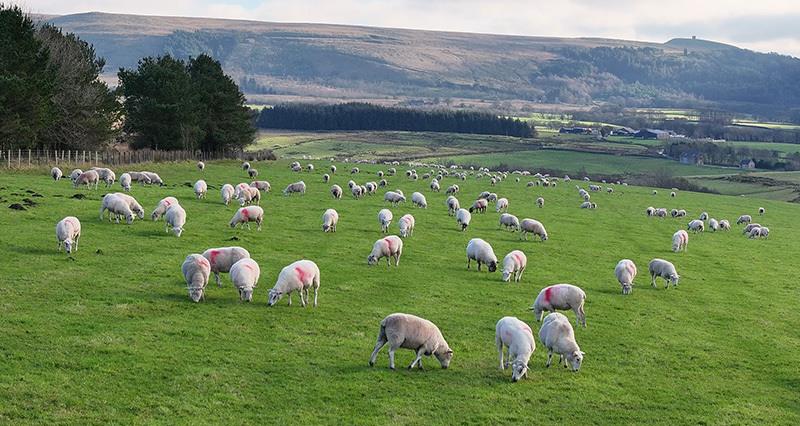
Relationships on the Commons are ‘strained, and a significant cause of local strife’ the report says.
Meanwhile, the closure of local abattoirs is cited as an example of the type of core infrastructure that is missing within local food systems, alongside markets, butchers and vets.
Dr Cottam also noted ‘numerous examples of farmer-generated research, innovation and experimentation’ with farmers taking huge risks, often with ‘little to fall back on’. They are innovating ‘almost in spite of the system’, which is not an issue unique to Defra or the UK Government, writes Dr Cottam.