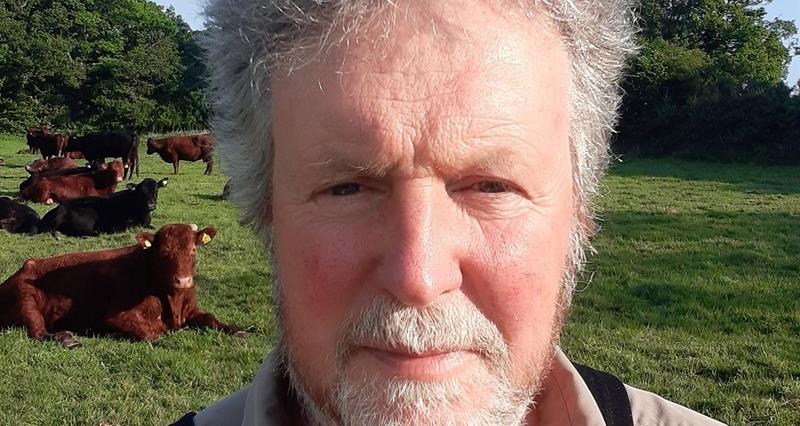
Taking over from previous incumbent Mark Meadows, Adam is no stranger to officeholder roles as a former NFU vice-president and West Midlands Regional Board chair.
He qualified in farm management from the RAU in Cirencester before taking on the responsibility of the family arable farm, which he runs with wife Sarah just south of Redditch.
The farm has been in the family just over 100 years, now divided up among the extended family.
Extensive experience
In 2011 he built the ASDA cattle progeny testing unit, finishing up to 500 retained ownership cattle a year.
Adam was appointed regional chair for NFU Mutual Midland Farmer Forums and is also a trustee of the Studley College Trust and the Henry Plum Foundation.
Over the years, the couple has built up a closed herd of polled Salers cattle along with an Easycare sheep flock that has been closed for the last 35 years.
“Like most people I became actively involved in the NFU because I was frustrated by the lack of government action (sadly, not a new problem) during the BSE crisis, which in turn took me to the national livestock board, with involvement with the then MLC, and then on to NFU Council for six years,” said Adam.
During the past decade, Adam has been involved in the Henry Plumb Foundation helping young people on their journey in farming.
“It has been fantastic to play a small part in helping some truly inspirational youngsters in their next steps in developing their farming career,” he said.
“Change has always been a constant in the farming world, but that change is speeding up; a combination of changes post-Brexit, world trade in disarray, a lack of consistent profitability – and the UK is not alone here.”
Adam Quinney
With his interest in livestock, he has been on the regional livestock board and took on the role of NFU Council delegate for Warwickshire in the 2024 county AGM.
Increasing challenges
“The food chain, both before and after the farm gate, is falling into fewer hands, and the ageing farming population and concerns who will follow on, combined with the capital needed to start farming, means the industry is so different than it was 30 years ago.
“The pressure on UK farmland for other uses rather than food production, while at the same time ramping up of regulations around food production with the hypocrisy of importing food produced to lesser standards is an increasing challenge. We live in a changing political landscape as well, and it’s vital that the NFU remains apolitical.
“While we have seen the present government make steps in the right direction around IHT, there are many other areas we need to engage with and to continue to show that the NFU is an organisation with solutions to problems, not simply to highlight the problems.”