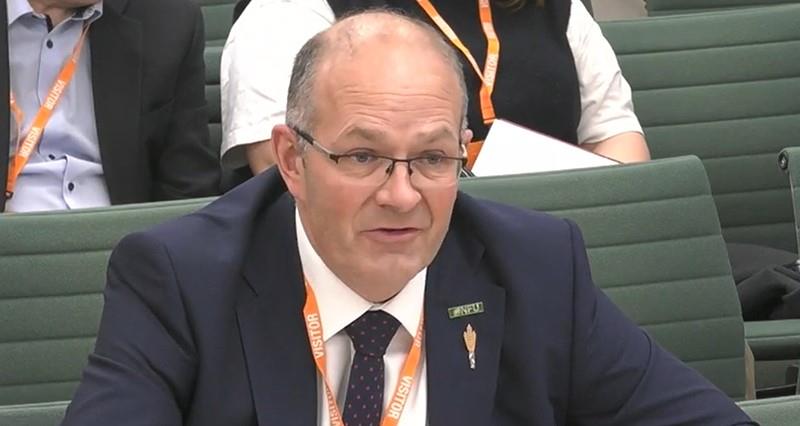
NFU President Tom Bradshaw appeared in front of MPs during a Business and Trade Committee evidence session discussing the government’s ‘reset’ in relations with the European Union.
Tom said it was positive to see that the government had managed to secure full access to the Indian market for British lamb, but noted his concerns that the deal liberalised the domestic dairy market.
“We can be world-leading if we get a carve-out for gene editing.”
NFU President Tom Bradshaw
Asked by the Chair of the Committee Liam Bryne – the Labour MP for Birmingham Hodge – what the trading relationship was like with the EU for NFU members, Tom highlighted that the volume of trade with the EU had fallen by 37.4% since 2019, as demand has dropped for British products in the European market due to friction at the border.
Gene editing advantage at risk
Tom noted the opportunity for increased trade with the EU but drew attention to the fact that the UK and the EU are no longer fully aligned in certain technological areas, including gene editing and plant protection products.
Tom said it was important that we “seized” the opportunity to become a world leader in these areas, and don’t sacrifice our technological advantage in order to reach a deal with the EU.
The NFU is lobbying the government for an exception to be applied to our gene editing legislation to ensure it isn’t affected by any UK-EU SPS (Sanitary and Phytosanitary) agreement.
When asked by Liberal Democrat MP for Witney Charlie Maynard for thoughts about a potential UK-EU SPS common or customs zone, Tom said that reducing friction at the border was in all parties’ interests, referencing horticultural businesses who have difficulty importing plant material due to border issues and high costs.
Tom also referenced the reduction in beef and dairy exports, with figures down 24% and 16% respectively.
However, Tom again made the point around the potential impacts of dynamic alignment, and its impacts on our ability to innovate.
“There are some really difficult issues that need solutions to them,” he told MPs. “I don’t think it is as simple as saying ‘there’s a bit of give and you’ll end up in a better position’.
“We can be world-leading if we get a carve out for gene editing.”
Opportunities to innovate
Tom also warned that, without a carve out for gene editing, the EU would restrict itself from adopting the technology, as it would lose the opportunity to use British research on the subject.
This, and the EU system for registering plant protection products, were both areas the UK should push the EU hard on during negotiations to protect British producers, Tom urged.
Without securing these carve-outs during initial negotiations, it would be unlikely we’d get them in the future, Tom warned.
Influence is ‘paramount’
Tom said it was essential that the UK was part of the decision-making process of the EU and that the UK had its best people working with the EU to influence its policy.