The report – ‘A Well-Adapted UK’ – makes several recommendations including the need to remove regulatory barriers that prevent farmers from adapting their businesses, providing incentives to adapt practices and giving farmers and growers access to the skills and training they need to help drive change.
The adaptation measures outlined in the report all have positive cost-benefit ratios and are already technologically viable, making the economic case for their implementation particularly strong as a world with 2C warming is increasingly likely.
The report forms part of the independent assessment for the fourth climate change risk assessment.
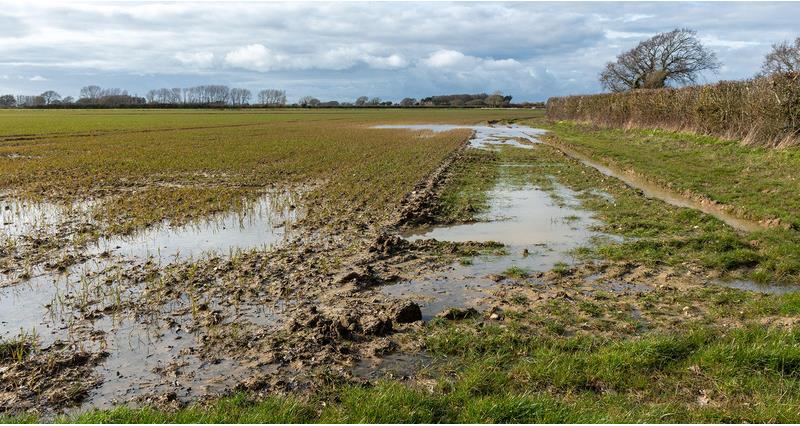
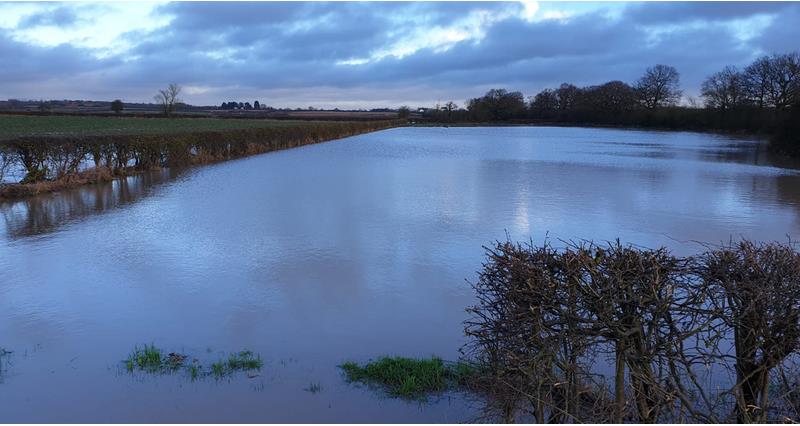
British farmers are already facing extreme weather events as evidenced by the NFU’s 2025 decadal weather survey. These are expected to increase in frequency and intensity.
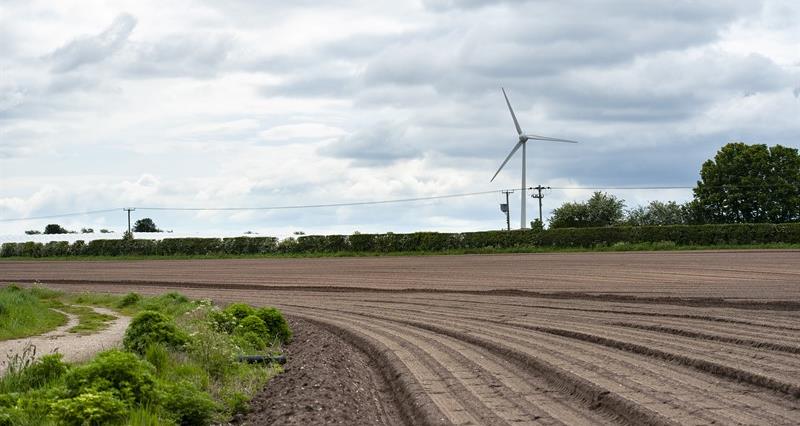
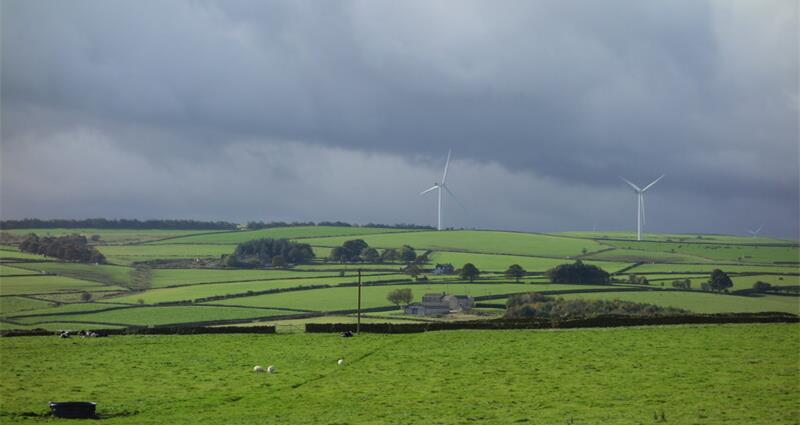
Farmers and growers are taking a number of steps to build on-farm resilience, such as installing solar panels and shifting to different crop varieties and soil types.
”We welcome the CCC’s recognition of how extreme weather impacts farming and agree that we can still grow domestic food production, but only if the government helps farming adapt now.”
NFU Deputy President Paul Tompkins
While farmers and growers are making real improvements in this area, they cannot work on this alone – progress also depends on support from the government and the wider supply chain.
Government must help farms adapt now
NFU Deputy President Paul Tompkins said that the report makes clear “that farming has becoming increasingly challenging in the UK – changing weather patterns are already hitting yields, farm incomes and long-term business confidence”.
This has not been helped by growing geopolitical uncertainty, the Deputy President added, with the wars in Ukraine and the Middle East leading to rising costs for fuel, fertiliser and energy.
“We welcome the CCC’s recognition of how extreme weather impacts farming and agree that we can still grow domestic food production, but only if the government helps farming adapt now.
“That means backing on farm water storage, dynamic water abstraction, soil resilience, lowering disease prevalence and removing barriers to growth.
“This report emphasises our long-term ask that the government must continue to work hand-in-hand with farmers to target investment in adaption as well as food production and the environment so our members can continue to produce food in a changing climate.”
CCC calls for food production target and more support for farmers
Understanding the risks to food security, keeping farming viable, avoiding water shortages and managing flood risk are among the eight key areas the CCC has said require government action.
The committee calls for farmers to be given support with the skills, information and training they need to make climate-resilient decisions.
It also says long-term investment in flood defences is ‘essential’, and says annual flood risk investment should rise to around £1.6–£2.2 billion each year.
The CCC is calling for the introduction of a food production target as a proxy for adaptation of the sector. This would be based on the current 60% volume of domestic food production and should be at least maintained going forward.
Following engagement with the NFU throughout the past year, the committee is also calling on the government to ease regulatory barriers that make adaptation more difficult, namely installation of on-farm reservoirs for improved water security.
Read the report in full at: CCC.org.uk | A Well-Adapted UK.