“What is pleasing is that Defra has taken the NFU’s feedback on board in a number of areas where we were concerned about early plans for the new SFI.”
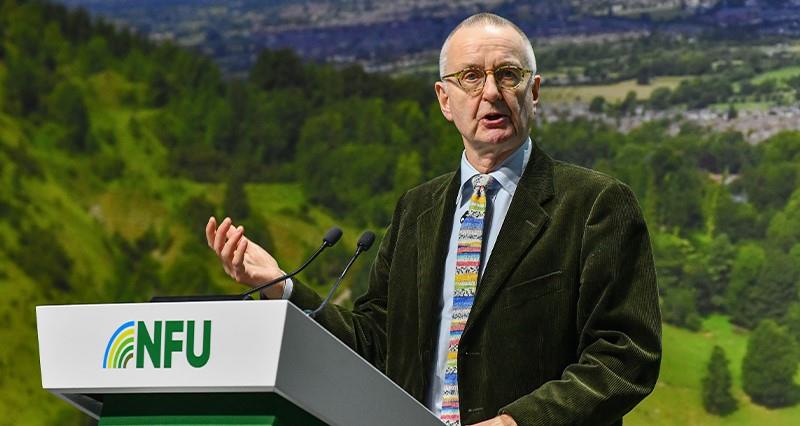
NFU President Tom Bradshaw
The latter of these has continued to be a contentious issue, with the NFU President asking in his opening speech at the NFU’s Conference today: ”Where has the £1.85bn that was going out in BPS gone? No one can tell me.”
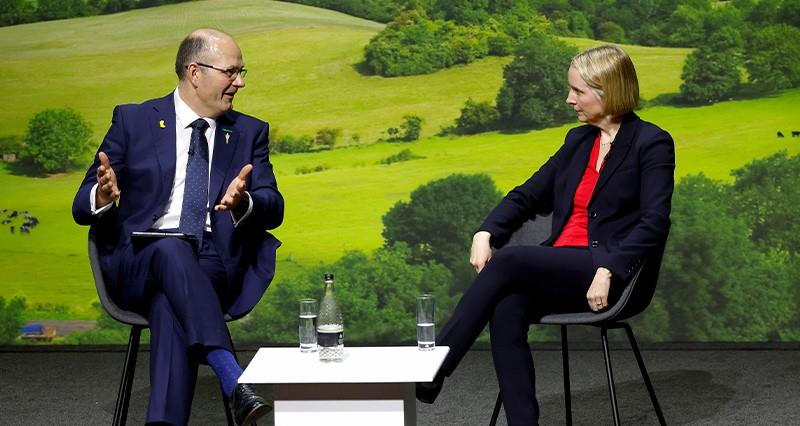
Speaking to delegates during her political address, the Defra Secretary said she was “determined to give British farming the foundation it needs to grow”.
She said: “Partnership shapes everything we are doing.”
She said farming would receive a £345 million boost, broken down into grants under the Farming Innovation Programme and Farming Equipment and Technology Fund, as well as an increase in funding for capital grants.
What’s new for SFI?
Building on her commitment to deliver a “simpler” SFI, Ms Reynolds revealed that the reformed offer will have 71 actions, down from the 102 previously available under the SFI24 extended offer.
Agreements will be capped at £100,000 per year to manage budget pressures. Emma Reynolds said that payment rates would also be reduced for three arable actions, with the full list of actions available due to be published later today.
The first application window for SFI will open in June for ‘small farms’, which the Defra Secretary has today clarified as those with holdings between 3 and 50 hectares that are registered with the RPA. It will also be open for those not already in an ELM agreement, followed by a wider, second application window in September.
NFU President Tom Bradshaw said the offer “appears to strike the right balance between simplifying the process and maintaining flexibility, while still retaining preferable actions for farmers and growers”.
“I said today that stopping the decline of UK food production would be good for our economy, good for our national security and good for our natural environment. If government agrees, we can collectively deliver,” Tom continued.
“It’s good to see the recognition of the uplands by maintaining actions that support the much loved landscapes in which they work, but we’ll need to work through the wider detail of the scheme,” he added, in reference to increased payment rates for moorland actions. This uplift will apply to existing SFI agreements with these actions.
“What is pleasing is that Defra has taken the NFU’s feedback on board in a number of areas where we were concerned about early plans for the new SFI,” he said. The NFU has been engaging with its membership on what they wanted to see from a future SFI, receiving strong feedback that farmers needed clear guidance, flexibility, and certainty around the future offer.
Looking at ELMs more widely, the Defra Secretary committed to an increased funding of £225 million for capital grants, with a new round opening in July 2026.
Animal welfare boost
The Farming Innovation Fund will see a £70 million boost, alongside £50 million for the Farming Equipment and Technology Fund which helps support farmers to invest in equipment to improve productivity, animal health and welfare and manage slurry.

Defra will also consult on making its Animal Health and Welfare review mandatory – currently, farmers can apply to access funding for vet services covering pigs, sheep and cows.
Continuing along the theme of animal welfare, Defra will also launch a new grant this summer for poultry biosecurity reviews to help in the fight against avian influenza.
Budget transparency
Ms Reynolds committed to working in partnership with the nation’s farmers and growers, adding that she was taking forward her promises on this as well as commitments on clarity and confidence.
“Let’s build farming’s resilience together,” she said. She also confirmed the first meeting of the Farming and Food Partnership Board would be in March and that the NFU would be represented on it.
NFU President Tom Bradshaw responded: “It’s encouraging to hear the Defra Secretary of State reaffirm her commitment to working in partnership with farmers and growers.
“Today’s announcement on investment in productivity demonstrates that she recognises the vital contribution our nation’s food producers make to the economy and to our national security.
“The Secretary of State said today that the ‘government is serious about partnership’ and is ‘committed to giving [the industry] clarity and stability’. I welcome that, but key to this must be transparency around the farming budget, as well as a long-term plan for food and farming. The resilience of our food system can’t be taken for granted, underlying profitability is essential to driving the investment needed and the resilient food system that society needs.”
Track our lobbying work on SFI:
Meet the speakers:

Emma Reynolds MP
Secretary of State for Environment, Food and Rural Affairs
Previous roles included working as economic secretary to the Treasury and parliamentary secretary at HM Treasury and the Department of Work and Pensions.
As Secretary of State for Environment, Food and Rural Affairs, Emma has overall responsibility for the department, with specific responsibilities including the budget, international relations, senior appointments and economic growth.

Tom Bradshaw
NFU President
The home farm is based around arable production but has also diversified into equestrian and renewables.
Tom has represented the NFU from Local Branch Chairman through to Chair of the National Combinable Crops Board.
Tom was elected to the position of NFU President in February 2024 and re-elected in February 2026.
Responsibilities
- Fair dealing provisions
- Food chain relations (post-farmgate)
- Labour – immigration and SWS (Seasonal Workers Scheme)
- Planning/on-farm infrastructure
- Public procurement
- Regulation
- SPS (Sanitary and Phytosanitary) agreement
- Taxation and fiscal policy – IHT (inheritance tax) review
- Trade