This article looks at some of the key environmental policies introduced under part three of the Act, how they could affect the farming industry and provides further detail on the Environmental Delivery Plans being prepared.
Part three of the Act introduces the ability for Natural England to bring forward EDPs (Environmental Delivery Plans) to the Secretary of State.
The Secretary of State will decide if the EDP meets the overall improvement test (the environmental conservation measures must outweigh the negative environmental effect of the development).
EDPs aim to help address some of the environmental issues currently limiting developments.
The plans create an alternative approach for developers to deliver certain environmental obligations by paying into an NRL (Nature Restoration Levy). The levy forms an NRF (Nature Restoration Fund) which pays for conservation measures to address those environmental obligations and restore nature.
An EDP would specify the area and developments in scope, the protected sites and/or protected species it applies to, the issues affecting them, and the conservation measures needed to deliver environmental improvement.

The responsibility to prepare, consult, implement, and monitor the EDPs sits with Natural England; these functions can also be designated to another person by the Secretary of State.
EDP areas, preparation, and consultation
Natural England notified the Secretary of State of its intention to prepare 23 EDPs in England; 16 for nutrient pollution affecting catchments with protected sites and 7 for great crested newts.
The first EDPs that Natural England will consult on and submit as final draft EDPs to the Secretary of State will relate to nutrient pollution. Natural England is, however, preparing several great crested newt EDPs in parallel, noting that the government has committed to not making any EDPs beyond nutrient pollution before making a statement to Parliament setting out the initial learnings from the development and implementation of the first EDPs.
This will allow for a test and learn approach to be taken.
EDPs for nutrient pollution focus on areas under pressure from development in specific catchments with European protected sites; SAC (Special Areas of Conservation), SPA (Special Protection Area), Ramsar (Ramsar Convention on Wetlands) and types of nutrient pollution.
These catchments are listed below.
- Peak District Dales SAC (Phosphorus)
- Poole Harbour SPA/Ramsar (Nitrogen)
- River Avon SAC (Phosphorus)
- River Axe SAC (Phosphorus)
- River Camel SAC (Phosphorus)
- River Clun SAC (Nitrogen and Phosphorus)
- River Eden SAC (Phosphorus)
- River Kent SAC (Phosphorus)
- River Lambourne SAC (Phosphorus)
- River Lugg SAC (Phosphorus)
- River Mease SAC (Phosphorus)
- Solent SAC/SPA/Ramsar (including River Itchen SAC) (Phosphorus)
- Somerset Levels and Moors Ramsar (Phosphorus)
- Stodmarsh SAC/Ramsar (Nitrogen and Phosphorus)
- Teesmouth and Cleveland Coast (Nitrogen)
- The Broads (including River Wensum (Nitrogen and Phosphorus)
The 7 EDPs for great crested newts cover counties where the species is present. These EDPs are being designed for each region and would cover most counties in England.
Each EDP will be drafted by Natural England with local partners. A draft will go to public consultation (28 days) before it is submitted to the Secretary of State who, if satisfied, would approve the EDP. Farmers, landowners and their representatives should be given the opportunity to be engaged in the development of the EDP by Natural England and can respond to the consultation. Stakeholder engagement on the first EDPs began at the end of 2025, with formal consultations beginning in spring/summer 2026.
Nature Restoration Fund
The levy can be paid by developments in scope of an EDP; this puts money into the NRF. The fund then covers the costs of delivering the conservation measures.
EDPs will include charging schedules setting out the rates for the NRL. The Planning and Infrastructure Act outlines the parameters for how the levy can be used and what will be included in further levy regulations.
Using the fund, Natural England aims to deliver the conservation measures through direct delivery and fair and open competition. It should be working with third parties such as farmers, habitat banks, and environmental NGOs to deliver conservation measures. The fund could be a potential private market opportunity for some farm businesses. It is important that farmers can voluntarily access the NRL and that this works alongside their farming business and food production.
EDPs, nutrient mitigation schemes and BNG
Natural England’s existing nutrient mitigation scheme will transition to the relevant EDP when it becomes available. Existing third-party led mitigation schemes can continue to sell nutrient credits directly to developers.
Developers may also continue to propose bespoke mitigation plans under the existing regulatory system. Whether local authority nutrient mitigation schemes continue will depend on specific circumstances. Some may choose to fully transition to the EDP where available, while others may continue to operate within the existing system alongside EDPs. Natural England is working with affected local authorities to establish the most appropriate arrangements for their area.
EDPs are separate to BNG (Biodiversity Net Gain); developments would still need to deliver these obligations.
How would an EDP work in practice?
We know that EDPs are being created for areas where housing developments are currently being held up by nutrient pollutant issues in catchments with European protected sites.
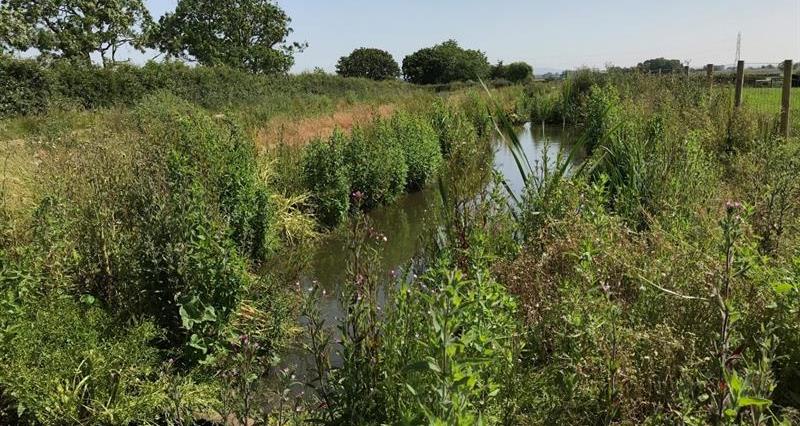
The EDP would calculate the nutrient impact of those developments and the conservation measures needed to address and improve it. These measures could range from efficient wastewater management, creating riparian buffer strips, to taking farmland out of production to plant new woodland. The measures do not have to be delivered in that catchment.
Developments in scope have the option to pay into the NRL which covers the costs of delivering the conservation measures and enables them to carry on with the development. The conservation measures will be delivered directly by natural England and with third parties.
Further details on EDPs and the NRF is available on: GOV.UK | Implementing the Nature Restoration Fund.
How could part three of the Act impact farming businesses?
1. Natural England given compulsory purchase powers
Part three gives Natural England the power to compulsorily purchase land connected to a conservation measure; these measures could be away from the EDP area.
The NFU remains concerned that this power will be used to compulsorily purchase farmland rather than reaching a voluntary agreement with the landowner.
This is further exacerbated by the fact that the Secretary of State is provided with powers to designate another person with the ability to exercise the functions of Natural England, and as such, potentially give another party the powers of compulsory purchase.
2. EDPs excluding farm developments
The NFU is worried that EDPs will exclude farm developments from their scope.
While it’s important that those looking to make farm developments have flexibility to decide how to deliver their environmental obligations, excluding them from EDPs could hold up and/or limit farm developments further.
3. Unintended consequences of EDPs on farming practices
If there is an EDP in an area, the NFU is concerned that it could unintentionally impact, prevent or limit wider farming practices such as stocking numbers, abstraction licences, pollination, and agri-environment scheme delivery.
The NFU is also worried that conservation measures may be forced onto farmland and/or limit what landowners can do in a conservation measure area eg, build a new slurry store, EIA (Environmental Impact Assessment) decisions.
NFU action
The NFU broadly welcomes the Act’s intention to modernise the planning system, remove the regulatory burden and speed up planning applications to enable sustainable on farm investment. However, we have concerns about certain policies introduced as part of the Act.
As the Act made its way through the parliamentary process, the NFU closely monitored its progress and worked with MPs to seek clarity and put forward amends to help address our concerns.
NFU amends to part three of the Act were principally targeted at minimising the negative impact the Act could have on farming businesses and reducing the powers given to Natural England.
Amends the NFU put forward and/or supported covered:
- the consultation of EDPs with the farming sector
- the need for EDPs to consider the impact on food and farming
- the removal of Natural England’s compulsory purchase powers
- greater checking and accountability of Natural England
- clarification that another person able to exercise the functions of Natural England would need to be a statutory body.
While some changes were made to the Act following NFU efforts, we are disappointed that many of our concerns haven’t been addressed.
The NFU continues to engage with Defra and Natural England to ensure that EDPs don’t have unintended consequences on farm developments and agricultural activities, and that farm businesses can voluntarily access the NRF.
Next steps
The government is required by the Act to make secondary legislation to add further detail to some provisions and to give full effect to the Act’s measures; these cover levy and prioritisation regulations.
Guidance will also be developed to support Local Planning Authorities, developers, providers, and regulators.
The NFU will continue to engage with government during the development of the secondary legislation and guidance which underpins these policies. It is important that farmers’ voices are represented in these policies given the potential impacts.
As this evolves, the NFU will explore opportunities to be involved in local EDPs and policy developments, and communicating this with members.