“This is an issue that must be addressed across the whole water supply chain,” NFU President Tom Bradshaw said in response to the proposals. “Investment from both industry and government in research and technology is essential to ensure the material farmers take is high quality, safe and fit for purpose.”
Options currently being explored by the government include bringing controls under environmental permitting, amending the current regulations to introduce a charging scheme, or updating requirements as and when the evidence supports this rather than through regulation.
“This is an issue that must be addressed across the whole water supply chain.”
NFU President Tom Bradshaw
The government has also said existing agricultural water rules will be simplified.
The proposals build on commitments outlined in the latest version of the Environmental Improvement Plan as well as recommendations from the Independent Water Commission on reforming sewage sludge regulations and come off the back of the major reforms to the water sector outlined in the government’s recently published Water White Paper.
Circular economy
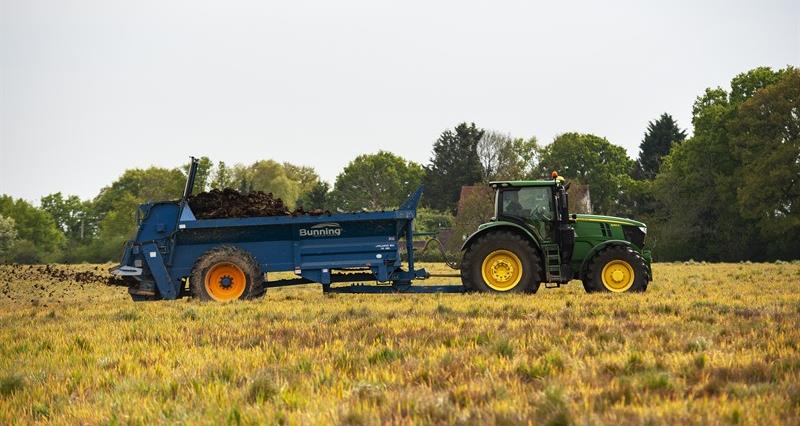
Farmers currently utilise sludge as a valuable input over manufactured fertiliser and it also forms an important part of the circular economy.
Tom said he was pleased to see Defra had committed to collaborate with the industry on ways to reduce PFAS (Per- and poly-fluoroalkyl substances) in its ‘first-ever PFAS plan’.
“Farmers and growers are committed to caring for the environment, but regulatory change must not place additional cost burdens on farm businesses, many of which are struggling to be profitable.
“We will continue to engage with the water supply chain and Defra and will work with members to gather feedback on the consultation.”
The government reiterated that its approach to working with farmers on water pollution will focus on advice and partnership.
View the consultation at: GOV.UK | Consultation on the regulatory framework for sludge applied to agriculture.