Beavers in the South: what farmers need to know

05 March 2026

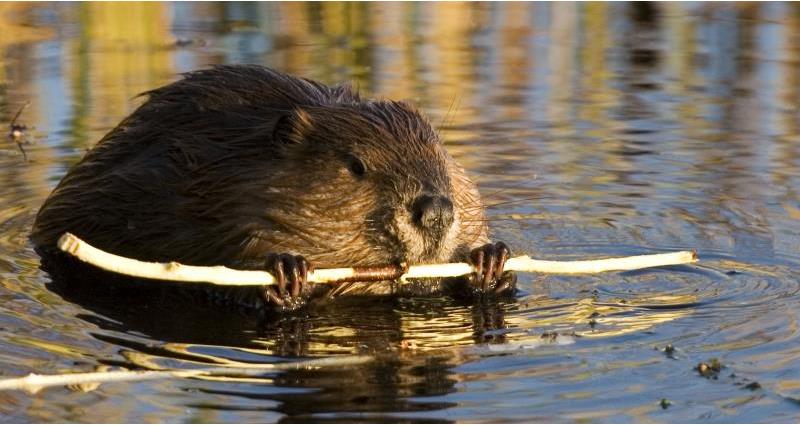
A beaver in a river holding a stick in its mouth

As beavers become an increasingly common feature of rivers and wetlands across the region, environment and land use adviser Ellie Newman brings us up to date with the situation in the South.

Use these quick links to jump to information on:

The return of beavers brings with it potential environmental benefits but also raises understandable questions for farmers and landowners about flood risk, land management, and what is and is not allowed when beavers are present on agricultural land.

How did we get here?

The Eurasian Beaver is a native species, hunted to extinction in Britain around 400 years ago. After many decades of absence, beavers began reappearing in England through a mix of enclosed projects, unlicensed releases and natural spread.

In the South, the most significant milestone was the River Otter Beaver Trial in Devon, England’s first licensed wild beaver reintroduction. The five year trial concluded in 2020 and found that beavers could live in the wild while delivering environmental benefits, provided impacts were actively managed.

Following this, the government confirmed that:

  • Wild living beavers would be allowed to remain and expand naturally.
  • From 1 October 2022, beavers would receive legal protection in England as a European Protected Species.

In February 2025, Defra announced a new policy allowing licensed wild releases of beavers, including in the South, under a controlled and managed approach designed to balance benefits with impacts on farming and infrastructure.

We are aware of a number of beaver sightings or signs of activity across several catchments. In some cases, this may relate to historic unlicensed releases or natural spread from neighbouring counties.

If you have concerns about unanticipated beaver activity or would like support, please get in touch with your local adviser.

Potential benefits

Evidence from South trials and wider research shows that beavers can:

  • Slow water flows and reduce downstream flood peaks
  • Store water in the landscape during dry periods
  • Improve water quality by trapping sediment and nutrients
  • Create wetland habitat that supports biodiversity and natural pest control

These effects can, in the right locations, support natural flood management and help build resilience to extreme weather, which is increasingly relevant for farm businesses. However, these benefits are location specific and depend on scale, catchment context and active management.

Challenges for farmers

Beavers can also create real and legitimate challenges, particularly for productive farmland. These may include:

  • Localised flooding of grazing land or crops
  • Burrowing into riverbanks, ditches and flood embankments
  • Damage to trees, including hedgerow and riverside trees
  • Risks to farm tracks, culverts and other infrastructure

Most impacts occur close to watercourses, typically within around 20 metres of the bank, however, unmanaged activity can still have knock on effects for farm operations. This is why the government’s approach is explicitly based on managed coexistence, not unmanaged spread.

Looking ahead

Beavers are now part of the South landscape. The challenge and opportunity is to ensure their return:

  • Does not unfairly burden farm businesses
  • Comes with clear, workable management options
  • Is properly supported by advice, licensing and funding mechanisms

Dialogue between farmers, NFU representatives, regulators and conservation bodies will be essential to make sure beaver management works for food production as well as for nature.

What farmers can and cannot do

Beavers are legally protected in England. Without a licence, it is a criminal offence to:

  • Kill, injure, capture or deliberately disturb a beaver
  • Damage or destroy a beaver dam, burrow or lodge

What does not need a licence
Farmers can continue normal farming activities, including ploughing, grazing and ditch maintenance, provided they do not deliberately damage beavers or their structures.

You do not need a licence to:

  • Protect trees using guards or fencing
  • Take preventative measures such as riparian buffers
  • Remove newly built beaver dams that are less than two weeks old, where no burrow or lodge is affected

When a licence is required
A licence from Natural England is required for:

  • Modifying or removing established dams or burrows
  • Managing beaver activity during the breeding season
  • Capturing or relocating beavers

Natural England operates several class licences (CL50, CL51 and CL52), designed to allow farmers and land managers to respond proportionately to impacts without unnecessary delay. 

More information about beaver management and licensing: NFU Online | Eurasian beavers – government approach, management, licensing, and support

Where are beavers in the South?

Cornwall:
Over the past two years, Cornwall Wildlife Trust has carried out feasibility work to assess whether a licensed wild release would be appropriate for the county. Following this, a formal release licence was submitted to Natural England.

In January 2026, the application was approved, and Cornwall’s first fully licensed wild beaver release will take place in February 2026.

The 10 year project allows Cornwall Wildlife Trust to release up to 15 pairs of beavers into the Par and Fowey catchments. A dedicated Beaver Project Officer is in place to support landowners with understanding beaver behaviour, managing impacts, and developing practical coexistence approaches tailored to local farming systems.

Anyone wanting to learn more about living alongside beavers or discuss support options can contact Lauren Jasper, Beaver Officer, at [email protected].

Devon:
Wild living populations in the River Otter catchment, with additional populations on the Tamar, Taw, Exe and Little Dart.

Somerset:
Wild living beavers in multiple catchments, with locally developed co existence guidance for land managers.

Dorset:
One of England’s first newly licensed wild releases took place in Purbeck in 2025.

Gloucestershire:
No licensed wild releases to date; county wide feasibility work underway to assess where beavers could be appropriate with an project expected. 

Wiltshire:
Established wild living beavers in parts of the Bristol Avon catchment, with animals also spreading into the Hampshire Avon and upper Thames catchments. 

Hampshire:
No licensed wild beaver populations; chalk stream catchments (Test and Itchen) are highly sensitive and would require very careful assessment before any future proposals. 

Isle of Wight:
No wild beavers yet; an advanced proposal for a licensed wild release on the Eastern Yar is being developed by Hampshire & Isle of Wight Wildlife Trust. 

Berks, Bucks and Oxon:
Across the BBO area there are currently no licensed wild beaver populations, however interest and monitoring are increasing across the Upper Thames catchment. Buckinghamshire and Berkshire are undertaking early feasibility work and tracking activity along the Thames and its tributaries, where natural spread may occur over time.

Support for farmers and landowners

Across the South, Beaver Management and Advisory Groups provide practical, locally informed support to farmers dealing with beaver activity. These groups can:

  • Help assess risk and impacts
  • Advise on mitigation options
  • Support licence applications

If you are having issues with beavers, contact your local group or your NFU County Adviser.

Berks, Bucks & Oxon: [email protected]

Cornwall: [email protected]

Devon: [email protected]

Dorset: [email protected]

Gloucestershire: [email protected]

Hampshire and Isle of Wight: [email protected]

Somerset: [email protected]

Wiltshire: [email protected]


Ask us a question about this page

Once you have submitted your query someone from NFU CallFirst will contact you. If needed, your query will then be passed to the appropriate NFU policy team.

You have 0 characters remaining.

By completing the form with your details on this page, you are agreeing to have this information sent to the NFU for the purposes of contacting you regarding your enquiry. Please take time to read the NFU’s Privacy Notice if you require further information.