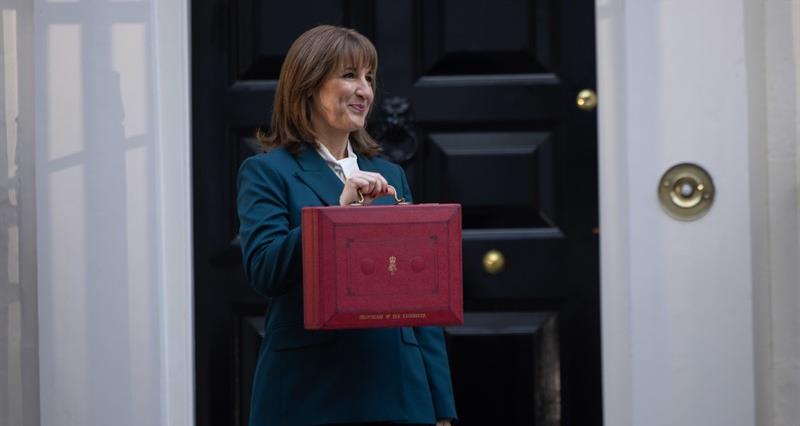
The Chancellor announced a small change to the rules which will allow those farmers who are married, or have deceased spouses, to transfer their inheritance tax allowance to one another if one of them dies having not used their allowance.
NFU President Tom Bradshaw said: “It’s good to see the government accepts its original proposals were flawed. But this change goes nowhere near far enough to remove the devastating impact of the policy on farming communities.
“It’s only right that agricultural allowances can be transferred between spouses and it’s something we’ve been calling for, but it doesn’t go anywhere near far enough in protecting the working people of the countryside. It does nothing to alleviate the burden it puts on the elderly and vulnerable.
“It doesn’t go anywhere near far enough in protecting the working people of the countryside.”
NFU President Tom Bradshaw
“It is also a huge smack in the face to the Labour MPs who have been working so hard to find a way through this for their local farmers. To them, we say thank you.
“The Chancellor said she wanted to ‘back working people not make them poorer’ and to ‘increase investment not cut it’. To do that, government must look again at the multiple solutions that have been put forward by industry and tax experts.
“Public support over the past year has been incredible. We will need this support to continue from all sides to create the change needed to protect those people caught up in this unjust, unfair policy. The fight continues; we cannot give up and we will work with the wider industry, supply chain and MPs on next steps.”
What does the change to the family farm tax mean?
Latest update: The Chancellor made a small change to the IHT policy relating to spousal transfer of the nil rate band.
If you leave assets to your spouse or civil partner, they are usually exempt from inheritance tax. The first £325,000 of assets in any individual’s estate are exempt from inheritance tax; this is known as “the nil rate band”. Because you are transferring ‘across’ to your spouse, rather than ‘down’ to your children, you haven’t used your nil-rate band, so the band is transferred to the surviving partner. For example, if the husband dies first, the wife will have two nil rate bands when she dies – hers and her husband’s.
While the 2024 Budget set the APR/BPR inheritance tax threshold at £1 million (higher than the £325,000 for non-farmers) it did not allow the £1 million APR/BPR allowance to transfer between spouses. So, if the wife died first and left everything to her husband, he would still only have one £1 million allowance to pass on to his children.
The Chancellor has now changed this. The £1 million allowance can be transferred between spouses. This means a farmer doesn’t have to leave £1 million of agricultural assets to their children when they die. They can leave it to their spouse, and the spouse can use both allowances – £1 million from their partner and £1 million of their own – when passing assets to their children.
What else was announced in the Budget?
Today’s minimal movement on the family farm tax comes alongside a range of other announcements in the Budget that could increase inflationary pressures on our food system. NFU President Tom Bradshaw has said these announcements “will hit farming and growing businesses hard”.
National Living Wage increase
The National Living Wage will rise to £12.71 an hour for those aged 21 and over, up from £12.21, with the National Minimum Wage increasing to £10.85 an hour for those aged 18, 19 or 20. Under 18s will see a rise up to £8 an hour along with the apprenticeship rate.
Tom added: “The increase in the National Living Wage, which will have risen 12% in two years, puts further cost pressures on agricultural and horticulture businesses and further inflationary pressures on our food system. At a time when the government has an ambition to get the country eating more fruit and vegetables, it will hit the horticulture sector hardest.
“While the 4.1% increase to the accommodation offset is positive, we believe the offset rate should be aligned with one hour’s pay at the NLW. This would help employers enhance accommodation while keeping contributions from workers at a modest and affordable level.”
ATQ for sugar cane increased
Elsewhere, the government has decided to increase the ATQ (autonomous tariff quota) for sugar cane to 325,000 tonnes from 1 January 2026, a move which Tom has said ”undercuts British growers at a time when this government says promoting growth and investment at home is its priority”.
Welcome news on apprenticeships
The news that funding for training of apprentices under 25 years of age will be free for SME businesses has been welcomed by the NFU. The majority of NFU members are SME businesses and, under current rules, pay 5% towards the cost of training and assessing an apprentice. Although the saving is relatively modest it will help businesses to better support the next generation of farmers and farm workers.
The Budget also confirmed that funding will be available for short training courses to upskill the current workforce but the new short courses are currently restricted to the Industrial Strategy 8 + 2 sectors. We are disappointed on the lack of clarity as to when funding for short courses that will help farming and horticulture businesses will be available to help upskill workers in the sector.
“We believe farming may benefit from the announcements on apprenticeships and it could help bring the next generation into our food and farming sector,” said Tom.
Dive deeper into the Budget announcements
How we got here
Just over a year ago in October 2024, the Chancellor first announced the government’s planned changes to inheritance tax which delivered a devastating blow to Britain’s farmers and growers.
That announcement kickstarted a relentless year of campaigning, with the NFU working in partnership with members, fighting on all fronts to Stop the Family Farm Tax.
During this time we have held a mass lobby, joined forces across the country in our Day of Unity, secured thousands of petition signatures and sent thousands of letters to MPs which have led to frequent debates and questions in parliament, ensuring the family farm tax was never far from politicians’ minds.
We thank all NFU members for their lobbying, letter writing, and meetings with MPs. This has shown the strength of the NFU in making our sector’s voice heard loud and clear.
Throughout this time, we have been persuading Labour backbenchers behind the scenes that this policy is wrong. There is now a large group who are backing our campaign and speaking up for British farming in parliament as well as lobbying ministers.
Our lobbying in numbers
We’ve galvanised support from farmers, politicians, the public, tax experts, retailers, the supply chain and beyond. Together we’ve had the same message – the family farm tax is bad for food production, farming and for growth. It must be changed.
279,000
signatures on the NFU petition to overturn the family farm tax
19,000
pieces of media coverage on the family farm tax
10,000
letters to MPs, asking them to speak up against the family farm tax
1,800
NFU members at the NFU's mass lobby
NFU President Tom Bradshaw said: “Public support over the past year has been incredible. We will need this support to continue from all sides to create the change needed to protect those people caught up in this unjust, unfair policy. The fight continues; we cannot give up and we will work with the wider industry, supply chain and MPs on next steps.”
Stay up to date
For the latest information you can also join our WhatsApp channel, download the NFU app, bookmark this NFUonline page, follow us on X and read your weekly NFU Bulletin and President’s vlog emails.
If you have any questions you can fill in the form at the bottom of this webpage or NFU members can speak to one of our expert advisers by calling NFU CallFirst: 0370 845 8458.
Thank you to those who have already taken the time to send in questions – we will respond to them shortly.