
The NFU-organised the meeting to push the need for an urgent shake-up of the way the crime is dealt with and make clear how industrial scale fly-tipping is being carried out by organised criminal gangs on a regular basis in Hertfordshire.
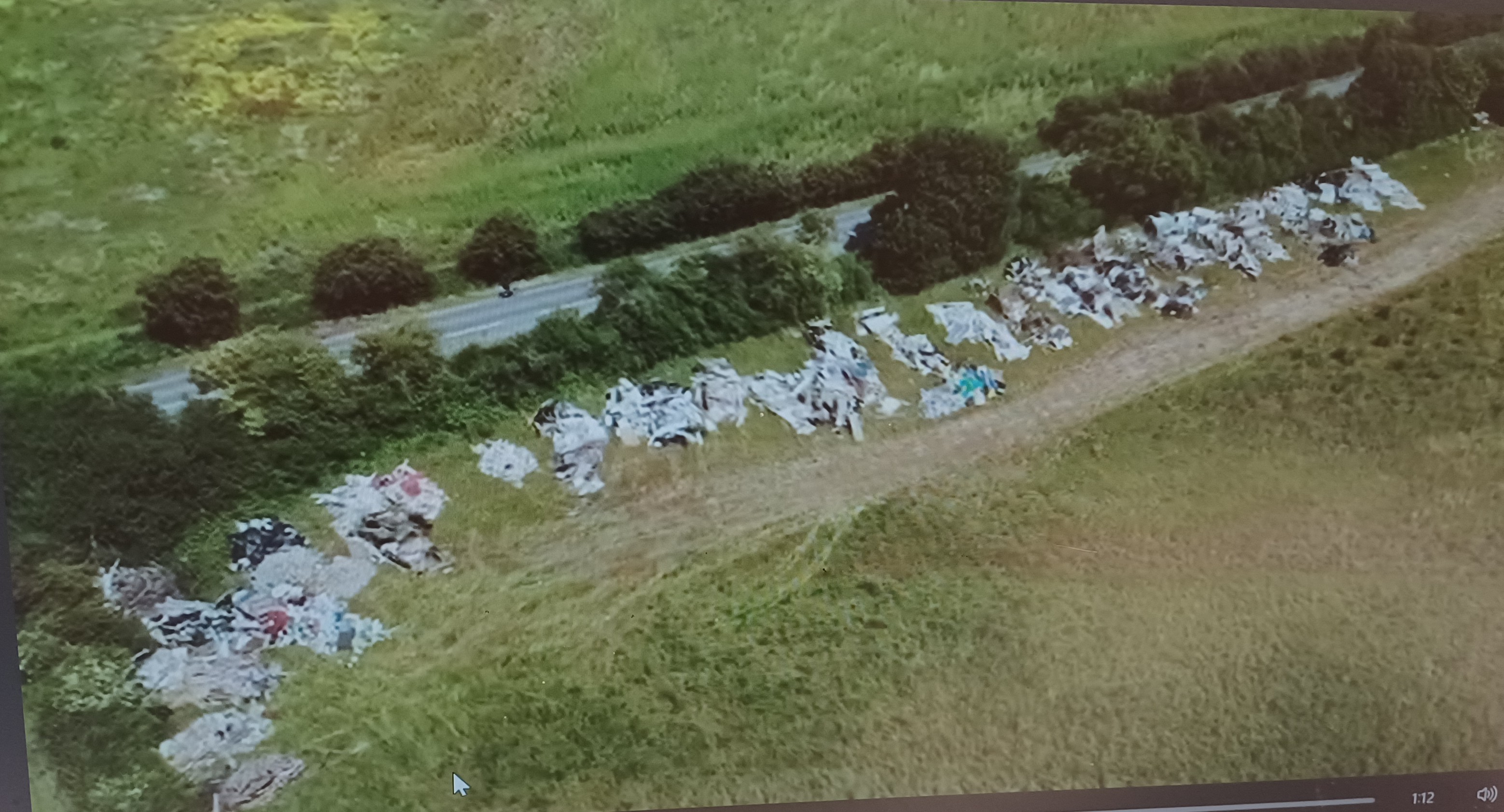
The meeting was held weeks after 200 tonnes of waste was dumped on a farm at St Albans in an incident which has attracted widespread national and local media attention.
With farmers and landowners legally responsible for clearing rubbish dumped on private land, the farmer could be facing a bill of more the £40,000.
NFU member and arable farmer Will Dickinson hosted the roundtable meeting at his farm, near St Albans.
He said: “This was an important opportunity to put the issue of fly-tipping clearly under the spotlight.
"A complete travesty of justice"
“Fly-tipping is a huge issue, damaging the environment, seriously disrupting farmers’ work and costing farmers tens of thousands of pounds in clear-up costs.
“It is a complete travesty of justice that farmers and landowners, who are the victims of the crime, are liable for the clear-up costs and could themselves face prosecution if they do not clear up the mess.
“Very few fly-tipping incidents result in prosecutions and, when people are convicted, they often receive a fine which amounts to less than the cost of hiring a skip.
“The whole system needs looking at to address the seriousness of this crime.”
Attendees included Hertfordshire Police and Crime Commissioner Jonathan Ash-Edwards, Sgt Alex Winning from Hertfordshire Constabulary’s Rural Operational Support Team, Deputy Leader of the Liberal Democrats and MP for St Albans Daisy Cooper, MP for Harpenden and Berkhamsted Victoria Collins, NFU Hertfordshire Chair Robert Law and Widford Parish Council Leader Ian Collins. There were also representatives from the Environment Agency.
During the meeting, held as part of the NFU’s ongoing lobbying work with all political parties, NFU members described frustrations over ineffective reporting systems and the need for a consistent, joined-up, approach from authorities responsible for dealing with the crime.
"A blight on the countryside"
Mr Ash-Edwards said: “Fly-tipping is a blight on our countryside. While local councils are the lead authorities, the police regularly run operations with other agencies to proactively check vehicles and disrupt fly-tippers.
“My fly-tipping grant scheme is one of the only initiatives in the country to help private landowners with clear up costs and prevention measures. There is much more that needs to be done including an increase in local authority prosecutions and tougher consequences for waste criminals.”
Daisy Cooper said: “We’ve heard loud and clear from local farmers that the absence of a single reporting system has created a spaghetti junction of prevention, investigations and enforcement activity, meaning that the true scale of this crime remains unknown.
“After hearing how fly-tipping has affected Hertfordshire residents, I’m more determined than ever to tackle this scourge and the criminals who benefit off the back of it.”
Ms Collins said: “This roundtable was a clear reminder of how important it is that we work together, across Hertfordshire, to combat the horrendous incidents of fly-tipping we’re currently seeing. It's an absolute scandal that victims are being left to pick up the pieces.
“Our farmers deserve better protection, and I will continue to push for the resources and powers needed to tackle this growing problem head-on.”
NFU asks on fly-tipping
The NFU is calling for:
- Further collaboration between land managers, local authorities, police and the Environment Agency to establish ownership of the issue, improve investigations and ensure fines are proportionate.
- Local authorities and the police to assist land managers in the clean-up and reporting of fly-tipped material.
- Proactive prevention such as stop-and-search highway initiatives with the police and the DVSA
asking for waste carriers licenses and waste transfer notes. - A single reporting mechanism to be developed so farmers and land managers only have to report a fly-tipping incident once. Currently victims may have to report incidents to multiple authorities, which is time consuming, often confusing and frustrating.
- Work to ensure all householders are aware that responsibility for any of their waste is maintained through to its final disposal point – not when they pass it to a third party.
Find out more about the PCC’s Fly-tipping on Private Land Fund.