COP30 final agreement – 6 key outcomes

24 November 2025

Environment and climate
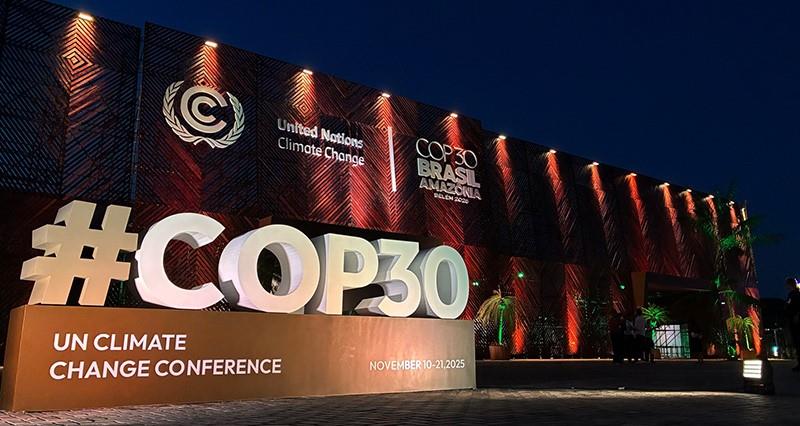
COP30 sign

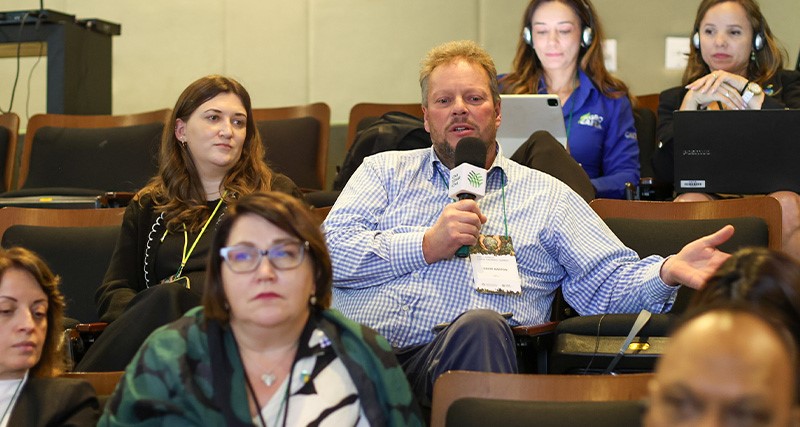
Jenny Brunton, Senior Policy Advisor at the British Agricultural Bureau represented UK farmers at this year’s annual climate conference, COP30 in Belem, Brazil. Jenny has championed agriculture at COP, working with the World Farmers’ Organisation and other members of the UNFCCC Farmers’ Constituency to influence the negotiations. 

Two weeks of the COP30 international climate talks opened on Monday in the small Amazonian city of Belém.  Returning to Brazil, this was the thirtieth ‘conference of the parties’ since the signing of the UN Framework Convention on Climate Change at the 1992 ‘Earth Summit’ in Rio de Janeiro.  

United Nations Secretary General António Guterres, addressing Heads of State from more than 30 countries ahead of the official negotiations, accused decision-makers of a “moral failure and deadly negligence” in not limiting global heating to 1.5C, a threshold now likely to be overshot in the early 2030s.

However, in a separate speech he also drew attention to the global energy landscape “changing at lightning speed”, with two trillion US dollars invested in clean energy last year.  The ‘transition away from fossil fuels’ agreed at COP28 in Dubai is now inevitable, even if not happening fast enough.  Policies are needed to eliminate fossil fuel subsidies and to support workers and communities through a ‘just transition’, as well as investing in new grid infrastructure and ensuring that new energy demand such as for data centres and artificial intelligence is met with low-carbon renewables.

Lastly, finance must be unlocked to drive investment in poorer countries – another key aspect of the global shift to a future net zero world with a stable climate.

21 November 2025

COP30 final agreement: Key outcomes

At COP30 in Belém, 195 parties adopted what is being called the 'Belém Package', anchored by a “Mutirão” decision, which reflects a spirit of collective and inclusive action. The Belém Declaration (tied to COP30) explicitly recognised family and small-scale farmers as key players in the climate fight, especially for adaptation, ecosystem restoration, and food security.

Several important decisions were made:

1. Roadmaps (voluntary)

One of the most criticised shortfalls was the omission of explicit language committing to phase out fossil fuels in the main agreement. While a voluntary roadmap was announced, there is no binding clause to phase out coal, oil or gas. Some civil society groups argue that, without stronger fossil fuel commitments, the final deal lacks the urgency required. Rather than binding global fossil fuel phase-out targets, the package sets up voluntary roadmaps. Brazil announced two of these; one for transitioning away from fossil fuels, and another to reverse deforestation. 

2. Climate finance scale-up

Countries committed to mobilising US$ 1.3 trillion annually by 2035 for climate action. 

3. Adaptation funding

Adaptation finance is to be tripled by 2035, boosting support to vulnerable countries dealing with climate change impacts. However, the timeline was pushed back from earlier calls, and many parties criticised the lack of ambition.

4. Just transition mechanism

A new mechanism was established to support a “just transition” that is, ensuring that the shift to low-carbon economies is equitable. It emphasises cooperation, capacity building, and social protection, especially for workers and vulnerable groups. 

5. Adaptation indicators

For the first time, a set of 59 voluntary indicators was agreed to track progress on the GGA (“Global Goal on Adaptation”), covering water, food, ecosystems, infrastructure, livelihoods, and more. 

6. Climate disinformation

Interestingly, the package includes a commitment to promote information integrity and counter climate “disinformation”, recognising that false or misleading narratives are a barrier to climate action. 

COP30 made real progress on mobilising funds and institutional mechanisms that could benefit farmers, in particular those farming in countries where land degradation is a key concern. The RAIZ accelerator and climate-smart agriculture funding may create new opportunities, but accessing these will likely require strong national policies, good governance, and capacity-building.

However, the absence of a binding fossil fuel phase-out leaves open important questions about Parties being able to find consensus on key issues and on delivering long-term systemic change. Implementation will be critical; converting agreement into delivery of resources and on-the-ground support for farmers will be the real test.
19 November 2025

Belém declaration on fertilisers

On 19 November 2025, the UK and Brazil announced a global call to action on fertilisers, furthering their partnership on fertilisers to tackle their environmental impact and embrace their economic opportunities.

The Belém declaration on fertilisers, launched at COP30, urges for more to be done to enhance nutrient use efficiency and reduce emissions from fertiliser production as a key pathway to delivering climate goals, protecting and restoring nature, and ensuring food security for all in an equitable and just manner.

Under the Global Climate Action Agenda at COP30 this year, the UK has also collaborated on a plan to accelerate fertiliser solutions to assess actions already underway, identify gaps, promote acceleration of those actions and coordinate across organisational barriers to deliver change.

The UK stated that it aims to mobilise greater action into nature-positive, climate-resilient agricultural solutions, ensuring that feeding the world does not compromise climate, ecosystems, or future generations.


18 November 2025

UK ‘all-in on climate action’

UK Secretary of State for Energy Security and Net Zero Ed Miliband told COP30 delegates that climate change deniers are losing ground as countries are "standing up for the cause of multilateralism and the Paris Agreement. We should not fear these forces of denial and delay because they are losing the fight. Their attempt to disrupt progress is a sign not of their strength, but of their weakness.”

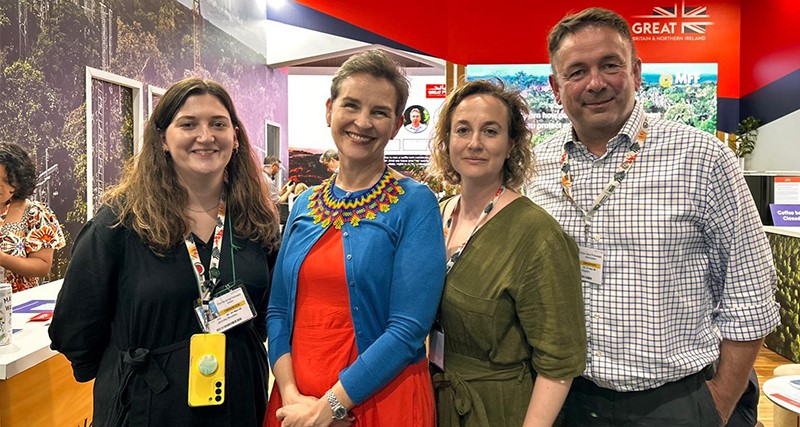
Alongside Rachael Madeley-Davies (AHDB) and Lucas Daglish (BMPA), Jenny met with Mary Creagh, Defra Minister for Nature and raised the importance of farmer representation at COP30.

We discussed the importance of both government and industry to demonstrate the UK’s shared ambition on climate action within the agriculture sector, and of the need for governments to work with the farming sector in order to deliver the innovation and investment that is required for our climate ambitions.

Jenny Brunton, Mary Creagh Rachel Madely-Davies and Lucas Daglish

 UK ag industry representatives at COP30: L-R: Jenny Brunton (UK Farming Unions), Rachael Madeley-Davies (AHDB Head of Environment), Lucas Daglish (BMPA Sustainability Manager).

17 November 2025

Agriculture in the UNEP global methane status report

Launched at COP30, the UNEP (UN Environment Programme) published the 2025 global methane status report  to update on global progress on methane mitigation and the remaining work needed to achieve the global methane pledge, as well as the potential for further ambition.

According to the UNEP's report, agriculture accounts for about 42% of total human-caused methane globally, mainly from:

  • Enteric fermentation (livestock digestion)
  • Rice cultivation
  • Manure management

Under current policies, methane emissions from agriculture are projected to rise by 8% by 2030 and 17% by 2050, driven by increasing food demand. 

Nevertheless, there is significant mitigation potential in agriculture: by 2030, about 24 Mt CH₄ could be cut via:

  • Feed additives for livestock
  • Improved livestock breeding
  • Better water-management in rice paddies

Despite the potential, policy uptake is weak, especially for enteric methane, with few countries adopting advanced feed or breeding strategies at scale. Financing is a major barrier: implementing the technically feasible measures aligned with the global methane pledge would cost around US$ 127 billion/year by 2030.

To unlock that finance, the report calls for:

  • Clearer policy frameworks to de-risk private investment
  • More public and philanthropic funding for project preparations
  • Supporting to build capacity and institutions
  • Integrating methane mitigation into broader climate, agriculture, and energy strategies

The next five years (to 2030) are “decisive”: there is enough technical knowledge and tools, but rapid scale-up is needed, backed by data, policy, and finance.

  • Accelerated methane action in agriculture yields multiple co-benefits:
  • Reduced crop losses (improving food security)
  • Cleaner air and health benefits
  • Economic gains and “stronger economies,” per the report. 

As outlined in the NFU's livestock sector resilience plan, the NFU believes there are significant opportunities to improve on farm productivity, reduce emissions through MSFPs (methane suppressing feed products) and targeted breeding, as well as progressing towards more accurate methane accounting and reporting. We echo the UNEP's findings that clearer policy frameworks and increased investment are needed to increase confidence in and uptake of new productivity measures.

16 November 2025

Declarations on hunger and land use

Last week, during the Belém Climate Summit, leaders from 43 countries and the European Union signed the Belém declaration on Hunger, Poverty, and People-Centered Climate Action which builds on the Global Alliance Against Hunger and Poverty that Brazil launched while it held the rotating G20 presidency last year. 

The declaration highlights the fact that the effects of climate change are already severely impacting populations. As the host of COP30, Brazil has placed food systems high on the agenda: “Transforming agriculture and food systems” is one of the six pillars of the official COP30 action agenda.

Meanwhile, the RAIZ (resilient agriculture investment for net zero) land degradation initiative aims to channel investment to restore up to 250 million hectares of degraded land by 2030.

"Climate change, environmental degradation, and biodiversity loss are worsening hunger, poverty, and food insecurity. They are also compromising access to water, deteriorating health indicators, and increasing mortality rates. These issues are deepening inequalities and threatening livelihoods, with a disproportionate impact on those already living in poverty or vulnerability," states the text.

In response, the declaration recommends that countries continue investing in mitigation, while giving greater priority to adaptation, particularly human-centred measures such as social protection, crop insurance, and other instruments that strengthen community resilience.

Additionally, the document calls for climate finance to focus on projects that generate opportunities, jobs, and livelihoods for smallholder farmers, traditional communities, and forest peoples. 

15 November 2025

Agriculture negotiations fail to deliver for farmers

Parties at COP30 were discussing a workshop that took place under the ‘Sharm el-Sheikh joint work on implementation of climate action on agriculture and food security’. This ongoing four-year program, initiated at COP27 in Sharm el-Sheikh, focuses on implementing climate action in agriculture and food systems.

The first workshop under SJWA took place in June 2025 in Bonn where Jenny Brunton spoke of the importance of farmers being included in decision making, and the need to scale up tools and finance to deliver on mitigation and adaptation.

However, parties were unable to agree the outcomes and recommendations from this workshop at COP30, and this will now be negotiated in Bonn, June 2026.

The SJWA recognises the fundamental priority of safeguarding food security and ending hunger, and the particular vulnerabilities of food production systems to the adverse impacts of climate change. It highlights the role of farmers as key agents of change recognising that solutions are context-specific and take into account national circumstances. 

Jenny has continued to highlight the need for the SJWA to reflect the realities of farming and that farmers are solution-oriented and open to innovations rooted in practical experience and local knowledge. The SJWA must deliver real and meaningful impacts to better the lives and circumstances for all farmers across all countries.

11 November 2025

Pressure on at COP30 to deliver change

More than 45,000 people are expected to descend on the northern Brazilian city of Belém, on the outskirts of the Amazon rainforest, over the coming days for the 30th United Nations Climate Change Conference, or COP30.

A small group within this is the UNFCCC Farmers' Constituency, a sector recognised by the UN due to having a special interest, and therefore involvement in climate negotiations.

Government negotiators are facing intense pressure at COP30 to agree on indicators to measure adaptation and a roadmap to quadruple the new collective quantified goal on climate finance.

Will climate financing shift from mitigation to adaptation? Agriculture, facing increasing extreme weather, is central in this, not only as a source of emissions, but also a sink. The "Baku to Belém Roadmap" focuses on mobilising $1.3 trillion annually in climate finance by 2035, with a specific component addressing farmers' needs.

The Farmers' Constituency hopes to shift the dialogue to ensure that investment in agriculture adaptation and mitigation is seen as an economic opportunity, and that farmers are direct recipients of climate finance.

Countries’ latest round of national climate plans (NDCs) will also be in the global spotlight

Will countries feature agriculture in their NDCs?

Parties were originally supposed to submit their NDCs by February 2025, but a number of them have yet to do so.

So far, agriculture feature very differently across them, often depending on whether they’re high or low emitters.

Many Parties are calling for urgent discussion on whether countries’ NDCs are 1.5°C-aligned, cover all sectors and greenhouse gases, and respond to the calls for energy transition. It appears that there will be space made to decide on an action package aimed at addressing the expected shortfall in collective ambition. 

6 November 2025

Farmers gather ahead of COP30: From vision to action

With the world’s attention on the UN Climate Change Conference (COP30) in Brazil this November, the WFO (World Farmers’ Organisation) convened the inaugural COP30 Farmers’ Summit on 6-7 November 2025 in Brasília, partnering with the Confederação da Agricultura e Pecuária do Brasil (CNA Brazil) to elevate the voices of farmers worldwide.

Joining other world farmers, NFU Livestock Board Chair David Barton and BAB Senior Adviser Jenny Brunton, represented UK farming at the Summit.

Globally accepted metrics needed

Both the Farmers' Summit and COP30 come at a critical juncture. Last year was the hottest year on record, and farmers everywhere are already feeling the impacts of extreme heat, flooding, shifting rainfall, supply-chain pressures and testing times for global trade.

Despite this, farmers frequently remain under-represented in global climate policy dialogues, even though they are on the frontlines of climate impacts.

In discussions, David Barton drew attention to the critical need for robust, and globally accepted metrics to accurately measure what farmers are doing, especially around climate adaptation and mitigation.

He questioned: “How do we measure what farmers have been doing for generations […] the lack of globally accepted metrics is holding back recognition and reward of farmer-led climate action.”

David Barton – World Farmers' Organisation

Photograph: WFO. Daniel Fagundes/Trilux.

Key takeaways

The Summit highlighted the urgent need to bring farmer-led solutions in climate negotiations at COP30, to shift from seeing agriculture as a problem to instead recognising it as part of the solution. Key takeaways included:

  • For policy makers: Recognising that farmers must be involved early, their perspectives integrated, and their organisations resourced if climate targets are to be realistic and implementation-ready.
  • For agri-business and the private sector: Partnering with farmer organisations offers pathways to deploy climate-smart agriculture at scale, improve resilience and link trade and climate objectives.
  • For farmers and farmer groups: This summit is a chance to be heard, network globally and influence the agenda – turning adaptation and mitigation from burdens into opportunities.
  • For all stakeholders: Food systems, climate resilience and sustainable development are deeply interconnected; marginalising farmers risks undermining progress on all fronts.

This page was first published on 11 November 2025. It was updated on 24 November 2025.


Ask us a question about this page

Once you have submitted your query someone from NFU CallFirst will contact you. If needed, your query will then be passed to the appropriate NFU policy team.

You have 0 characters remaining.

By completing the form with your details on this page, you are agreeing to have this information sent to the NFU for the purposes of contacting you regarding your enquiry. Please take time to read the NFU’s Privacy Notice if you require further information.