Defra published its revised EIP (Environmental Improvement Plan) today, which sets out its roadmap for nature restoration. Split across five chapters and ten goals covering everything from creating a circular economy, to improving people’s access to nature, the plan also includes updated interim targets for the next five years.
The NFU is calling for food production to be given the same prioritisation to ensure the EIP goes hand in hand with a sustainable, secure supply of food.
What’s new in the EIP?
“It shouldn’t be forgotten that these landscapes exist because generations of farmers have shaped and cared for them while producing food for the nation.”
NFU President Tom Bradshaw
Among the new headlines announced with the plan’s publication is £500 million for Landscape Recovery Projects to be invested over a 20-year period and £85 million to improve and restore peatlands.
The new interim targets published today include:
- 250,000 hectares of wildlife-rich habitats to be restored or created outside of protected sites.
- Double the number of farms providing 'sufficient year-round resources for farm wildlife', compared with 2025.
- Reduce the rate of establishment of invasive non-native species by at least 50% by December 2030, compared to 2000 levels.
Clear targets for British food production
Responding to the launch of the EIP NFU President Tom Bradshaw said: “The clear direction from Defra is that they need farmers to deliver for the environment and farmers stand ready to do just that. What farmers need from Defra in return is similar clarity on the importance of domestic food production and a policy framework that supports that.
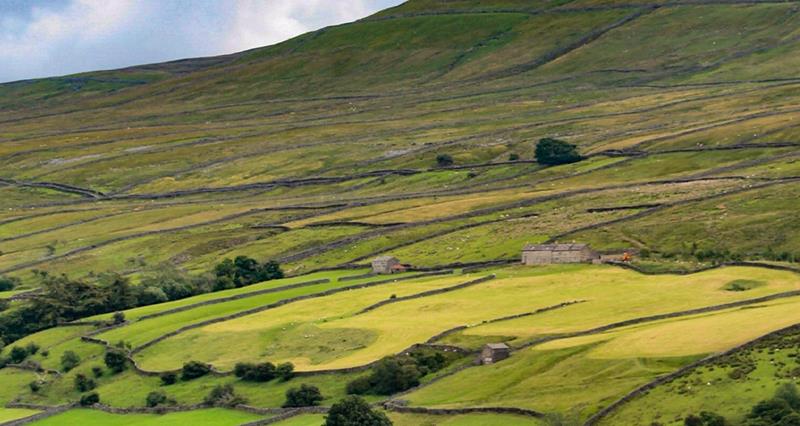
“The Defra Secretary Emma Reynolds said, ‘Britain’s rolling hills and stunning coastline are treasures’ that must be protected. It shouldn’t be forgotten that these landscapes exist because generations of farmers have shaped and cared for them while producing food for the nation. We need polices that enable farm businesses to produce food, strengthen food security, and achieve the government’s own ambition of improving farm profitability alongside these environmental goals.
“Defra’s plans for Landscape Recovery projects under the EIP involve combining government funding with private investment. However, experience shows that attracting private investment has been challenging, raising concerns about how farmers can confidently engage their businesses in the projects.
“That’s why we’re calling for certainty over the Sustainable Farming Incentive, alongside delivery of the EIP, and, as clearly set out in the NFU Blueprints, a multifunctional Land Use Framework that gives food production equal priority to environmental delivery.
"We also need clear targets for British food production, because a resilient food system is not just an ambition, it’s a necessity. This will go a long way in giving farmers the clarity that they need from Defra and confidence to the public who tell us time and time again that they want to buy British.”
The government concluded a rapid review of the previous EIP from 2023, forming part of a wider statutory EIP review which considered the implementation of the EIP23, progress towards meeting targets set out in the Environment Act, whether the natural environment has improved and if different steps should be taken to meet these aims.
It has said it will work with stakeholders, including farmers, to deliver the revised plan.
Impact on farmers and growers
Goal 1: Restored nature
- Conserve and manage 30% of the UK’s land by 2030 (30by30).
- Achieve favourable condition for 50% of SSSIs (sites of special scientific interest), create and restore 250,000 hectares of wildlife rich habitat, increase tree canopy and woodland cover by 0.33%/43,000 hectares, double the number of farms providing sufficient year-round resources for farm wildlife.
- Support farmers and land managers to create or restore 48,000km of hedgerows by 2037 and 72,500km of hedgerows by 2050.
Goal 2: Air
- Reducing emissions and population exposure to air pollutants. Deliver air quality targets for PM2.5 concentration and exposure.
Goal 3: Water
- Reduce total nitrogen, phosphorous and sediment pollution from agriculture to the water environment by at least 12% by December 2030, compared to 2018 levels.
- Modernise the abstraction licensing system, including moving it into the Environmental Permitting Regulations.
- Support the agricultural sector in ensuring collaborative sustainable water use, through enabling an increase in the number of Water Abstractor Groups from 7 to 14 by 2030.
- Review the regulatory framework for sewage sludge spreading to agricultural land to ensure it effectively manages the risks to the environment and health.
Goal 4: Chemicals and pesticides
- Reform UK registration, evaluation, authorisation, and restriction of chemicals to enable protections that address chemical pollution to be applied more quickly, efficiently and in a way that is more aligned with our closest trading partners, especially the EU, by December 2028.
- Take action on PFAS (Perfluoroalkyl and Polyfluoroalkyl Substances) through a new PFAS plan.
- Deliver the domestic pesticides reduction target, as set out in the 2025 UK Pesticides NAP (National Action Plan), to reduce each of the 20 metrics of the PLI (Pesticides Load Indicator) by at least 10% by 2030 in the arable sector compared to 2018.
- End the use of neonicotinoid pesticides (clothianidin, imidacloprid and thiamethoxam) that are known to carry substantial risks to pollinator populations.
Goal 5: Waste
- Reduce illegal waste sites and fly-tipping incidents from 2023 to 2024 levels by 2029 to 2030.
- Publish the circular economy growth plan in early 2026.
Goal 6: Resources
- Bring at least 40% of England’s agricultural soil into sustainable management by 2028, increasing to 60% by 2030.
- Improve the quality, consistency and availability of soil data by 2029.
- Create and implement a new farming roadmap.
- Create and implement a new food strategy.
Goal 7: Climate change
- Reduce and report on carbon emissions from farming and agricultural practices in line with government’s Carbon Budgets 4, 5 and 6 (2023 to 2037).
- Restore approximately 280,000 hectares of peatland in England by 2050.
- Increase the number of trees on farms, with a focus on silvoarable (trees with crops) and silvopastoral (trees with livestock) agroforestry systems.
- Make terrestrial protected site designation and management more dynamic and adaptive to the changing climate.
Goal 8: Reducing environmental hazards
- Make sure that 92% of Environment Agency maintained flood and coastal risk management assets are at or above target condition by March 2026.
- Deliver an improved evidence base to monitor wildfires, through fire and rescue service incident data.
- Fund research to address the risk of wildfire.
- Continue to support woodland creation and peatland restoration projects by recording hectares planted or restored.
Goal 9: Biosecurity
- Understand, prevent, eradicate and control biodiversity threats from invasive non-native species, animal and plant pests and diseases.
Goal 10: Access to nature
- Ensure that everyone has access to green or blue spaces within a 15-minute walk from home.
- Develop measures to improve responsible access that protect and enhance nature and visitor experiences, aiming to increase the number of people visiting the countryside and coast for leisure and tourism purposes.