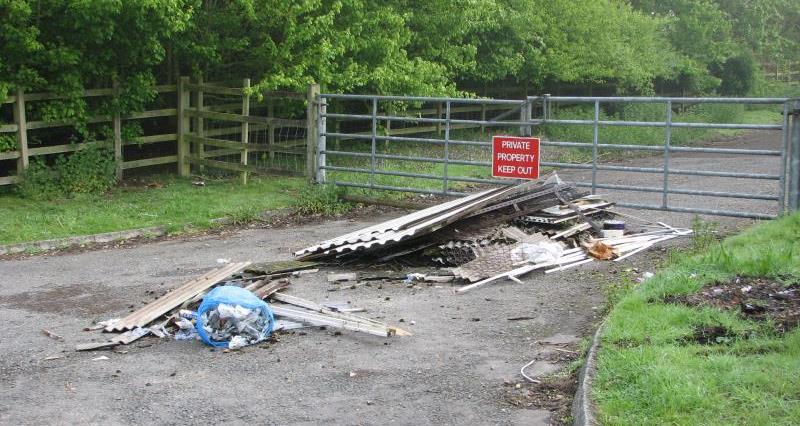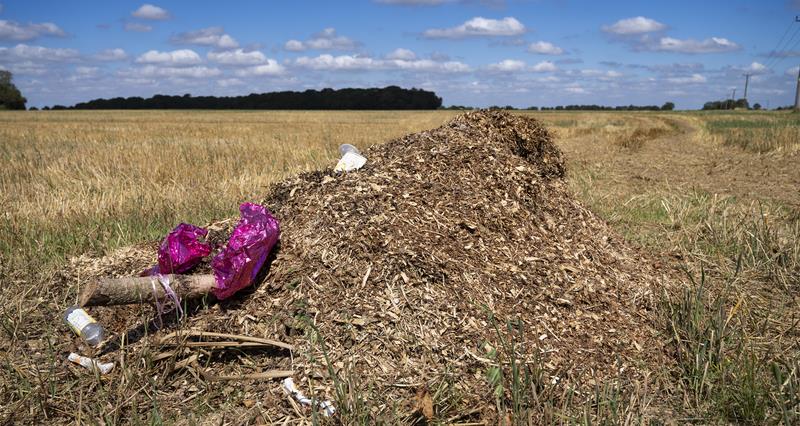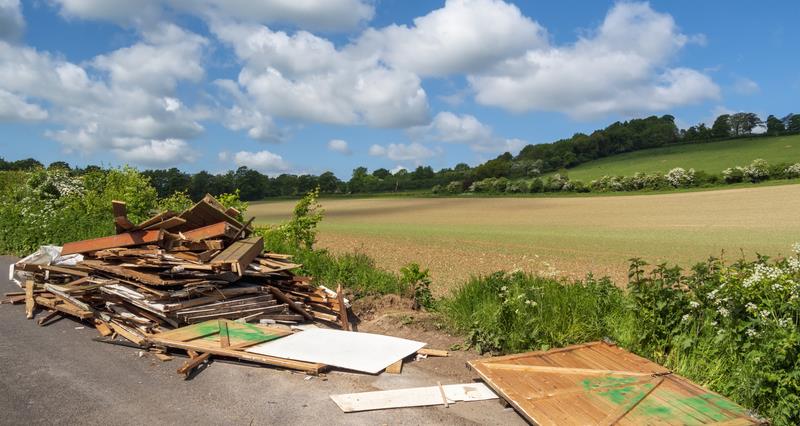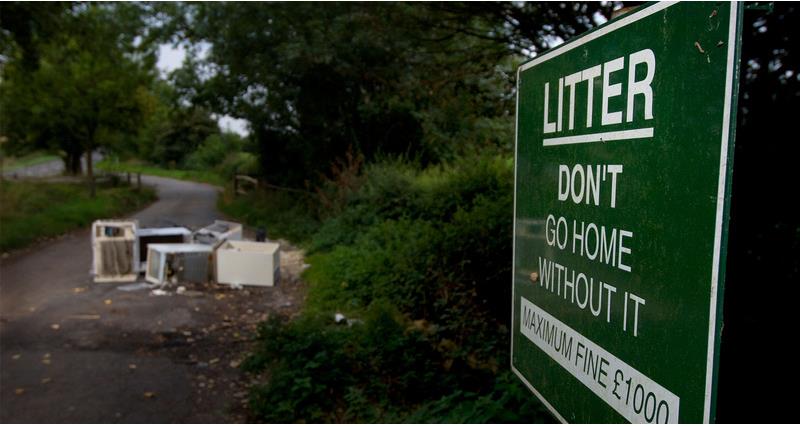
The statistics indicate a growing challenge with managing fly-tipping, particularly concerning household waste with these incidents climbing by 13% to 770,000, with the most common size category for fly-tips equivalent to ‘small van loads’ (31%) and ‘car boots or less’ (27%).
However, the Defra data for dumping on public land included an 11% increase in ‘tipper lorry-load’ dumps, costing local authorities £19.3 million in clear-up costs.
Data excludes the large-scale incidents dealt with by the Environment Agency and the majority of private-land incidents.
It should be noted that the private land data included does not reflect the full scale of fly-tipping on private land, as most cases go unreported.
It is still disappointing that these figures do not accurately reflect fly-tipping on private land, which is estimated to impact two-thirds of farmers.
A constant battle
According to the newly released figures:
- The most common place for fly-tipping to occur was on highways, accounting for 37% of total incidents.
- There was an increase of approximately 11% in the number of large fly-tipping incidents.
- The cost of clearance to local authorities in England in 2024/25 was £19.3 million.
- Local authorities carried out 572,000 enforcement actions in 2024/25, an increase of 8%.
- The number of fixed penalty notices issued was 69,000 in 2024/25, an increase of 9%.
“Once again these statistics fail to capture the true scale of the problem on private land, where most incidents go unreported.”
NFU Vice-president Rachel Hallos
While the statistics come soon after Defra announced a new set of measures to help tackle the problem, the NFU warned that this alone won’t solve the issue.
“This data lands just days after the government announced new enforcement technology, which is welcome progress,” said NFU Vice-president Rachel Hallos. “But farmers need more than drones and detection tools – we need proper coordination between agencies, penalties that genuinely deter offenders and a simple, single reporting system for victims.”
She said said the latest figures confirmed what many farmers across the country already knew – “organised, criminal fly tipping remains a relentless and costly blight on our countryside”.
As the new stats were released, Defra said that, for the first time, government guidance will advise local authorities how to seize and crush vehicles used to dump waste.
There is increasing evidence of organised criminals being involved in large-scale waste crime and the NFU welcomes the Home Affairs Committee’s Call for Evidence on serious and organised crime. The NFU will be submitting a response to the committee covering the impact of organised crime on farm businesses, including fly tipping but also machinery and equipment theft.
The NFU has welcomed previous government initiatives to help combat the issue, including increasing the maximum penalty for fly-tipping from £400 to £1,000 under the Antisocial Behaviour Plan and funding the creation of a fly-tipping post within the National Rural Crime Unit.
Government plans to abolish the fees local authorities charge for disposing of DIY waste at HWRCs (household waste recycling centres) also came into force on 31 December 2023. Although some charges still apply and booking systems can mean lengthy waits.
Joined up approach needed
The NFU believes the whole system needs to tackle fly-tipping at the source – from packaging design, recycling, landfill tax and tip opening hours – to make it easier for the public to reduce, re-use and recycle waste.
Proportionate penalties as a deterrent to potential offenders, combined with more consistent enforcement measures, are key to addressing this issue.
Rachel added: “Once again these statistics fail to capture the true scale of the problem on private land, where most incidents go unreported.
“Fly tipping is not a victimless crime. Until the system tackles waste crime at its source and supports those left to deal with the consequences, these numbers will continue to move in the wrong direction.”
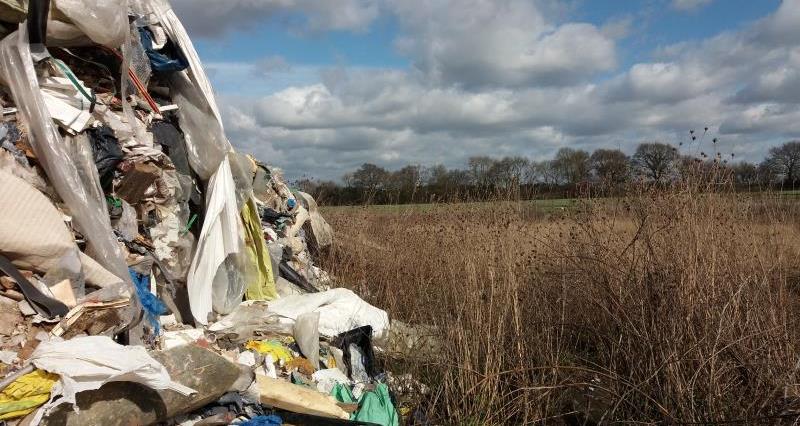
Small-scale fly-tipping incidents were included in the latest National Waste Crime Survey.
Reporting incidents
Have you experienced fly-tipping on your farm? We’re encouraging farmers and landowners who’ve been affected to share details of incidents with us using our online form.
Your information will help strengthen our case for tougher action.
If you know or suspect illegal waste activity is taking place, report it anonymously to Crimestoppers: Give information | Crimestoppers or call 0800 555 111. The 24-hour incident hotline is also available on 0800 80 70 60.