NFU Crops Board Chair Jamie Burrows

NFU Combinable Crops Board Chair Jamie Burrows
As growers begin to look towards harvest 2026 following another year of variability and challenging weather conditions, many of us are counting the effects of this year’s weather.
For those outside of the agricultural sector, the impact of the weather is mostly short lived, but for those of us within the crops sector, we and our businesses and livelihoods are at the mercy of nature. With 2024’s harvest being so marred by the wet weather, the stark realities of the limited margins within which many growers operate are beginning to show.
This year has seen unprecedented variability right down to a field level, with some growers reporting higher than average tonnages and others reporting near failure for some crops. As we look ahead to 2026, we cannot predict or control the weather. However, we can work to effect change to make the environment in which our businesses operate more transparent, fairer and more resilient for the future.
The national perspective
We couldn’t have predicted the swing in conditions from 2024 to 2025. We are seeing weather patterns become more sustained, more extreme and more damaging to our crops. Uncertainty is becoming the name of the game for many growers and the vast disparities in yields that have been seen across the country paint a clear picture.
Policy climate just as testing
It is also worth noting that our sector has also felt the impact of numerous major policy shifts. One issue that stands out is the recent UK–US trade agreement. While touted in Westminster as a diplomatic win, this placed new pressures on domestic markets and was experienced by growers as an overseas incursion into our domestic market. Having stood at the gates of the Vivergo Fuels plant, on the day it took its last load of British wheat, I feel the need to echo our president, Tom Bradshaw, in that there is simply nothing more to give away under the banner of new trade agreements.
Despite this incredibly challenging year, we have seen some policy victories, with the launch of the government’s supply chain fairness review, the development of the work around UK farm assurance and the delivery of our board strategy, Harvesting Growth.
As we look ahead to 2026, we have a lot to do and it will be a long hard road. But in that challenge, there are huge opportunities to see positive change. Among these are the long-awaited supply chain fairness review, the
ongoing UK Farm Assurance Review and the opportunities to see greater transparency in our market through the Digital Passport for Grain.
Midlands region

Regional Crops Board Chair Andrew Williamson
It is difficult to ignore the condition that large areas of crops were in as we approached harvest this summer, particularly for those on lighter soils.
Much of the Midlands faced significant reductions in yield, particularly in winter wheat, which saw yields range between 4t/ha and 10t/ha.
However, it isn’t always doom and gloom, as there is an opportunity to share a surprising success story. Despite the trends that we have seen in OSR (oilseed rape) yields in recent years, this year saw significant improvements, with some areas yielding averages of 5t/ha. We are hopeful that this isn’t a one-off and we see more growers look towards valuable break crops such as OSR, peas and beans to deliver soil health and other environmental benefits.
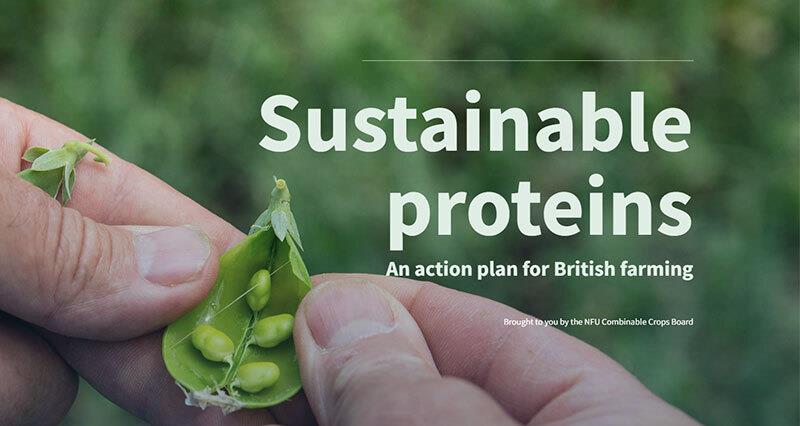
The recently launched NFU Sustainable Protein Action Plan highlights the opportunities for growers to diversify rotations and create tangible benefits for their farm and local environment.
North region

Regional Crops Board Chair James Mills
At this time last year, combines were trudging their way through poor crops and wet conditions, so the weather during harvest 2025 has been welcome.
However, like much of the country, yields have been incredibly variable with light land in particular suffering as a result of the prolonged drought.
Looking ahead to the next harvest, uncertainty remains whether the weather will prove favourable or whether heightened disease pressure will drive up costs and risks for growers.
What is urgently needed is clear and decisive progress towards a more robust, risk-based policy framework for plant protection products.
East region

Regional Crops Board Chair Peter Knight
The East has traditionally seen drier conditions than much of the rest of the country; however this year we saw a desperately wet winter followed
by little to no rainfall from late February right up into until mid-August. The lack of moisture in the early growth period stunted some crops and significantly reduced yields, with some spring barley yields being as low as 1.5t/ha, while winter wheat has seen huge variation from 5t/ha up to 10t/ha.
Overall, it’s a long hard look at what we can do for the future to secure greater resilience across our sector, whether that be through improved plant genetics, greater rotational diversity or significant investment in on-farm irrigation.
South region

Regional Crops Board Chair Matt Culley
Harvest 2025 in the South of England has been characterised by extreme yield variability, with many farmers experiencing mixed results. While some had some reasonable yields, others have faced disappointingly sparse returns.
Overall profitability remains a significant concern, with continued low grain prices and high fertiliser costs compounded by a series of challenging growing seasons.
The harvest progressed rapidly, with crops harvested earlier than any normal year, but pulses and spring barley were particularly hard-hit by drought conditions.
We now face the challenge of moving crops off farm with limited demand across the market place, highlighting the importance of the government's forthcoming supply chain fairness review.
Wales

NFU Cymru Crops and Horticulture Group Chair Tom Rees
Across Wales, the warmer weather seen in the spring supported strong crop development and final yields for many growers. We also benefited from more varied rainfall during the spring, which contributed to above-average results in the majority of winter crops, particularly OSR.
Spring crops were more varied, but aside from some very late-sown areas, outcomes were generally positive.
Overall, Wales has enjoyed one of its better harvests in recent years, with some growers even achieving personal bests. This is especially welcome after the severe losses of 2024, when saturated ground left crops rotting in the fields, unreachable by combines.
Despite a positive harvest outcome for Wales, the familiar variability seen across the wider industry remains.
Uncertainty continues to weigh more and more heavily and growers are questioning the long-term viability of their farming businesses, particularly under the ever-present shadow cast by inheritance tax.