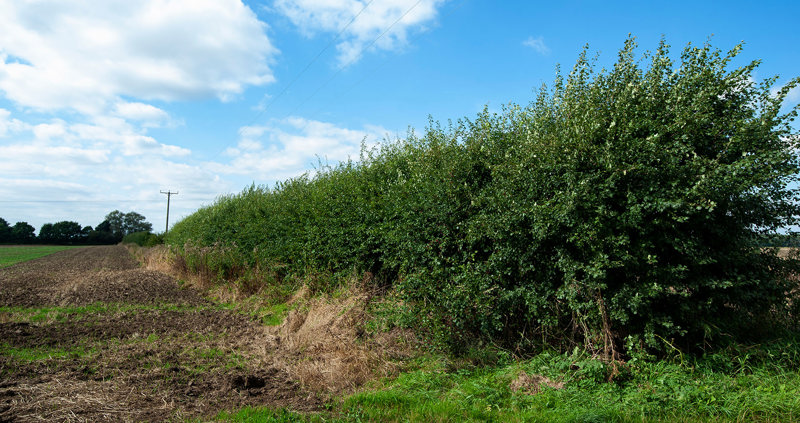
For 5,000 years, hedgerows have helped to shelter and retain livestock, crops and soil in fields, marking boundaries and forming wildlife corridors.
Hedgefest, an annual celebration of the humble hedge, saw farmers, land managers and community groups converge on Rem Moser’s Windmill Farm, near Petersfield, in East Hampshire.
Organised by FWAG South East, with the South Downs National Park Authority, the event featured a line up of engaging expert speakers, interspersed with practical demonstrations and opportunities to tour trade stands. It concluded with a briefing on funding for hedgerow planting, management and restoration.
Important for nature recovery
Opening proceedings, Cath Jackson, of the South Downs National Park Authority, said: “We know that our farmers are incredibly keen on hedges and hedges are incredibly important for nature recovery across the Park.”
Rem Moser’s 66ha former arable farm has been in Countryside Stewardship since 1989, along with other schemes to increase wildflowers and farmland bird populations.
After the South of England Hedgelaying Society restored her boundary, Mrs Moser enthusiastically planted a Millennium hedgerow herself in 2000, later adding four more. The yellowhammer, a hedgerow nester, has been the subject of university research here. Naturally, one of Mrs Moser’s mature hedges was the focus of a hedgelaying demonstration during the festival.
More than the sum of the parts
William Selborne, chair of the Selborne Landscape Partnership (SLP), a farmer group that covers some 5,500ha, explained “the whole is more than the sum of the parts if we are collaborating at a landscape scale.”
Mrs Moser is a member of the SLP, which has restored and planted “an incredible amount of hedgerow” over the past 11 years, besides monitoring and boosting farmland wildlife.
Ellie Banks, of CPRE Hampshire, outlined the charity’s Hampshire Hedge project. This initiative aims to connect the two National Parks in Hampshire, the South Downs and the New Forest, with a corridor of hedgerow for nature recovery meandering through the heart of parishes, linking woodlands, meadows, nature reserves and Sites of Special Scientific Interest. Around 11km of hedgerow has been planted within two years.
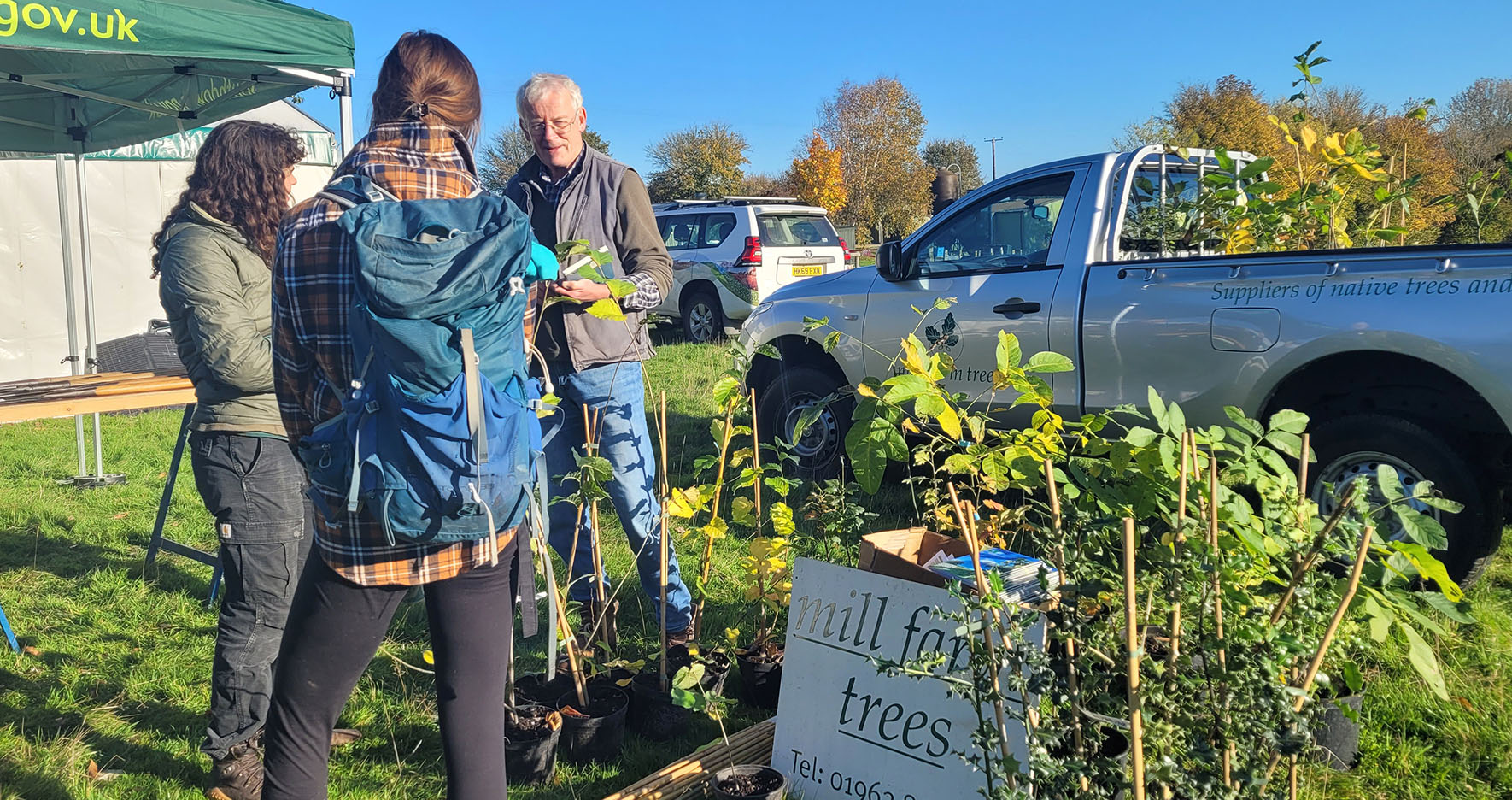
A trade stand at #Hedgefest25
Surprising statistics on the role of hedgerows within the environment were highlighted by Megan Gimber, of the People’s Trust for Endangered Species (PTES).
Dubbed a ‘hedge guru’ by the organisers, with good reason, Devon-born Megan told the audience: “I laid my first hedge aged seven, which my Dad shudders to think of now, because we were eight feet high, above a road, sharp tool in hand. And I’ve basically been geeky about hedges ever since.”
Part of the solution
Ms Gimber said: “Nationally 72% of our land is farmed, 80% in this area, so what we do within our farmland is really important on the climate change front and on the biodiversity side.
“The more I look into hedges, the more I think they are part of the solution.”
She continued: “Eighty four per cent of farmland bird species rely on healthy hedgerows. Hedgerows are something we can do that improves biodiversity, and they can improve some of our farmland as well.”
In 2015 a two-year study of a farm hedge by Robert Wolton discovered 2,070 different species in an 85-metre length.
Not only do hedges provide food and shelter for nature, they harbour beneficial insects that prey on crop pests. They also provide browsing and shade for livestock, and microclimate regulation.
They aid water infiltration, enhance water quality and protect soil. Old hedgerows are even better than woodland for carbon storage Ms Gimber concluded, citing Drexter’s report of 2023.
Advantages of incremental cutting
Delegates saw a demonstration of incremental cutting, with machinery supplied by Morton Pattinson. An incremental cutter has a blade like a domestic garden hedge-cutter. Incremental cutting is preferable to flail cutting and being nature-friendly, it enables hedges to flower and fruit, while only slowly growing bigger.
Hawthorn hedges die back if they are consistently flailed to the same height year after year, explained hedgerow expert Nigel Adams. And once elder invades a ‘gappy’ hedge, it poisons the neighbouring hedge plants.
A full time hedgelayer during winter, Nigel is a member of Hedgelink and the Hedgelaying Society and has just published a new guide to hedgelaying.
Hedgelaying is essential to maintain healthy, stockproof and biodiverse hedgerows.
Hedges require rejuvenation
Mr Adams explained that over a period of some 25 to 30 years, any hedge will require rejuvenation, by hedge-laying or coppicing. While coppicing is cheaper than laying, there is no resulting barrier left behind.
He advised farmers to contact their nearest hedgelaying society as they will sometimes assist a farmer free of charge, if a hedgelaying competition can take place on site.
Sharing hedge wisdom
A panel of three farmers shared wisdom on hedgerow management and the establishment of new hedges, before fielding questions. Wiltshire farmer Chris Rumming, who hosted last year’s Hedgefest, joined Cumbrian milk producer and hedgelayer James Robinson with William Selborne, a keen hedge planter and fan of hedgelaying, for a fireside-style chat.
Chris Rumming started hedgelaying four years ago.
“We didn’t have any history of hedgelaying on the farm for the last 50 years, but realised the benefits, so we started cracking on with it and there is lots to do.”
He finds the craft hugely fulfilling and relaxing, as does James Robinson, who chairs the Nature Friendly Farming Network. Hedge-laying in the local style is integral to the management of James’ family farm each winter. The family enjoy keeping this historic craft alive, as well as the local dialect terms associated with it.
Trade stands included a reconditioned tool stall and Mill Farm Trees, a supplier of native trees from near Winchester, in Hampshire. The Biocharged Compost Co, displayed its CompBuchar, a soil/plant probiotic and feed. This Wiltshire-based firm is running composting trials on Chris Rumming’s farm.