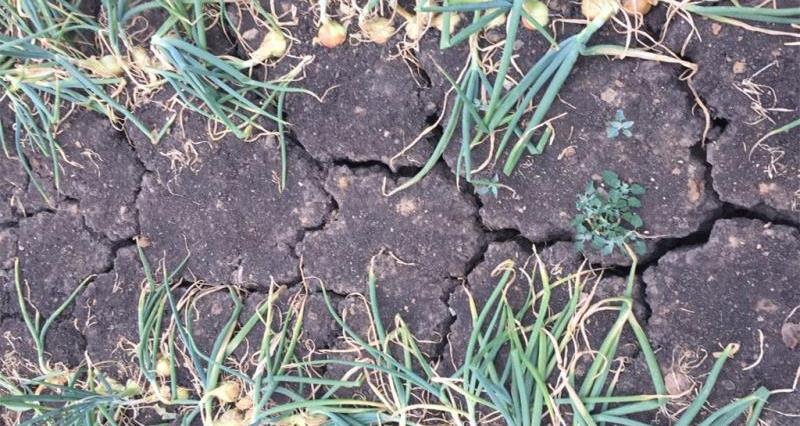
See which areas are in drought on our National Drought Group update page.
It shows that there is still more to be done to address the significant water challenges that impact farmers’ ability to produce food for the nation, particularly the critical issues of water availability, as well as water quality.
Impact on businesses
“In all my years farming I can’t remember a time when we’ve been worried about drought in December.”
NFU Vice-president Rachel Hallos
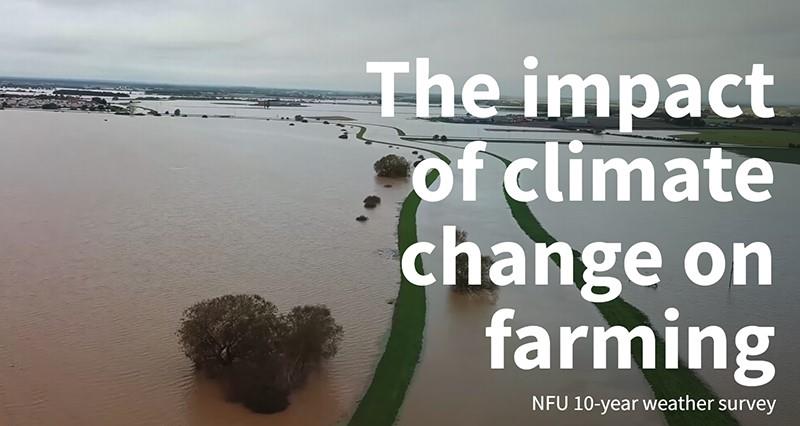
This news comes as the NFU's 10-year weather survey results have revealed that 68% of NFU members have seen an increase in drought and 56% say they’ve seen an increase in flooding.
Survey results also showed that of those farmers whose businesses were impacted by severe weather events, 47% reported financial losses of at least £10,000, with 12% reporting losses of over £100,000.
Read the results of our 10-year survey: The impact of climate change on farming
Weather extremes resulting in financial losses
“In all my years farming I can’t remember a time when we’ve been worried about drought in December,” said NFU Vice-president Rachel Hallos.
“While farmers and growers are out in the fields, sheds and glasshouses to make sure the food and flowers get to supermarket shelves in time for Christmas, it’s a real concern that water availability – a key ingredient in the production of these products – could be difficult in the year ahead.
“As our weather survey shows, going from extremes between dry weather and flooding is having a knock-on effect on farming and growing businesses, resulting in financial losses at a time when the Defra Secretary has said farm profitability is vital for growth. It is essential that farmers and growers have resilience built into their businesses to weather these impacts.”
Three key pledges
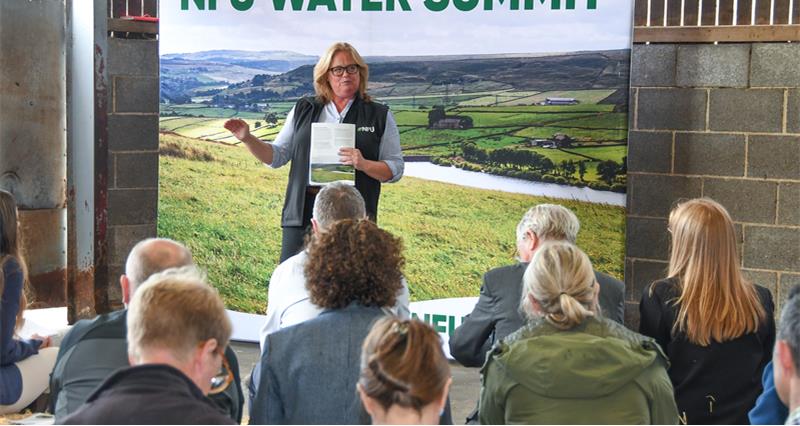
Water, whether too much or too little, plays a huge role in the nation’s food production and has a knock-on impact on farming and growing businesses. Since the NFU brought together key stakeholders for a summit to discuss water challenges almost six months ago, we have been driving forward our three key pledges:
- Robust data: Support a pilot scheme in a defined catchment with a scientific partner to test methodologies for farmers to undertake their own water quality testing. We will bring to the attention of members new, promising data and technology-led approaches that can help access water and aid with efficient application.
- Advice and information: Grow our water quality information for farmers and growers to raise awareness of relevant obligations, including more best practice advice and case studies, signposting to rules and funding initiatives, and information on how to prepare for an Environment Agency inspection. We will work with members across all our regions to support the formation of water abstractor groups and communicate the risks and opportunities in the future demand for water while protecting the environment.
- Partnership working: Convene industry experts and regulators to develop and roll out at scale nutrient management knowledge exchange and professional development. This will support water quality outcomes, nutrient use efficiency and productivity. We will work with planners and regulators on resilient and sustainable options for accessing water, particularly during times and in places of scarcity, to deliver food security. We will also continue our work as a founding member of the Rural Flood Resilience Partnership.
‘This is just the start’
Since then, the NFU has:
- Supported the creation of a Water Abstractor Group in Shropshire, with further interest being expressed by members in Kent, West Suffolk, Cambridge, Herefordshire, Worcestershire and Yorkshire – all areas that have experienced a shortage of water this summer.
- Convened follow-up meetings with water summit partners on planning systems – a key area identified in supporting necessary infrastructure improvements on farms for reservoirs and slurry storage – and on supply chain collaboration.
- Engaged with scientific partners on the potential creation of a pilot scheme to test methodologies for farmers to undertake their own water quality testing, further meetings are set up for the new year.
- Increased our water quality information for farmers which has resulted in members volunteering to test Defra’s new nutrient management tool. NFU regional teams are also working with AHDB to arrange water quality advice meetings in the new year.
NFU Vice-president Rachel Hallos continued: “The water summit was just the start of tackling the challenges with water, whether it be resources, flooding or quality. It opened the door to having open and honest conversations, which we’re continuing to have almost six months on, and is resulting in real change on the ground.
“There is still more to be done. It is vital that government, local authorities, water companies, environmental NGOs and the supply chain work together collaboratively to ensure farmers and growers have access to a clean supply of water to safeguard UK’s food security.”