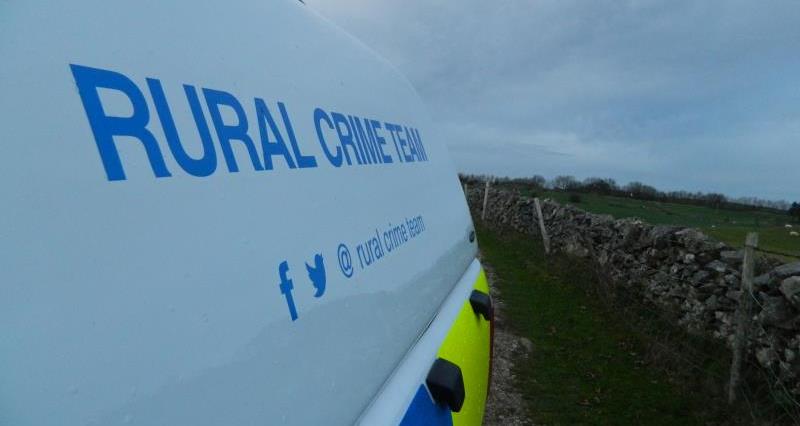
The NFU inputted into a rural crime strategy roundtable with the Home Office, Defra and police leads in February 2025.
The strategy, published today by the NPCC (National Police Chief’s Council), identifies nine priority crime areas, including machinery theft, livestock worrying and theft, illegal hunting and poaching, and offences against protected species such as badgers, bats, and birds of prey.
The NPCC said these crimes ‘strike at the heart of rural life, undermining the economic and social security and stability of those who live and work there’.
“Farmers need visible policing, swift recovery of stolen equipment and sentencing that deters repeat offenders.”
NFU Vice-president Rachel Hallos
The strategic priorities align with the NFU’s asks on rural crime, and the activities that severely impact farm businesses and rural communities, particularly those around organised acquisitive crime, livestock worrying, and livestock and machinery theft.
Rural policing teams have recovered more than £12.7 million worth of stolen machinery this year, including £825,500 worth recovered from overseas, leading to 155 arrests. Crimes are increasingly being carried out by organised crime groups the NPCC has said, requiring a coordinated response.
Complexity of rural crime
NFU Vice-president Rachel Hallos said the launch of the strategy served as “recognition of the serious and organised nature of rural crime”.
“For too long, criminal gangs have exploited the countryside, targeting machinery, livestock and land with devastating impacts on businesses and families,” she said.
“The NFU has consistently called for a cross departmental rural crime taskforce, sustained funding for the National Rural Crime Unit and stronger legislation to protect farmers from theft, hare coursing and livestock worrying. It is positive to see government and police leaders acknowledging the complexities of rural crime and committing to intelligence-led policing, new technology and national training.”
In its strategy, the National Police Chief’s Council recognises ‘the complexities of specific rural offences which are cross-border in nature, involve a significant degree of planning and co-ordination, often involve international networks and which have a substantial impact on rural communities’ .
The NPCC has said new technology will aid intelligence-led policing, using advanced data analytics and crime mapping, with police already using technology such as drones to tackle wildlife crime.
National training programmes will be rolled out for tackling machinery theft, livestock crime and wildlife offences, with DNA analysis used to support investigations.
Deputy Chief Constable Nigel Harrison, National Police Chiefs’ Council lead for Rural and Wildlife Crime, said: “Police chiefs recognise rural communities can feel isolated and vulnerable. The strategy will embed and strengthen visible policing within rural areas so those who live and work in the countryside are connected to their local police teams and feel as safe as those within urban areas.”
‘Delivery is key’
The NFU also welcomed recognition of other areas of concern for rural communities within the strategy – particularly fly-tipping – and the commitment to assist Local Authorities, the Environment Agency and Natural Resources Wales with investigations, enforcement and prevention.
Farming Minister Dame Angela Eagle said: “New powers to seize stolen assets, improved access to data and technology, and increased collaboration will help police forces make Britain’s rural communities against organised crime.”
The government has also committed to introducing legislation that will make it a requirement for all new ATVs and GPS units to have forensic markings in an effort to deter thieves, following sustained NFU lobbying for the scope of the Equipment Theft Act to be widened. Meanwhile, the Dogs (Protection of Livestock) (Amendment) Bill is currently making its way through the House of Lords after passing its third reading in the Commons. Marking a significant milestone in the Bill’s journey following years of NFU lobbying, the Bill would see police given greater powers to crack down on irresponsible dog owners.
Welcoming the new three-year strategy, NFU Vice-president Rachel Hallos warned that “delivery is key”.
“Farmers need visible policing, swift recovery of stolen equipment and sentencing that deters repeat offenders. A holistic, joined-up approach will make this effective, and we will continue to work with the Home Office, Defra and police forces to ensure this strategy translates into real protection for those who live and work in the countryside.”