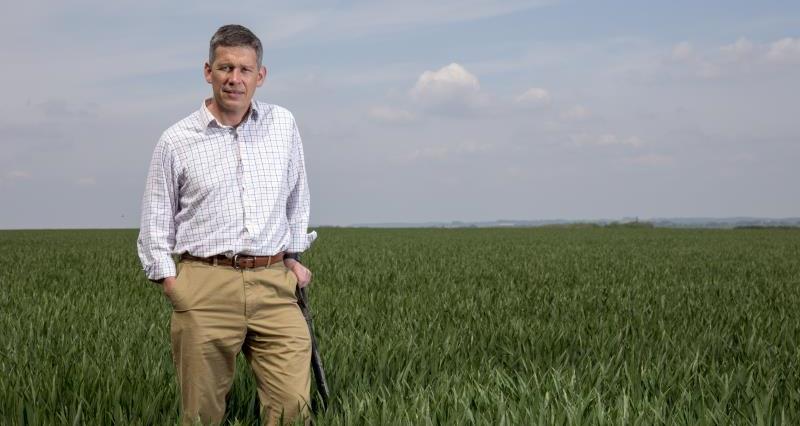
A spell working on a farm in Western Australia proved a life-changing experience for farmer Richard Ling. He worked on the 7,000-acre arable and sheep farm aged 22, after spending a few years on the family farm at Wortham near Diss, and came back with ideas that would take the home business in a new direction.
“I learned so much in Australia. The farm was having real issues with salt coming up through the ground, they were using GPS systems and yielding off 7,000 acres what we were yielding off 700 with our high input, high output system,” he said.
“We’re not 100% of the way there yet, there’s still a lot of work to be done, and change can sometimes take up to 10 years. You must think long term.”
Richard Ling
“We were using a plough and harrow-based system at home and were beating the soils up, but I didn’t realise that until I went to Australia and saw what they were dealing with. It brought home the importance of looking after, and appreciating, what you have. I looked at the farm in a completely different light when I came back.”
Looking after the whole ecosystem
Today, soil health is at the heart of farming practices at Rookery Farm. It has moved from all deep one-pass till to direct drilling, supported by catch and cover crops to protect the soil before the next cash crop is planted. There is a strong focus on reducing synthetic nitrogen fertilisers and replacing them with alternative low-emission fertilisers.
The farm has hosted successful trials with Nestlé, using low-carbon cocoa shell fertiliser made from chocolate factory waste.
“I knew we had to start working out ways that we could farm in a more environmentally friendly way, looking after the whole ecosystem,” said Richard. “Farmers have to be adaptable, we have to learn, and sometimes we have to do something that nobody else is doing to find out whether or not it works.”
The farm is supported by diversifications including a self-storage business, started in 2011, and more recent business lets. “This doesn’t mean our focus has changed from farming to non-farming activities,” he said. “Farming is our passion, our heart and our drive, but without a strong profitable core business the farm would cease to exist and we wouldn’t be farming.”
Continuing a legacy
Rookery Farm was bought by Richard’s grandparents in 1957 and has undergone change throughout the subsequent 68 years. The business had grown to around 1,000 acres with dairy, beef and pigs when Richard’s grandfather, William Ling, was tragically killed in a car accident.
The farm was left to Richard’s father, Dick, and Richard’s uncle, Ted, who increased its size to around 1,400 acres. With their children coming into the business, it was felt the time was right to split the farm, to give future generations an opportunity.
The Rookery side of the business then comprised around 700 acres, with a dairy herd, a beef finishing unit and a sow herd. Over time the livestock was sold off and the business today is all arable, farming on owned land, contract farm agreements and an alliance with a neighbouring farmer.
Richard’s parents are still involved in the business, alongside three full time employees and temporary staff to help with harvest.
Referring to the business changes, Richard said: “My parents have been brilliant, constantly forward thinking, not kicking the can down the road, so their legacy continues.
“It doesn’t mean that the proposed inheritance tax won’t hurt if implemented, but we’re not as vulnerable as we could have been.
“But the sad thing is inheritance tax shouldn’t be that big a deal if the industry was able to make a decent profit. I’ve got no problems with paying tax, but I do have a problem with having to pay tax if I can’t make any money to pay that tax.”
Long-term thinking
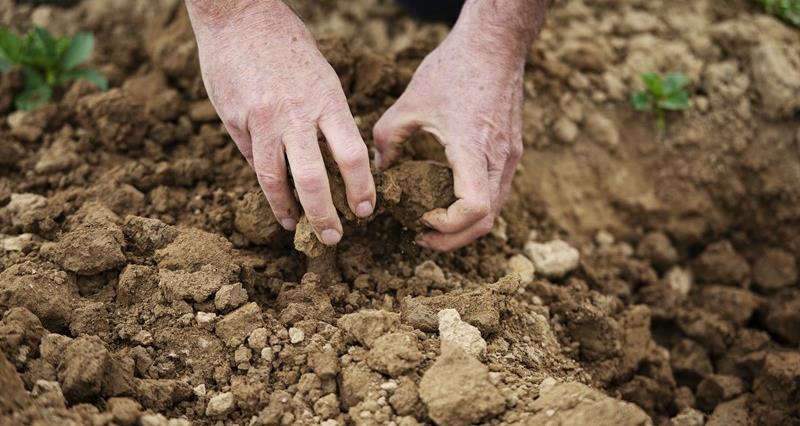
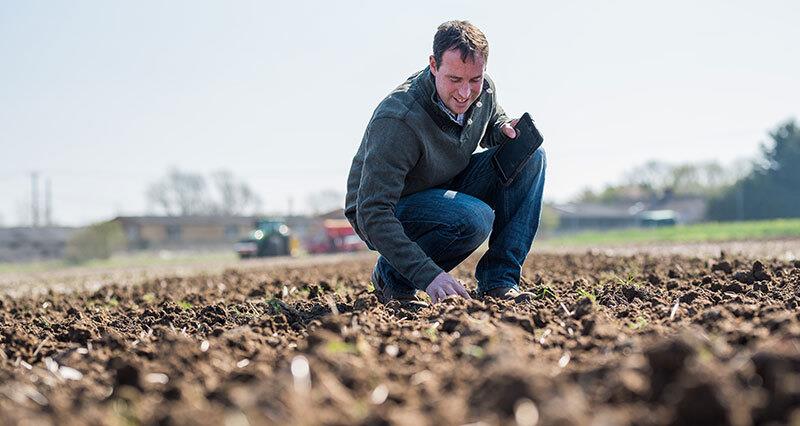
“Today cropping includes oilseed rape, winter wheat and spring barley, with beans also featuring within the rotation, alongside catch and cover crops. They help protect our soils and are giving us results. It’s amazing to see the worm activity that’s changed over the past few years,” said Richard. “We harvested some wheat at the end of July and then had to leave the rest for a week because of rain. There had been a lot of traffic on the harvested area but, by the end of that week, because the soil moisture had increased, the worm activity was huge. It absolutely transformed this field. We haven’t had to do any deep cultivations because the worms have done the job for us, and I never thought we would get to that point.
“Using catch crops like that is one of the ways we’ve been able to change and adapt the business to be more resilient and it does mean a big saving. We don’t need to use a deep cultivator on those fields. We can do in and establish the next catch crop, or oilseed rape that’s been direct drilled with companion crops. That helps against flea beetle. The companion is there to help mask the oilseed rape crop so the beetles can’t find it.
“We’re not 100% of the way there yet, there’s still a lot of work to be done, and change can sometimes take up to 10 years. You must think long term.
“The more consistent we can be with our catch and cover crops, the quicker we’ll see the improvements over the next few years.
“It’s one thing to get a catch and a cover crop established on the odd field. It’s another thing to do it across your whole farm, because the time for drilling them is when the combine’s still running. Our whole farming system has had to be adapted slightly to be able to get catch crops and cover crops established while the combine will still be running. It just means we must plan a bit more.”
Taking care of one another
Richard is equally enthusiastic about the potential benefits that cocoa shell fertiliser could bring. After the initial trials with Nestlé, he’s undertaking trials with CCm Technologies, which helped Nestlé make the fertiliser.
“We’ve taken it from small plot trials into field scale trials and last year we had a field of winter wheat, which we only used the CCm on, and we matched like-for-like with the artificial fertiliser,” he said. “The CCm has grown just as good a crop of winter wheat as the artificial liquid fertiliser crop so we know it works.
“This is all about learning to grow a net zero crop, and you quickly realise that one of the biggest hurdles is the fertiliser. If we can sort out the fertiliser, we’re really starting to get somewhere.
“We’ll be doing more trials with CCm next year and this is one area that could do with government funding to help push it along and speed up the testing process.”
Alongside looking after the soil, Richard is clear that looking after your workforce is important as well. “It’s not just about helping the environment, it’s about supporting those who work on the farm, making sure they have a decent quality of life,” he said. “If somebody has a passion for playing football at a weekend on a Saturday, for example, it’s making sure that they have the time to go and play that sport.
“Another thing that we’ve been doing for the past few years is, if we’re working late, we sort out some food. We have hot meals delivered to the tractors, so people are eating at 7pm, rather than 9.30pm or 10pm or whatever time they finally finish.
“If you are getting home late, and not eating properly, for 10 to 15 days straight, which can happen, people are going to burn out. That’s why there can be a lot of staff turnover on farms. It’s really important that we look after each other and take care of everyone’s health.”