Under FDOM (Fair Dealing Obligations (Milk) Regulations), all first purchaser milk contracts in the UK must clearly explain the pricing factors milk buyers use to calculate farmgate prices.
It is important producers are able to understand how their milk price is determined and can track the market indicators influencing their milk price. In turn, this gives them the ability to anticipate potential market changes (and adjust their business plan accordingly) and confidence that any change to their milk is justified.
The ‘variable’ price that is paid per unit of farmgate milk must be determined by factors that are set out in the milk purchase contract. The factors used to determine price should be freely negotiated between the farmer and milk buyer.
More information on how a factor is defined under the Fair Dealing Obligations, can be found under the Pricing & Payment heading via: GOV.UK | Additional guidance for FDOM Regulations 2024
The regulations allow farmer owned structures like Cooperatives and Dairy Producer Organisations to have greater flexibility in terms of the pricing schedule as their structures create space for a formal negotiation between the two parties.
However, these structures must have a ‘decision-making body that is made up of a majority of individuals democratically elected by the producer members and which has ultimate decision-making authority in relation to contracts for the purchase of milk’.
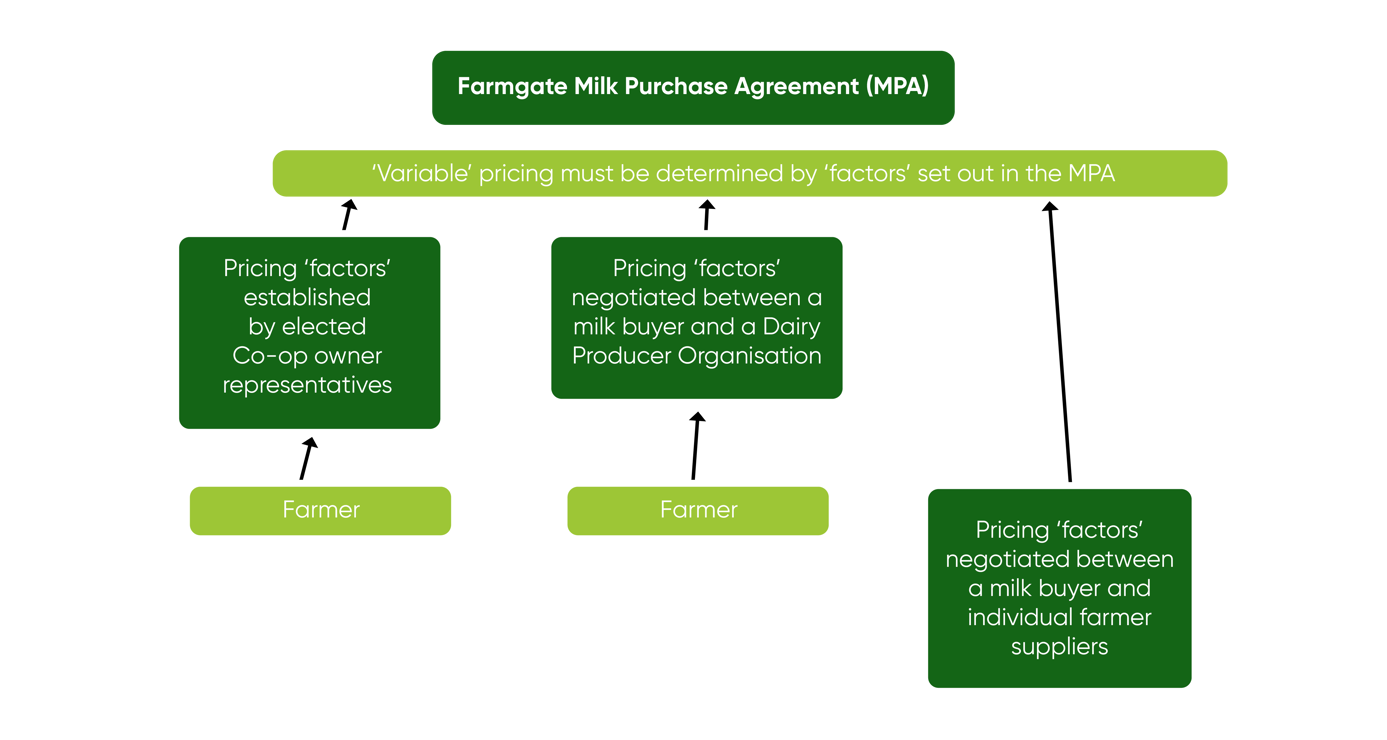
The milk buyer must have due regard, as far as it is reasonably practical to do so, to only factors set out in the MPA (Milk Purchase Agreement) when determining the price per unit of milk.
Check the correct ‘factors’ are being used to determine the milk price
Under the regulations, farmers, or their representative structures, may, by written notice request that that the milk buyer provide them with a written explanation as to how the price was determined and how the ‘factors’ used to calculate the milk price were given ‘due regard’. The milk buyer must respond within 7 days.
If the milk buyer feels that the ‘factors’ used to determine the milk price are business sensitive, an independent, third-party person can be used to determine if the ‘factors’ have been given ‘due regard’. The process of this third-party verification process must be contained in every MPA. The milk buyer must cover at least 50% of the cost of this process.
If the milk buyer fails to engage with this process or parties do not agree that ‘due regard’ has been given to the ‘factors’ in determining milk price, farmers can refer the case, anonymously to the Agricultural Supply Chain Adjudicator.
Dispute procedure*
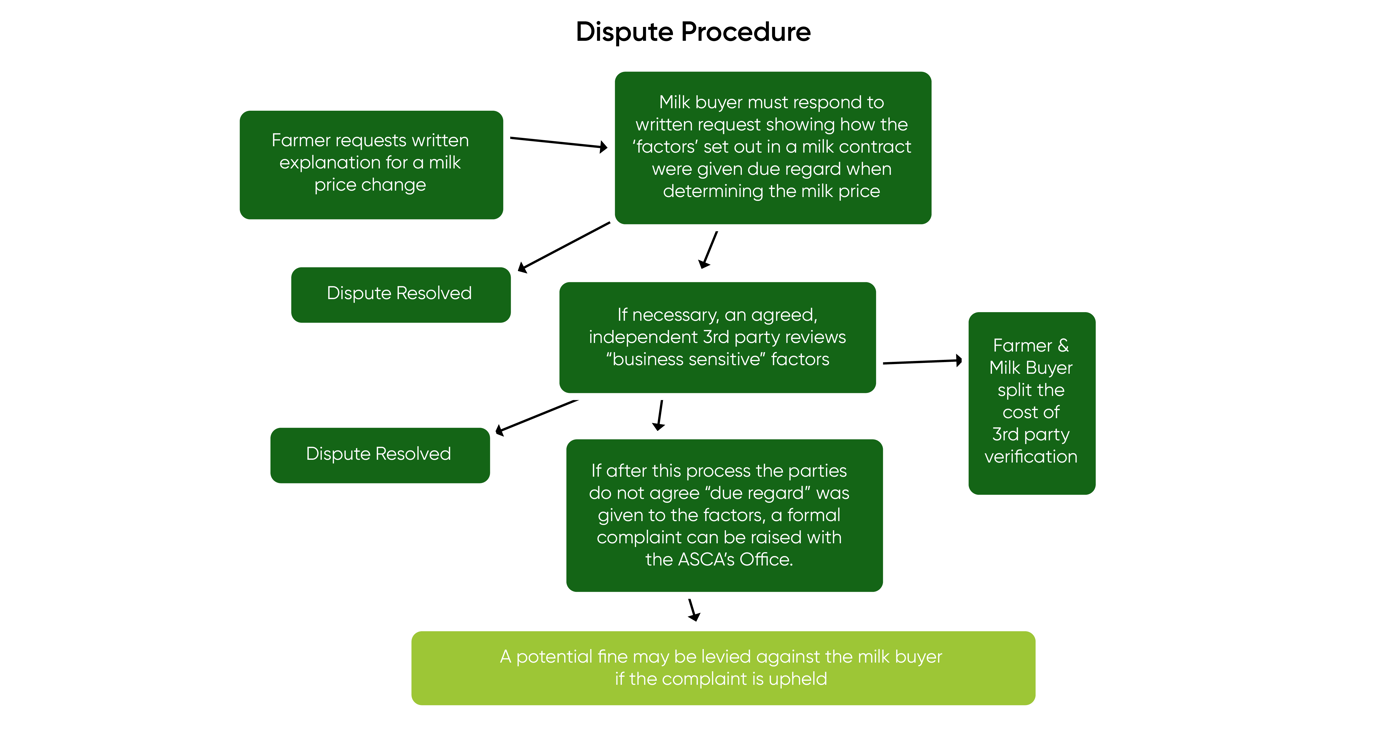
*Throughout this process, at any time a producer may put forward concerns relating to their MPA to the adjudicator through a confidential inbox. This will not be taken as a formal complaint but will help identify potential issues and ongoing behavioural concerns to the adjudicator. Email: [email protected]
The future of FDOM
Driving fair dealings and improving trust and transparency across the agri-supply chain will not happen overnight. The NFU lobbied for legislation to help tackle unfair dealings for a long time. The new Fair Dealing Regulations are just the start. We know that more will need to be done.
The regulations must be reviewed ‘from time to time’ and the Secretary of State must publish a report setting out the conclusions of any review.
The first report must be published within five years of the regulations coming into force. These reviews provide an important opportunity for the voice of the farmer to be heard and any ongoing concerns around the behaviour of first purchasers to be tackled – potentially through further tightening of the legislation.
NFU members are therefore encouraged to speak with their NFU representatives, their DPO or contact the ASCA office directly to ensure their experience of the new FDOM regulations and how they are operating in practice are captured.