
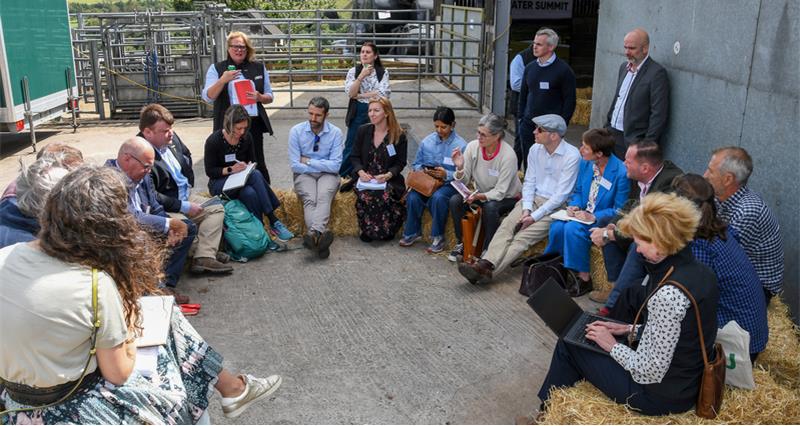
In this context, the group gathered at NFU Vice-president Rachel Hallos' farm discussed the key enablers to a long-term circular economy as including good, robust baseline data for nutrients and water availability, but also soil health.
Chaired by Head of Food System Transformation at WRAP, Estelle Herszenhorn, panellists discussed the importance of gathering this data from field and farm levels in order for us to take action and enable innovation to take place.
And, if we would like to scale our action and activity from farm level to catchment or landscape levels, collaboration between farmers and with partner organisations would also be needed – we need to work together through groups, such as farm clusters or facilitated groups through a farm adviser, to achieve improvements at scale.
“It was widely accepted that we cannot adopt a ‘one size fits all’ approach and that we may need different solutions in different parts of the country to enable our circular economy.”
NFU Chief Environment Adviser Dr Diane Mitchell
Nutrient use
In terms of nutrients, it was recognised that additional key actions were needed to ensure that we have a functioning circular economy.
At a farm level, we discussed that this could include reducing nutrient losses and optimising nutrient use through the uptake of good soil and nutrient management planning and using precision farming techniques, using organic materials ahead of manufactured fertilisers and in some cases, making investments into storage or slurry separation or further treatment.