
1. What does resilience mean to the farming community?
‘How do we define resilience?’ This was one of many questions posed by HRH the Princess Royal to the audience.
“Are we defining it slightly differently now?” she asked, reflecting on the conference’s 90-year history, and considering what farmers at the first OFC, held in 1936, would have thought about the issues of today.
“Would they have recognised the theme? Would they have interpreted it slightly differently? Or would they have all said, ‘Well, that’s what we do – we are all resilient because we're in agriculture’? Is it about who or what is resilient?”
The questions asked at this year’s conference, she said, would help to tease out some of the answers; adding that it was fitting to consider the topic of resilience now given the ‘intense’ challenges felt by the farming and wider rural community.
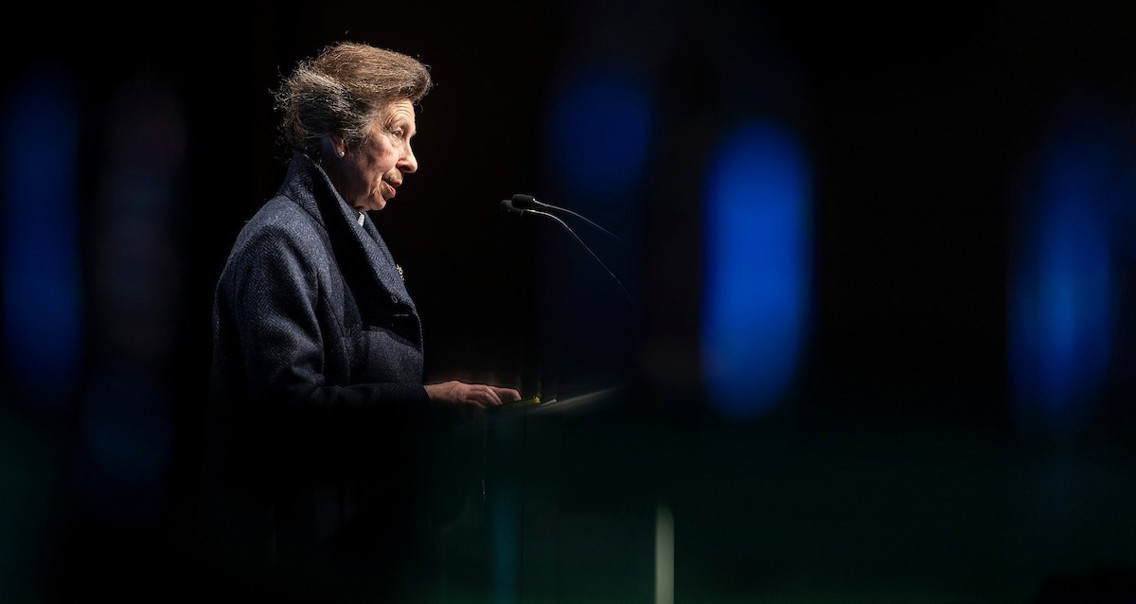
HRH the Princess Royal. Photograph: The Oxford Farming Conference
2. What are the latest updates from Defra?
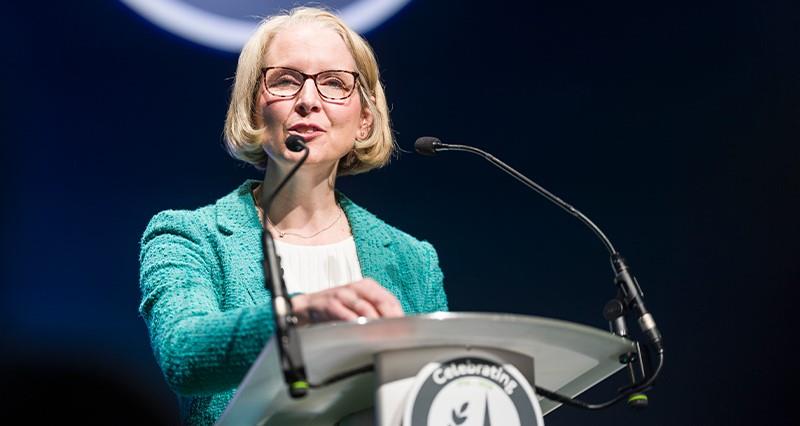
The political keynote was delivered this year by Defra Secretary of State Emma Reynolds MP. As part of her speech, Ms Reynolds outlined reforms to SFI.
The NFU welcomed this announcement. NFU Deputy President David Exwood said it was positive to hear the Defra Secretary talk about “much-needed plans to reform the SFI” and her commitment to work with the sector, “but there remains a huge lack of detail that farmers and growers urgently need and this uncertainty continues to undermine farmers’ confidence, ability to invest and do the best for their business”.
The Defra Secretary also announced a new £30 million Farmer Collaboration Fund, to be invested across three years, which will support farmer groups in growing their businesses, building partnerships and sharing best practice. The NFU welcomed the fund’s focus on growing farming businesses.
Ms Reynolds added that the government’s vision is “to help farmers improve their productivity and profitability; and to collaborate on delivering positive environmental change together”.
3. How can we attract new talent into the farming sector?
Jumping on the Defra Secretary’s point about collaboration, vice chancellor of Harper Adams University, Ken Sloan asked Ms Reynolds how she would help universities and training providers make sure that the current, ‘bleak’ narrative around the industry’s future is not getting in the way of inspiring the next generation of farmers.
Ms Reynolds said she hoped that, given the changes made in recent months, the industry would start to see changes to the existing narrative. “We need new talent, new blood in any sector, but particularly in farming,” she explained.
“We want to encourage the next generation. It's something that I think we need to work on together. We need the sector to embrace it. It’s something that Angela [Eagle] and I are very passionate about. We need to get the right skills to drive productivity and profitability.”
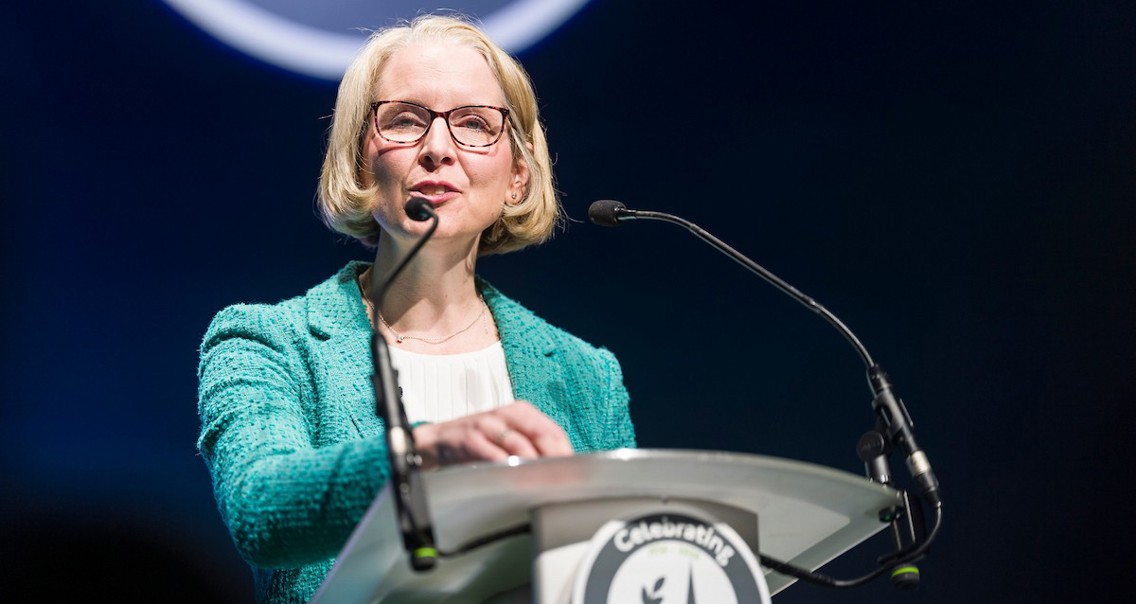
Defra Secretary Emma Reynolds. Photograph: The Oxford Farming Conference
4. How do we tackle misinformation about farming?
Jack Bobo, executive director at UCLA Rothman Family Institute for Food Studies, who delivered the conference’s opening keynote, spoke to the room about the stories circulating in current discourse on food and farming, and how creating a more positive narrative could help with public perception and driving the industry towards achieving its sustainability goals.
An interesting question about how farmers in the ‘age of the internet’ can protect agriculture from the barrage of misinformation online and in the media, came from a young farmer in the audience. He asked Mr Bobo how farmers could put forward a positive and authentic case for agriculture today.
“There are a couple of ways to start this conversation,” Mr Bobo replied. “One is that if you don't participate in the conversation, then you shouldn't be upset that it doesn't have anything to do with your real interests.”
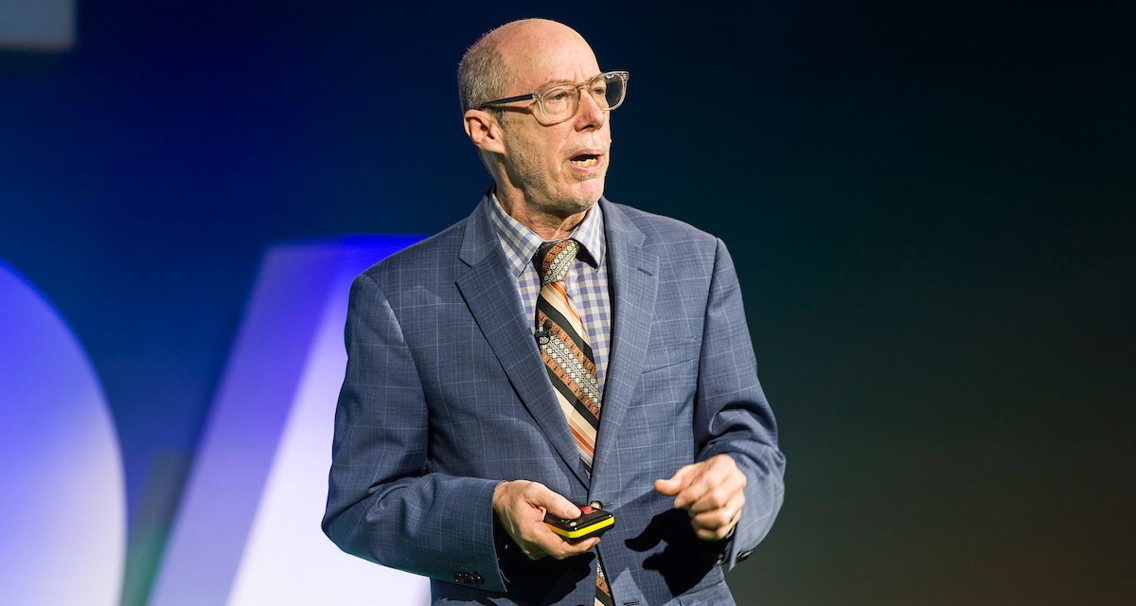
Executive director at UCLA Rothman Family Institute for Food Studies Jack Bobo. Photograph: The Oxford Farming Conference
Mr Bobo explained that he believes too many people don't participate in the public conversation; they don’t put forward their positive arguments about farming, and that there is an opportunity for voices in the UK to get involved in shaping the narrative.
He also paused a moment to highlight the fundamental issue with using the word ‘misinformation’ in these kinds of debates. “When we talk about the term misinformation, it assumes that the other information is wrong,” he explained. “If you're trying to explain misinformation to people, well, that means you're trying to convince them they're wrong, as opposed to having a conversation about what the world could be.”
Mike Rivington, senior scientist at James Hutton Institute, added that a lack of critical thinking about negative narratives in the public conscious is concerning.
“I think that is the biggest challenge for education across the world: it is how we get our young people to actually critically evaluate sources of information, and not just take things as fact,” he explained. “Science is about fact, or as close to fact as we can get, whereas unfortunately what we're hearing a lot is just opinion.”
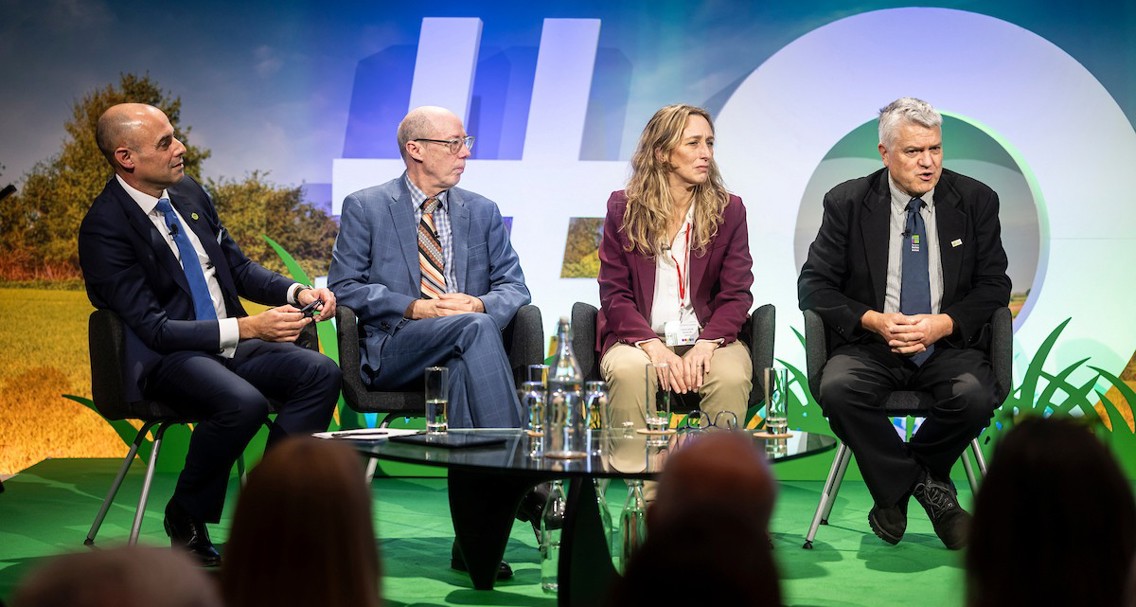
L-R: Moderator Professor Mario Caccamo chairs a discussion with Jack Bobo, Laura Lukasik and Mike Rivington. Photograph: The Oxford Farming Conference
5. Can we measure resilience?
Throughout the programme, attendees to the conference heard from a range of views on the topic of resilience, spanning the importance of good mental strength when dealing with difficult problems, to potential trade opportunities and ways to ensure financial stability amid an increasingly unpredictable landscape.
As part of ‘The Future of Farming’ panel, speakers were asked whether it was possible to measure resilience.
Laura Lukasik, founder of regenerative agriculture services provider Numen Bio, suggested that there were various kinds of resilience that needed to be considered to accurately formulate a metric for such a thing. Researchers would need to look at soil health and natural resources, how farmers and individuals feel about the system, and lastly the strengths and weaknesses of the existing food system.
Mike Rivington took a similar view: “Can resilience be measured? Yes, because we can measure people's behaviour. We can measure soil quality improvement. There's a whole range of things that we can measure that gives us good indicators to see if we are progressing towards resilience.”
He added: “I've been thinking, what will OFC 2050 look like? It's only 24 years away; and I would like to think that perhaps the title might be ‘We Achieved Resilience’, because in terms of an agricultural and a land use context, yes, we can measure resilience and hopefully use [that metric] to tackle the challenges ahead of us.”