Farmers and industry leaders have welcomed fresh progress in the development of a bTB ( bovine TB) vaccine for cattle, as six years of field trials move closer to completion across Great Britain.
An update from the APHA (Animal and Plant Health Agency) has confirmed that on-farm ‘phase three’ activities have now concluded across England and Wales.
This additional phase was necessary to gather extra data on the performance of the companion DIVA skin test in vaccinated cattle and to help inform how the vaccine could be deployed in practice.
The test, which detects infected amongst vaccinated animals, was described as a “major breakthrough” when it was announced in July 2021. Without it, the long-standing BCG vaccination cannot be used, because it cross-reacts with the cornerstone test used for bTB surveillance in the UK and by our trading partners – the tuberculin-based skin and blood test.
The latest work has seen 736 animals from 11 farms in the low TB incidence areas of England and Wales vaccinated with the BCG vaccine, and subsequently DIVA-tested. Progress has been described as ‘encouraging’, and all the sites have completed all on-farm activity, including vaccination and follow-up testing.
Milestone moment for vaccine development
Analysis of phase three data is the next step. Following satisfactory results there, GB marketing authorisations for the vaccine and test, as well as WOAH (World Organisation for Animal Health) recognition for the DIVA test reagent can be sought – the final pieces of the puzzle before a wider roll-out of the vaccine and test.
The data gathered on the DIVA test specificity (in essence its rate of false positive) will also help to inform deployment, once marketing authorisations are in place.
NFU Deputy President Paul Tompkins said: “This is a significant and welcome step forward and we are hugely grateful for the contribution of the farmers, veterinary professionals and trials staff who have supported the work on the ground.
“While challenges remain, the progress of field trials shows real momentum in delivering a practical, science-led tool in the fight against bovine TB.
“However, greater urgency is needed. Continued collaboration between farmers, vets and government will be critical to getting a vaccine over the line and finally turning the tide on bTB.”
What a vaccine might mean
If successful in securing marketing authorisation and WOAH recognition, the vaccine and DIVA test combination could provide a significant new tool in the fight against bTB.
It could help to:
- reduce infection rates within herds
- limit transmission within and between farms
- cut the number of cattle culled because of bTB
- support long-term eradication strategies across Great Britain.
For more information, visit: GOV.UK | Cattle bovine TB vaccine field trials move to next phase.
‘All tools still needed’
He stressed that the NFU continues to press for a bTB eradication policy based on sound science and that makes use of all available tools. The NFU reiterated that in its response to Defra’s recently updated strategy for tackling the disease.
“No single method can eradicate this disease – we need access to every tool that is scientifically proven to work, including very targeted wildlife control where needed,” Paul said.
“It’s by using all these measures together that we can achieve eradication.”
Vaccination would not replace existing controls, but would complement measures such as cattle testing, movement restrictions, increased biosecurity and enhanced wildlife controls, as part of a comprehensive package.
“Continued collaboration between farmers, vets and government will be critical to getting a vaccine over the line and finally turning the tide on bTB.”
NFU Deputy President Paul Tompkins
In the strategy update, the government said it wanted to see a cattle vaccine ‘deployed’ by 2030. The goal is to achieve bTB-free status in England by 2038, while Wales is working to a 2041 timeline.
Deputy Chief Veterinary Officer Ele Brown said: “The UK is at the forefront of global efforts to develop an effective cattle vaccine against bovine TB, and completing the on-farm phase of these field trials marks a significant milestone.
“Reaching this stage is testament to the world-leading scientists at the APHA, as well as the vets and farmers who have dedicated their time and expertise to this and previous trials.
“We are now one step closer to our ambition of having a deployable cattle vaccine and accompanying DIVA test ready by 2030. Used alongside other measures, they will help to tackle this insidious disease and reduce its impact on livestock farmers for years to come.”
If successful, the combined vaccine and DIVA test could transform the way bTB is managed on farm.
For many in the sector, the progress made so far is a welcome step forward — but there remains a clear need for urgency and for farmers to see results and a vaccine made widely available as soon as possible.
From the trials: Why I took part
A farmer in the north-east of England was among the 11 farms taking part in the final stage of on-farm work.
She said: “Despite being in a low incidence part of the country and having been a closed herd (except bulls) for more than 10 years, I still believe that bTB is the biggest threat to the cattle enterprise on our farm.
“The thought of the herd my husband and I, and my late husband and father-in-law before us, have built up being decimated by this dreadful disease doesn’t bear thinking of.
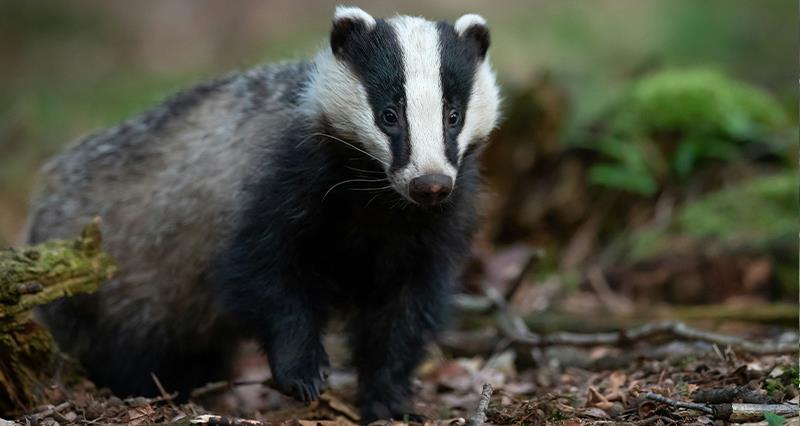
“We have a high density of badgers on the farm and if it were inadvertently introduced into the area the likelihood of it spreading through the wildlife would be high.
“Perhaps the main reason for joining the trial was because I believe that the only way to get TB under control is with a vaccine that is safe, effective and can distinguish vaccinated cattle from infected ones. The monetary incentives also made it an even easier decision to join the trial.
“My greatest hope is obviously an effective vaccine, which can be safely rolled out across all TB infected and edge areas to eventually eradicate this devastating disease from the UK.”