Fly-tipping is a major issue for farmers and growers in Hertfordshire and the NFU has long called for a shake-up of how the crime is dealt with.
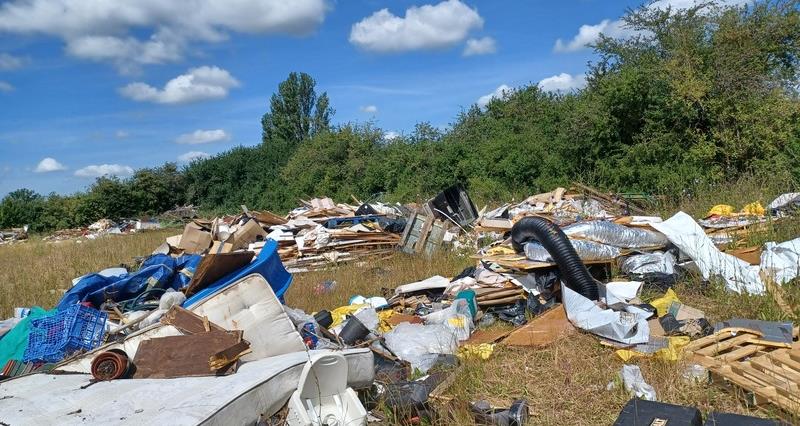
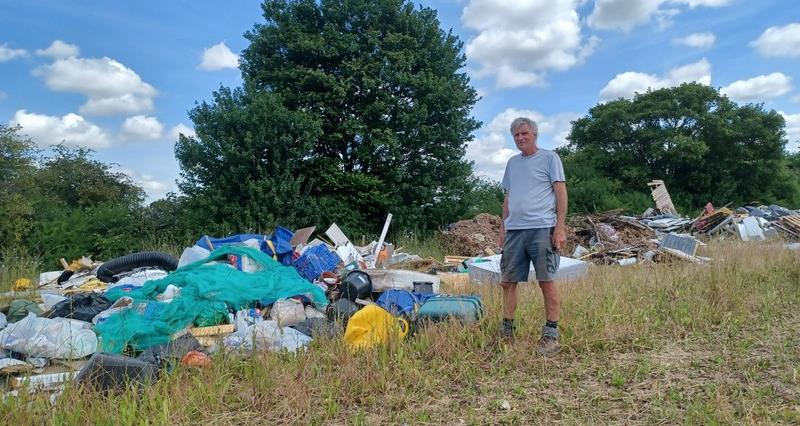
The county was in the national media last summer when more than 200 tonnes of waste were dumped on a farm in St Albans, leaving the farmer a bill of more than £40,000 in clear-up costs.
‘A national organised crime’
In the House of Lords earlier this month, Shadow Environment Minister Lord Blencathra said: “Fly-tipping is now a national organised crime on a mega scale, costing the economy over £1bn per year.”
Baroness Hayman of Ullock said: “It is important to say quite clearly that the government do not believe that the status quo is working.
“We need to make changes because it is getting out of control. We are looking at the best ways that we can make changes to improve the situation.”
“We cannot continue to have criminal gangs causing such damage to the countryside, with impunity.”
NFU member Will Dickinson
Government acknowledges change needed
Baroness Hayman, who is Parliamentary Under-Secretary of State for Defra, said the government is committed to digital waste tracking and other “technology-based opportunities” to tackle waste crime.
Speaking after the debate, NFU member and Hertfordshire arable farmer Will Dickinson said: “I am pleased to see this issue being discussed in the House of Lords and getting this spotlight.”
Will supported the farmer lumped with more than £40,000 in clear-up costs at the large-scale fly-tipping incident in Hertfordshire, having dealt with multiple fly-tipping incidents on his own neighbouring farm.
He continued: “I fully agree that fly-tipping is out of control and it is promising to hear the government acknowledge that change is needed.
“We cannot continue to have criminal gangs causing such damage to the countryside, with impunity.”
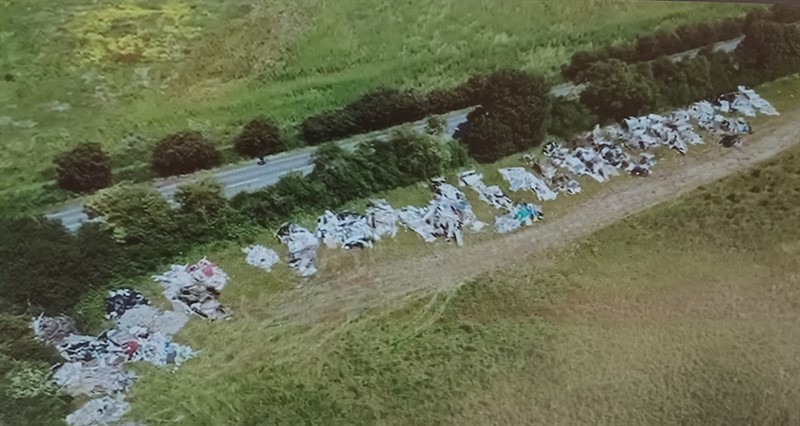
Aerial shot of the 200-tonne fly-tipping incident in Hertfordshire
NFU asks
The NFU welcomes news that the government is committed to digital waste tracking, but say it is important that such schemes are affordable and widely available.
To better reflect the impact of the crime, the NFU is calling for all authorities with responsibility for tackling fly-tipping to work closely together to secure more arrests and convictions and for penalties to be more proportionate.
The NFU is also asking for a simple reporting mechanism to be developed so that farmers and land managers only have to report a fly-tipping incident once. Currently victims may have to report incidents to multiple authorities, which is time consuming, confusing and frustrating.
Raising awareness of householders’ responsibilities for their waste is another way the government and waste sector can do more, the NFU has highlighted. Too much householder waste falls into the hands of third parties who then fly-tip that material.
Victims and environment suffer
Will Dickinson, who farms near Harpenden, said: “Individual farmers here are having to pay tens of thousands of pounds to clear rubbish dumped on their land, despite being the victims of this crime.
“Nationally fly-tipping costs the farming industry tens of millions of pounds and the wider economy more than £1bn.
“The crime also damages the environment and impacts our ability to feed the nation.
“We are working well with local authorities here, but they do not currently have the resources to deal with this.
“The NFU will continue to engage and to push for change at a national level and here in Hertfordshire.”