More than 70 people were at Junction 36 Auction Centre for the event, which was led by the NFU, the National Sheep Association and the Herdwick Sheep Breeders Association.
The event gave farmers the chance to examine current evidence regarding eagle behaviour, potential livestock and landscape impacts, insights from previous reintroduction projects in the UK and raise any views and concerns.
They heard from NFU Species Reintroduction Lead Poppy Sherbourne, explaining the issue and policy framework for such projects.
NFU Environment Adviser Abigail Teward outlined the Lifescapes project for Cumbria, and farmers and land managers from Scotland and the Isle of Wight shared first-hand experiences. Abigail reinforced the importance of understanding the real-world implications of species reintroductions for farming families and livestock welfare. She highlighted the need for robust evidence-based decision making and welcomed the open discussion during the event.
Abigail said: “I would like to thank everyone for attending as it is really important that we hear from local farmers and landowners about their concerns and real-life impacts this could have on their farms.”
A complex subject
NFU North Regional Board Chair William Maughan said he was pleased with the turnout and there was much to consider for food producers in the room.
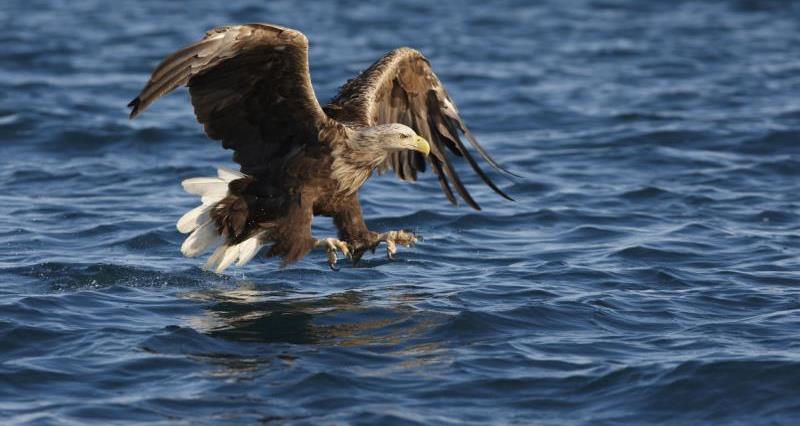
William said: “We heard first-hand from Scottish farmers about the challenges caused by white-tailed eagles on their farms and we discussed these and lessons learnt from releases across the UK. The subject is a complex one and there are many angles to consider. There were concerns raised in the room in relation to the impact on farming businesses, livestock welfare and on other local wildlife.
“It is essential there's an open and transparent consultation process that includes input from farmers and land managers to ensure all potential views are understood and considered.”
To ensure that upland farming voices were at the centre of the discussion the session was delivered with other partner and associated groups including Cumbria Commoners, the Swaledale Sheep Breeders Association, Rough Fell Sheep Breeders Association, Dalesbred Sheep Breeders Association and the North of England Mule Association.
Michael Priestley, National Sheep Association Policy Manager, said a key consideration with the White-tailed Eagle was the lengthy period it spent as a juvenile and the fact the bird only reached a breeding age at four to six years.
He said: “This means it is too early to say the Isle of Wight release has been a success one way or another and the stark lessons of Scotland must be considered carefully. Our view is that White-tailed Eagles will move into the Lake District naturally if given time and the habitat and foodstocks are sufficient. "With a strong population in Scotland of more than 200 breeding pairs, the species is established in the northern British Isles. We feel that nature knows best.
“However, if 66 birds were to be introduced, as per Lifescape’s plan, then a commitment must be made to tag and monitor the population and mitigate any predation seen in domestic animals for as long as possible. It may need to be 25 for 30 years or more, or possibly indefinitely.
“Without management plans and exit strategies the heritage of the Lake District, home to 90% of the Herdwick breed, could be at risk, as well as the viability of tenant farms, and the Rough Fell breed.”
Feedback gathered from participants will now be reviewed and used to inform ongoing discussions with conservation groups and policymakers as the NFU continues to ensure the farming community’s voice remains central to any future talks and decisions.