NFU warns EU-GB alignment risks organic egg production
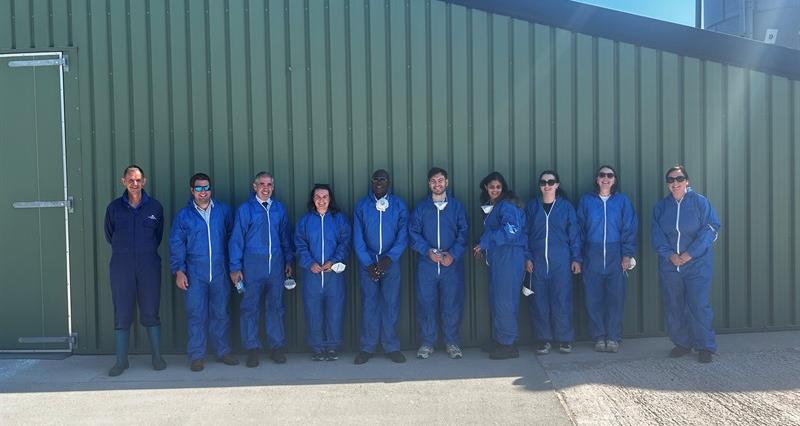
NFU host the Defra organics team on a pullet rearing farm in the Midlands.
The NFU has shown Defra officials how losing a vital pullet-rearing derogation under UK-EU SPS alignment could threaten the future of British organic egg production.
The NFU recently hosted the Defra organic team at a pullet rearing unit to provide a better understanding of how part-organic pullets are currently raised in the UK.
The visit, which included NFU Deputy President Paul Tompkins, was an important opportunity for the NFU to raise the significant concerns that our members have highlighted regarding the potential implications of UK-EU SPS alignment for the organic egg sector.
UK-EU agreement set to reshape organic regulation
The UK government has indicated that the SPS agreement which will be implemented between the UK and EU as part of the UK-EU reset will include organic regulations.
This will mean organic producers in the UK will have to transition to EU organic regulations (Regulation (EU) 2018/848).
NFU raises concerns for key derogation
Members of the NFU’s National Poultry Board have raised significant concerns about what this will mean for the future of the current derogation that allows non-organically reared pullets, up to 18 weeks of age, to be transferred onto organic laying farms.
This derogation is critical to the continued viability of organic egg production in the UK.
Pullet rearing forms a critical part of the egg production supply chain, sitting between hatcheries and laying farms, and this is why NFU Poultry Board Vice-chair Will Lea helped facilitate the visit for Defra officials to the pullet rearing farm in the Midlands.
Pullet-rearing system underpin organic egg sector
Currently, there are no fully organic commercial pullet rearing facilities operating in the UK. As a result, the sector relies on a system whereby pullets are reared indoors under strict health, welfare and biosecurity standards before being moved to organic farms at the point of lay.
While these birds are raised on the same site as non-organic pullets, they are managed separately, fed organic feed, reared to organic veterinary standards and housed in separate compartments. This well-established system, permitted under the terms of the derogation, underpins organic egg production in the UK.
During the visit, the attendees heard how the EU’s revised organic legislation no longer includes the derogation permitting the transfer of pullets from non-organic rearing farms to organic laying farms.
Instead, under EU rules, organic livestock are generally expected to be hatched and reared according to organic standards from three days old. The NFU is concerned that alignment with EU organic regulations will see the UK organic egg sector forced to follow these same rules.
Lack of UK infrastructure leaves producers exposed
The UK organic egg sector depends on the current derogation because there are no fully organic commercial pullet rearing facilities in the UK. Without the derogation, therefore, it would be impossible for producers to source organically reared pullets.
Pullet rearing operates through a highly integrated supply chain, with birds placed and reared in batches according to forecast demand and customer requirements.
Moving to fully organic pullet rearing would require significant changes to existing infrastructure and supply chain arrangements to be economically viable, creating major challenges for both rearers and organic egg producers.
Defra farm visit brings regulatory risks to life
The visit provided a valuable opportunity to demonstrate to Defra officials, working in both the organics and SPS teams, how the supply chain currently operates and explain the significant challenges to the poultry sector but also the future of UK produced organic eggs if regulatory alignment is pursued in this area.
The NFU will continue to lobby government to protect this vital derogation as SPS negotiations progress.