Farm business and support schemes autumn/winter checklist

Fergus Starkey
NFU Adviser (Support Schemes)
The NFU’s expert team gives a seasonal snapshot covering all the key support scheme developments to be aware of including; grants and funding, upcoming deadlines and updates on regulation and supporting guidance.
1. SFI scheme management
RPA support schemes run over multiple years, so it is important that agreement holders keep checking their agreement and scheme guidance to ensure they know what to do and when, particularly if they are new to the scheme.
Here are some key considerations to remember when participating in the SFI (Sustainable Farming Incentive).
Planning
While autumn 2026 crops are now largely in the ground, it is important to map out SFI activities for both the coming year and the year after. This is particularly important where maintaining the area entered into rotational actions is necessary to secure the associated payments.
Agreement holders may be able to move rotational actions onto land that was not included in the first agreement year, provided they meet the land occupation and associated action rules. This flexibility could help those managing more than one SFI or environmental scheme across their farm.
It is also important to map agreement end dates and understand when land will become available for other schemes. During an agreement year, land may be unavailable where there is incompatability under the double-funding rules.
Implementation
Environmental outcomes are central to SFI, so agreement holders must be able to demonstrate delivery on the ground and retain the required evidence.
Whether you are new to SFI or already have experience of the scheme, set up a folder for each agreement containing:
- a copy of the agreement
- farm maps showing where each SFI action is located
- the requirements for each action
It is key that employees and contractors understand what needs to be delivered, when and where, as well as the management requirements they must follow.
Regularly check the evidence requirements for each SFI action, including what evidence needs to be captured, for example what land covers looked like when they were expected to be in place.
Creating a month-by-month schedule may help you to plan for establishing and managing SFI action areas, and when to capture supporting evidence.
Change of circumstances
If you encounter problems delivering an SFI action, or an unexpected situation affects your agreement, first check the scheme guidance and the action-specific guidance linked to your agreement.
The ‘Managing your SFI agreement’ section explains what you can and cannot change after your agreement has started. The change of circumstances provisions may offer some flexibility, but you should read the relevant rules and contact the RPA as soon as an issue arises.
As the RPA increasingly uses remote monitoring to check agreement delivery, review your agreement regularly to ensure you are meeting its requirements. Raising problems promptly and keeping clear evidence of the actions you have taken will help if the RPA contacts you.
SFI agreement year end declarations
It is important to understand the different purposes of both the backward looking annual declaration and the forward looking rotational annual declaration. Despite their similar sounding names, each declaration has a distinct function. Failing to submit both declarations could stall the agreement, delay payments, or result in the agreement being ended.
Annual declaration
The annual declaration confirms to the RPA that you have successfully delivered the SFI actions for the agreement year just completed. When submitting it, you confirm that the actions delivered and land parcels used match those set out in your agreement offer.
You must submit an annual declaration at the end of each of the first, second and third agreement years. If it is submitted late, your final quarterly payment for that year will be delayed.
- Have the latest version of your agreement to hand when completing your annual declaration. Check it carefully, particularly if any rotational actions have changed since the first agreement year.
- Check the deadline for submitting your annual declaration.
- Plan ahead to ensure the deadline does not unintentionally create any blockers when dealing with scheme administration.
Rotational action declaration
After you submit your annual declaration, the RPA will ask you, where relevant, to complete a rotational action declaration. This applies only to rotational actions and confirms both their size and location for the forthcoming agreement year.
Submit the declaration promptly, as the information provided will be used to calculate the value of your agreement for the year ahead. A late submission could delay future quarterly payments.
- Confirm where each rotational action will be located in the coming agreement year.
- Check if the area of each rotational action will increase or decrease as a result of the new location (please check your agreement to see if you can increase your area of rotational actions).
- Refer to your SFI agreement to see what flexibilities are allowed for the increase or decrease in rotational actions for the coming year. Remember, for some agreements there is a rule that states at least 50% of the action area for year one must remain in subsequent years.
- Remember that any changes to the area entered will affect the total annual value of your agreement and your quarterly payments.
Managing multiple agreements
If your business has multiple environmental agreements, cross-reference them carefully to identify any potential conflicts. Different schemes operate on different calendars, for example Countryside Stewardship operates January to December, while SFI does not for most agreements have a 1 January start date.
In some cases, schemes can overlap and cause issues, particularly when dealing with rotational actions. It will be important to check any other agreements that might be in place.
Managing multiple SFI agreements can be complex. Businesses should map their rotations across all agreements to identify and avoid any overlaps or conflicts. They should also consider existing agreements before applying for a new scheme to ensure they can complement one another.
2. ELMs Capital Grants claim reminders and 2026 agreement offers
Existing agreements
If you have applied for, or have an existing capital grants agreement, make sure you understand the scheme rules for submitting a claim form for any completed works.
- As a reminder, Capital Grant agreements last for three years and claims can be submitted for completed works within this period. There are specific rules on partial claims, which will be covered in the RPA guidance and your agreement document.
- Be sure to understand the requirements when claiming, such as the specific rules over photographic evidence and additional details the RPA may need to see as evidence.
- A key point to consider is whether or not the works claimed for allow partial claims, as there are specific rules for some works that can only be claimed on completion.
- From a cashflow management perspective, the RPA aims to pay claims within two months of their submission. Bear this in mind when preparing to submit a claim, and when scheduling any further works within the three-year period.
- Visit our Capital Grants essential information page for further information on the Capital Grants offer, including any updates on exceptional circumstances that left a business unable to apply on specific parcels. The RPA has started to contact those that fall into the exceptional circumstance category about what they need to consider.
2026 agreement offers
The 2026 offer closed on 1 September, with the RPA receiving roughly 17,000 applications. The RPA has confirmed that agreement offers continue to be circulated throughout the remainder of the year.
Please respond to the RPA as soon as possible if it requires further information to ensure your application processes as promptly as possible.
3. Farming Equipment and Technology Fund 2026 agreements
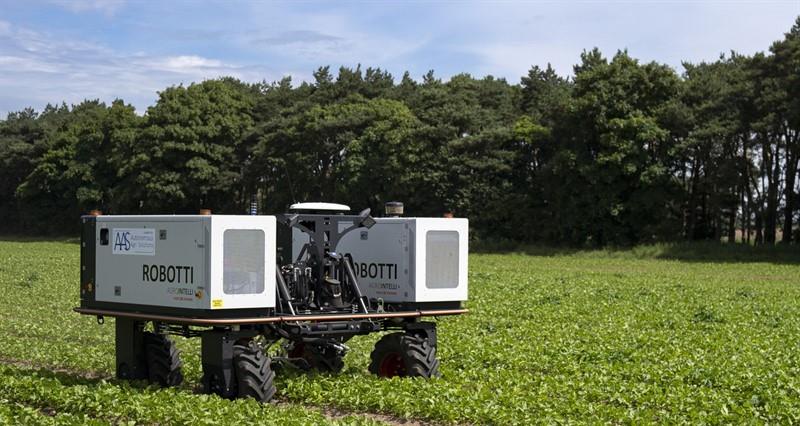
The deadline for submitting claims for the FETF (Farming Equipment and Technology Fund) 2026 is 20 January 2027, so successful applicants should focus on securing eligible items.
Remember that earlier submissions mean faster processing times. With every iteration of the FETF, there has been a spike in submissions as the claim deadline approaches, but a surge in claims also leads to longer processing times.
If cashflow is a consideration, it may be in your interest to submit a claim sooner rather than later, as the turnaround time for claims can take significantly longer. The RPA aims to make payments within 60 working days as standard, however the sooner a claim can be submitted, the more quickly it may be processed.
The RPA has seen issues with claims that have so far been made by the farmers under this scheme. Around 50% of FETF 2026 claims received via [email protected] contain sensitive information, meaning the entire claim must be deleted and resubmitted. GOV.UK guidance for claiming FETF 2026 grant payments states:
Make sure you redact any sensitive information on your bank statement or cheque book stub before sending it to us. This means covering your details with a solid black box or blurring the text, so it is unreadable. Keep your name and the last 4 digits of your bank account number visible so we can identify you.
Redacted bank statements must show the:
- bank or building society’s name and logo
- account holder name in full or account holder’s business name
- last 4 digits of your account number / IBAN number
- transaction date
- transaction type (including payee reference or cheque number)
- transaction amount
- date bank evidence generated
Please also note the guidance under section 3.2 Payment evidence which states:
Use your business account or credit card (if you can show it has been paid by your business account) to pay for items.
You cannot use the following to pay for grant-funded items:
- cash or your personal account
- lease or hire purchase
- part exchange
You must submit copies of your redacted bank, building society or credit card statement so RPA can check invoices have been paid in full by the business named in the GFA.
See our FETF26 essential information page for more information and watch our member-exclusive webinar: FETF 2026 explained.


Watch again: Applying for the Farming Equipment and Technology Fund 2026 offer
4. Farming Innovation Programme competitions
The ADOPT scheme is ongoing and aims to:
- Promote on-farm trials of innovative technology.
- Support members to adopt equipment they would otherwise be unable to.
- Allow for practical testing of novel solutions in a working farm environment.
Other competitions also include the Farming Innovation Investor partnerships.
Our Farming Innovation Programme competitions page has all the key information and deadlines.
For ADOPT, visit our essential information page to stay up to date.

5. CS and ES payment window 2026
2026 agreement holders will need to submit their agreement claims during this year's claim window.
Agreement holders will begin receiving payments from 1 December 2026 onwards. The RPA can sometimes issue a payment later depending on its capacity.
As always it is key to ensure the RPA has correct bank account details as the RPA always comes across payments for every scheme that bounce back from closed accounts. It's worth doing a quick check of the details the RPA holds.
6. Animal health and welfare pathway reminder and new opportunities for poultry keepers
The Animal Health and Welfare pathway remains open to farmers who would like to receive a funded vet visit and receive tailored advice and support from their vet until mid-2027.
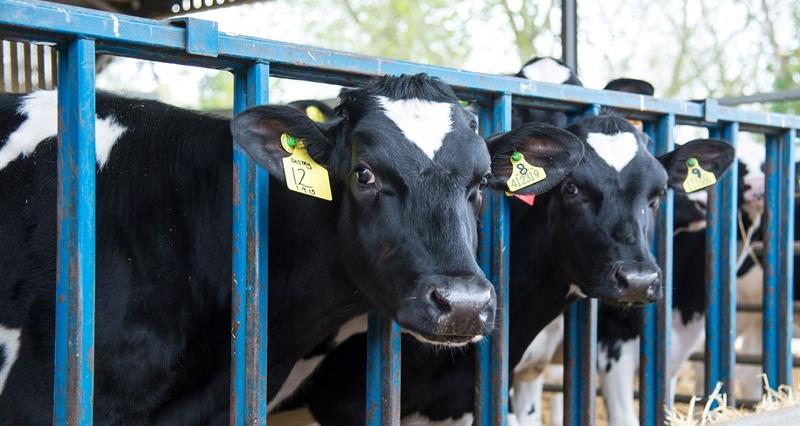
The pathway has seen a number of developments and is now available for farmers with multiple species and multiple distinct flocks/herds of the same species within the same business. The initial animal health and welfare visit has been expanded to include a follow-up visit focusing on endemic diseases for cattle, sheep or pigs.
Further information, including payment rates and eligibility criteria, can be found on our essential information page.
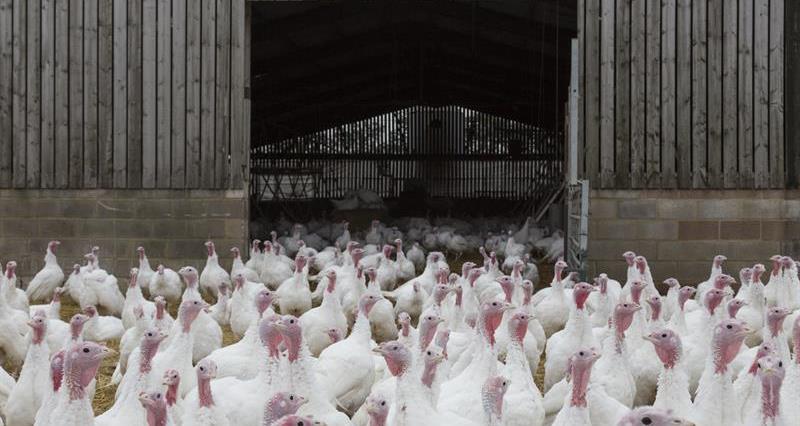
A new element of the pathway was introduced in 2026, Poultry Biosecurity Reviews, covering Poultry keepers and supporting them in the prevention of Avian Influenza – more information is available via our essential information page.
7. What to do if you're unhappy with an RPA decision
Sometimes things do not go to plan when dealing with the RPA, whether it is a mistake, system error or a misunderstanding. The impact on members and their businesses can be significant, not only from a financial standpoint, but from a mental health perspective, too.
Submitting a complaint to the RPA is divided into two distinct categories which have different processes depending on whether they relate to a decision made by the RPA, or whether it relates to poor quality customer service.
The NFU has guidance available on how to prepare an initial query, as well as further information on who to contact if you wish to raise a customer service complaint as well.
The RPA has recently updated its complaints guidance for grant funding schemes; a new form is now available to capture the details for queries across a wide range of schemes, with a new centralised inbox to address these.

8. Regional schemes and opportunities – Midlands focus
A number of opportunities for local funding offers are available across the country. Some of these may be provided by water companies as well as other organisations.
A summary of some of the opportunities in the Midlands are outlined below:
Anglian Water Innovation Grant
Anticipated to reopen early November 2026, the scheme supports innovation on-farm projects that address water quality challenges, including reducing herbicide, nitrate and phosphate losses and soil erosion in priority catchments.
Visit: Anglian Water | Supporting farmers
Severn Trent STEPS Scheme
Currently open, offering funding to farmers in eligible priority catchments to help make improvements that work for their farms and support local water quality.
Eligible measures include watercourse fencing, cover crops, herbal leys and improved application equipment, alongside a farmer Innovation option.
Applications close 11 December 2026.
Visit: Severn Trent | Environmental Protection Scheme
South Staffs Water SPRING 2 Scheme
Currently open to farmers in eligible priority catchments, offering up to £15,000 per farm per year for a combination of both field and capital options.
Eligible measures include cover crops, buffer strips, hedge planting, fencing, sprayer washdown areas and gate resurfacing to reduce agricultural pollution.
Applications close 30 November 2026.
Visit: South Staffs Water | Slug pesticide rethink – ideas for nurturing growth
Anglian Water Farmer Training Grant
Currently open, offering 50% funding up to £600 towards courses, workshops or events linked to soil health and water quality protection. This could include training in soil management, nutrient use efficiency and integrated pest management.
Applications close 18 January 2027, subject to funding availability.

9. Forestry funding, what to consider when planning
Funding is still available for forestry initiative across the country for members considering potential options for next year.
These include, but are not limited to:
England Woodland Creation offer
While the 2026 planting season is ongoing, applications are available for planting in 2027, with further information available regarding eligibility, funding and support from the Forestry Commission.
Woodland Trust funding schemes
The Woodland Trust offers a number of schemes for funding tree planting, including:
- MOREwoods – funding of up to 75% of costs is available, for where more than 500 trees are planted as woodland on at least half a hectare.
- Trees for you Farm – plant 500+ trees to improve productivity and the environment on your farm. Funding of up to 100% of costs is available for agroforestry schemes benefiting the business of productive farms.
- MOREhedges – plant 100+ metres of new hedging allowing a large tree to grow every 6 metres. Funding of up to 75% of costs is available.
Get more information including a summary of these funding options and who to contact should this be something your business is considering.

10. New RPA YouTube video sheep and goat tagging for keepers in England
The RPA has recently published a new video specifically looking at correctly tagging sheep and goats and record their movements.
The video gives an overview of the correct tags to use, the process for tagging your animals, and replacing any lost or damaged tags.