Governing parties often have a tough time during local elections, and this year was no different, with the Labour Party losing a total of 1,496 councillors. The Conservative Party list more than 500 councillors, leaving many pundits claiming that t ‘two party politics’ (eg, the traditional dominance of the Labour and Conservative Party) is well and truly over.
Reform UK gained 1,451 councillors and took control of 14 councils right across England, including in rural areas, winning county councils such as Suffolk and Norfolk and making significant gains in East and West Sussex, Hampshire and North East Lincolnshire at the expense of the Conservatives.
Reform also won at the expense of the Labour Party in areas such as Barnsley, Wakefield and Sunderland, as well as making a substantial gain in seats across the West Midlands in places like Coventry and in the South of England in Plymouth. Labour also lost in other, often more urban, areas to the Greens and Liberal Democrats.
| Political party | Seats won | Change |
| Reform UK | 1,451 | +1,451 |
| Labour Party | 1,068 | -1,496 |
| Liberal Democrats | 844 | +155 |
| Conservative Party | 801 | -563 |
| Green Party | 587 | +441 |
| Independent candidates | 212 | +34 |
The view from Wales
Meanwhile after more than a century of being the biggest party in Wales, Labour was reduced to third place, losing 20 Senedd seats to the benefit of Plaid Cymru in some places and Reform in others. Plaid won 43 seats in Senedd, up 30, but 6 seats short of a majority.
Elsewhere, Reform made major gains, winning 34 Senedd seats – up from 0 at the 2021 Senedd elections. The Conservatives suffered heavy losses, losing 6 Senedd seats, while the Green Party gained 2 seats and the Liberal Democrats held their 1 seat.
As Plaid Cymru is short of a majority, its leader in the Senedd Rhun ap Iorwerth has signalled his preference is to govern Wales as a minority government. This will mean relying on the support of other political parties when passing a Budget or legislation.
Plaid Cymru said that within its first 100 days it would establish a multi-year funding cycle for post-Brexit farm subsidies; in Wales this is called the SFS (Sustainable Farming Scheme). The deadline for applications is Friday 15 May.
Plaid has also promised that it will commission an independent review into the ‘bureaucratic burden’ on family farms, promising to remove duplicated or unnecessary paperwork. It has also promised a new food strategy, to put Welsh food at the heart of public procurement in schools and hospitals.
Find out more about NFU Cymru’s work in the run-up to the elections.
Engaging with your local council
Engagement between NFU members and their local councillors or councils is so vital.
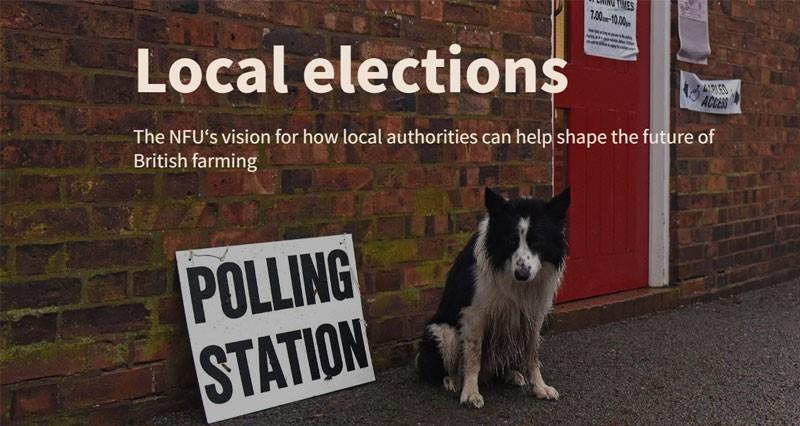
Ahead of the election, the NFU shared its vision for how local authorities can help shape the future of British farming, so NFU members know what to lobby their councillors on.
The document outlines how local authorities can support growing, profitable and sustainable farming businesses that play a vital role in ensuring our food security and powering rural economies.
Councils are the first point of engagement on a range of issues all of which affect farming businesses day-to-day, including:
- Rural crime.
- Planning.
- Local procurement.
- Public rights of way.
- Local nature recovery strategies.
- Rural broadband provision.
This is why engagement between NFU members and their local councils is so important.
This is particularly true following the May 2026 elections, when so many new councillors have been elected, who may want to learn more about how they can support the farming businesses in their local areas. If you are interested in hosting an MP or Councillor on your farm, read our page on hosting an MP on farm or contact your regional NFU office.