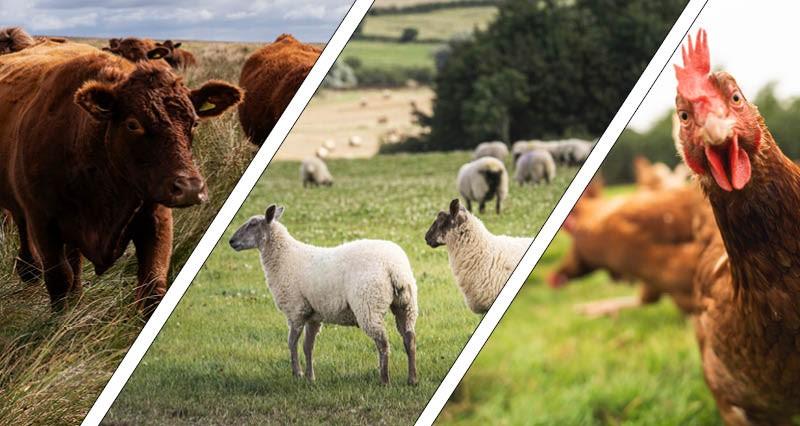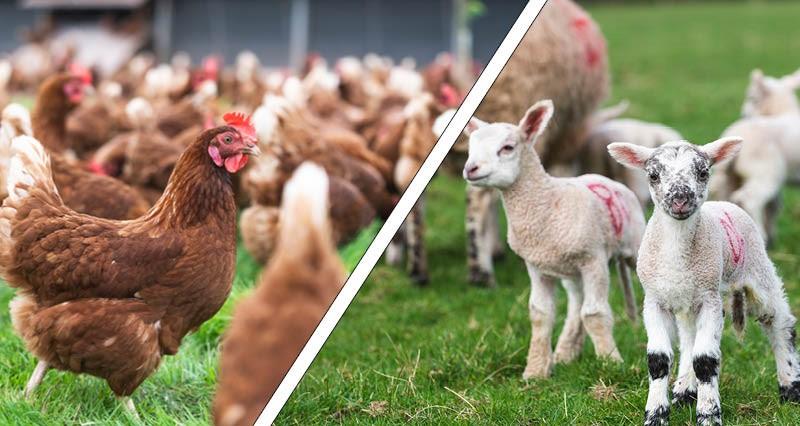
While eggs are often cited as a success story for mandatory labelling in Defra’s 2021 welfare Call for Evidence, the comparison is limited. Egg production systems are legally defined, easily recognisable, and already well understood by consumers. Adding new regulations risks creating unnecessary complexity in a category where clarity already exists.
Applying similar labelling to livestock products is far more challenging. Production systems for beef, dairy, and lamb vary widely, and animals often move through multiple environments during their lifetime. A dairy-bred calf, for example, may be born indoors, reared outdoors, and finished indoors. Capturing this level of variation on a single label is neither practical nor meaningful for consumers.
Scientific evidence also shows that production method alone is not a reliable indicator of animal welfare. Welfare outcomes depend far more on stockmanship, attention to detail, and consistent, professional care. Reducing these complex factors to a simple system label risks misleading consumers and obscuring the real drivers of welfare.
Little evidence
A tiered labelling system could further entrench the misconception that one production method is inherently superior. Given the diversity of UK farming systems, there is no single “typical” model, and any attempt to categorise them risks oversimplification. For these reasons, the NFU does not believe method of production labelling will improve transparency or support better welfare outcomes.
We support clear, accurate labelling that helps consumers identify food produced to recognised UK standards, but MMOP (mandatory method of production) labelling would be costly, difficult to implement, and remains unsupported by strong evidence.
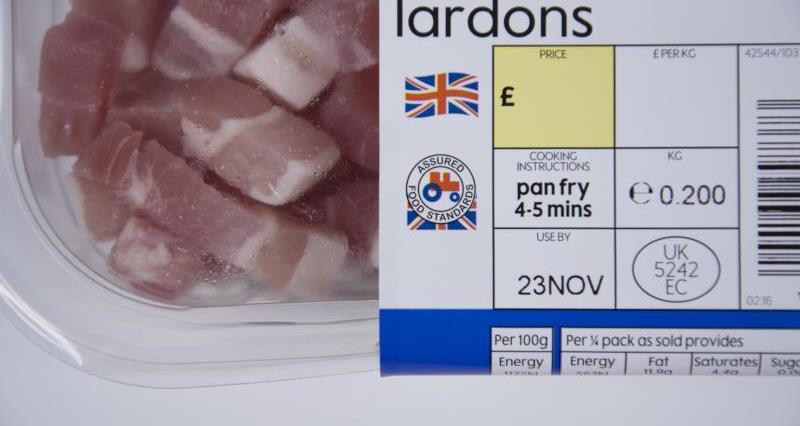
Independently audited assurance schemes remain the most trusted way to demonstrate high welfare. They evolve with scientific understanding, ensure consistent standards, and provide clear signals that align with consumer expectations without misrepresenting the production process.
Introducing new mandatory labelling would add costs for producers, particularly in sectors without defined systems, with little evidence that consumers would value or act on the information.
Market-led approach
Higher-welfare products remain a niche choice, largely due to cost. A mandatory labelling scheme would increase production costs across the board without guaranteeing improved welfare or shifting buying habits.
There is also a risk that fixed system labels could discourage continuous improvement. Welfare is best advanced through flexible, outcome-focused assurance schemes that reward good practice, not through static categories that fail to reflect management quality. Instead, we advocate a market-led approach grounded in robust assurance schemes, innovation, and credible, evidence-based claims.
NFU asks
To strengthen transparency and uphold UK farming standards, we urge the government to:
- Enshrine core environmental and animal welfare standards in law for all agri-food imports, ensuring a level playing field.
- Retain a voluntary labelling approach, using mandatory rules only where specific marketing terms are used.
- Improve country-of-origin labelling.
High animal welfare is achieved through skilled management, independent scrutiny, and continuous improvement, not through simplified system labels. Consumer confidence is best supported by trusted assurance schemes, consistent marketing language, and accessible, evidence-based information.