Farm inputs – what’s being impacted?
Key components used in food production pass through the Strait of Hormuz, including:
- 20% of the world’s oil and gas shipments.
- One fifth of global ammonia and urea supplies.
The disruption has driven up costs for a number of key farming inputs, particularly:
Red diesel
- Fuel used in off-road vehicles and machinery such as tractors.
- Made using crude oil.
Fertilisers
- Boosts the growth of arable crops, horticultural crops, and grass and forage for livestock.
- Urea is one of the nitrogen fertilisers produced and applied to crops. Urea fertiliser is not currently produced in the UK.
- Ammonia is a key feedstock for producing nitrogen fertilisers. There is currently no ammonia produced in the UK.
- Sulphur is another major plant ‘food’. The UK produces most of its own sulphur, but price rises in the Middle East are still likely to push up the cost of sulphur based fertilisers.
Natural gas
- Used to produce nitrogen fertilisers, accounting for between 60-80% of production costs.
- Heats glasshouses which produce things like tomatoes, cucumbers, peppers and ornamentals.
- Regulates temperatures in poultry sheds to keep birds comfortable.
CO2
- Widely used across the food and drink sector, particularly meat processing and packaging.
- CO2 is a by-product of fertiliser and bioethanol production.
- The UK imports much of its CO2 from European countries.
Plastics
- Agricultural plastics are used for products such as silage wrap, clamp sheeting and horticultural packaging films.
- They are highly exposed to oil supply chains, with polymer prices up around 40% and naphtha prices up almost 75%.
What data do you have?
Oil and gas prices have soared and markets continue to fluctuate in response to events.
While oil, gas and electricity prices fell with the news of a deal between the US and Iran, they remain above pre-war levels. Domestic nitrogen fertiliser prices also aren't falling as quickly as those on the global market.
Prices have been wide ranging – the below data is based on averages.
Prices before the conflict began on 27 February:
- Ammonia nitrate fertiliser – £404 per tonne
- Urea fertiliser – £455 per tonne
- Red diesel – 65 pence per litre (ppl)
- Natural gas – 76 GBp/therm
- UK electricity futures – £70/MWH
Average input price increases in May:
- Ammonia nitrate fertiliser on 15 May – £497 per tonne (25% increase)
- Urea fertiliser on 15 May – £611 per tonne (43% increase)
- Red diesel on 13 May – 95-110ppl (35-55% increase)
- Natural gas on 18 May – 126GBp/therm (56% increase)
- UK electricity futures on 18 May – £101/MWh (48% increase)
Early reports (up to 20 March) showed that members experienced immediate and significant price increases. For example, members reported:
- Fertiliser prices rising by around 27%.
- Red diesel costs increasing across a wide range, up to as much as 90%.
- Kerosene prices showing similar volatility, with one member reporting a 21% increase and another seeing a rise of 112%.
These figures are based on anecdotal evidence rather than comprehensive data.
Will food prices go up?
Several organisations have forecast increased food inflation. The Bank of England suggests it could rise between 6-7%, whereas the FDF (Food and Drink Federation) forecasts that it could reach over 9%. This may be driven by a range of factors across the supply chain, including potential increases in costs on farm as well as in processing, packing and transport.
These price rises might not be immediately noticeable on shop shelves but could emerge in the coming months as any pressures feed through the supply chain.
Here’s a brief outline of possible impacts on certain foods. For more detail on how specific sectors are impacted, see our sector analysis further down the page.
Protected crops
Includes foods like:
- Tomatoes
- Cucumbers
- Peppers
- Mushrooms
- Courgettes
- Some soft fruits
The soaring cost of natural gas hit UK glasshouse producers almost immediately, pushing up production costs significantly. The British Tomato Growers Association has already warned that we could see price rises for things like tomatoes, peppers and cucumbers in the coming weeks.
How much of this is passed on to consumers will depend on individual business contracts, the ability of farm businesses to absorb costs, and wider conditions across the supply chain.
The UK imports a lot of its fruit and vegetables, and growers across the world are likely facing a similar situation.
Potatoes
The sector is facing increased cost pressures, particularly from higher red diesel prices and rising electricity costs, and consumers may see some upward pressure on prices as production and storage costs rise.
Chicken and eggs
Although poultry producers have also been hit by the increase in the cost of energy, it is not expected that this will necessarily be reflected in consumer prices, as retailer pricing decisions and broader market conditions will play a key role. Retailers may seek to avoid increases on family favourite foods in the context of a cost-of-living crisis.
This may mean producers are likely to absorb much of these additional costs. For the same reason, parts of the supply chain may also face increased costs associated with haulage for specialist bird movements.
Cereals (wheat, barley, maize, oilseeds, oats)
Grains are traded on a global market which means the price is set globally. These are based on supply availability, not the cost of production.
At the moment, AHDB reports that global supplies of wheat and maize remain comfortable, so the price farmers get for their grain is unlikely to increase much. This means it will cost many UK arable farmers more to grow the crop than they will be paid for it.
However, retail prices may still rise, given the energy needed to turn these raw ingredients into our bread, biscuits pasta and more. This processing also means a longer supply chain, so any price implications at retail level aren’t likely to be felt immediately.
Beef and lamb
It could be next year before we see costs for beef and lamb filtering through to shop shelves.
This is because a key impact for livestock farmers is the price of fertiliser, which is needed to grow grass for the animals to graze and for silage to feed cattle over the winter – many of which won’t be sold until next year, depending on individual business circumstances.
There could also be longer-term implications as some farmers may decide to adjust on-farm costs by reducing the size of their flock or herd, for example. If there is a tighter supply over time, it could lead to price changes.
Dairy products (milk, cheese, yoghurt)
Similarly, increased costs of fuel and fertiliser may continue to place pressure on dairy farmers and they too need good grass growth to boost silage stores for the winter.
It’s unlikely inflationary impacts on dairy products would be seen immediately, but it could start to filter through later this year and into next year. This will largely depend on the length of individual business contracts, the availability of key inputs, the success of grass cuts and how much of these extra costs farm businesses can shoulder.
Other factors which could impact inflation include the energy used to make and store things like cheese, although these are currently being managed within the supply chain.
Are food shortages likely?
The British Retail Consortium has said that food availability is unlikely to be affected, with 90% of food sold coming from the UK or EU. But it does warn that longer the conflict goes on, the more it will feed into inflation.
On shortages – what about farm inputs?
The most immediate and pressing concern continues to be affordability of key inputs over availability.
Fuel and fertiliser
We're not hearing of widespread issues with red diesel or fertiliser supplies just yet, but some members are reporting extended lead times for deliveries and some haven't received their full orders.
This is a fast-moving situation and farmers and growers are worried about access to these key products over the coming months, particularly as fuel will be vital when harvest begins later in the summer.
CO2
There have been media reports of government contingency planning for CO2 shortages. We would expect any government to be making these types of preparations.
The government’s temporary restarting of the Ensus bioethanol plant in Teesside will help sure up supplies in the short term.
NFU asks – what’s needed to prevent further inflation in the supply chain?
Short term
The NFU has proposed a range of measures it believes government can use to help keep cost inflation under control, including:
- Postponing and rethinking the introduction of crippling energy standing charges in farming sectors.
- Postponing and reviewing the CBAM (Carbon Border Adjustment Mechanism) implementation to prevent it becoming a barrier to fertiliser reaching the UK market.
- Funding the increase in uptake of leguminous protein crops to realise the value of these crops as nitrogen-fixing tools within the arable rotation.
- Postponing and take a different approach to the introduction of inefficient FSA (Food Standards Agency) official control charges which will impact medium-sized abattoirs.
- Progressing fairness in the supply chain efforts across all sectors (clarity of contracts, sharing risk and reward).
- Supporting greater transparency in the fertiliser and fuel supply chains, whether through regular reporting or a requirement for suppliers to publish indicative prices, stocks, trade and consumption data while respecting competition law.
- Suspending import duties on critical inputs such as fertiliser including urea (6%) and ammonium nitrate (6%) (main supply countries are already 0%).
More information about these short term measures can be found on our Impact of the conflict in the Middle East on farming: NFU asks page.
Long-term resilience
In the long-term, it all comes down to resilience. This is about ensuring we have a stable homegrown food sector that can withstand shocks from global volatility and continue to produce food for the 70 million consumers of the UK.
Boosting the UK’s fertiliser production is a key part of reducing our exposure to global markets.
- On 19 March, Defra launched a consultation on plans to support innovation in the fertiliser sector and diversify supply – a much-needed long-term focus.
- Farmers need a fertiliser market that is reliable and affordable. The NFU will work with Defra to ensure the final framework is practical, boosts productivity and supports long term food security.
The purpose of the new Farming and Food Partnership Board is to build confidence and resilience in the farming sector, and the government must not take any decisions that could erode this further.
In its Building Farming’s Resilience’ report, the NFU outlines various practical policies and targeted investment which would help achieve this, such as:
- Stabilise farming incomes.
- Drive productivity.
- Strength farmers’ position in the supply chain.
- Manage climate extremes such as drought and flooding.
Has the government done enough so far?
Defra is engaging with industry and the NFU has met with officials in the highest level of government. This has led to some supportive measures, but not enough to halt the inflationary impact we’re seeing on agriculture and horticulture businesses and through the supply chain.
See a timeline of NFU work

Launch of immediate NFU asks on fertiliser resilience at the Cereals Event
The NFU outlines its Fertiliser Resilience Plan, setting out a series of immediate actions needed from government and the farming industry as UK farm businesses continue to face rising production costs.
NFU briefed MPs ahead of House of Commons Westminster Hall
The House of Commons Westminster Hall debate was on energy costs and the NFU Westminster team made sure that MPs were briefed with all relevant facts.

Banks told the “risks of producing food continue to rise”
The NFU brought together leading UK banks to outline the key challenges facing British agriculture, including the impact of the Middle East conflict and to highlight how banking agri-leaders can support the industry.
NFU provided MPs with questions ahead of the Defra Oral Questions
The NFU provided MPs with questions ahead of Defra Oral Questions.
Catch up with our post on NFU Political on X.
NFU brief MPs ahead of a Westminster Hall Debate
NFU briefed MPs ahead of a Westminster Hall Debate on preparedness for national emergencies.
NFU Deputy President attended the All-Party Parliamentary Groups for Food and Drink
NFU Deputy President Paul Tompkins attended the APPG for Food and Drink hosted by Mike Reader (Lab, Northampton South). Paul spoke about food security and the impact of the conflict in the Middle East upon farmers and growers.
NFU keeps MPs and Peers briefed
The NFU sent an updated briefing on the impact of the conflict in the Middle East on UK agriculture to MPs and Peers, keeping them up to date on the impacts of rising prices.
NFU President Tom Bradshaw meets Food & Agriculture Organisation
Tom Bradshaw met with directors at the FAO (Food & Agriculture Organisation) to discuss the global impact of the Middle East conflict and how governments were responding to it.
NFU attends industry fertiliser roundtable with government
NFU Deputy President Paul Tompkins attends an industry fertiliser roundtable with government ministers, including Dame Angela Eagle.
Following the meeting, Paul says: “The Middle East conflict continues to put huge pressure on our farmers and growers who are having to shoulder spiralling and unpredictable costs for fertiliser which is already shaping decisions for next year’s planting.
“The current market conditions mean we are in a very different place than the post Ukraine invasion price spikes and delays in purchasing fertiliser now could invoke a bulk purchasing moment later in the year which suppliers will struggle to meet.
“Farmers and growers need a functioning fertiliser market that is reliable, so they are able to continue to access a wide range of safe, effective and affordable products and keep delivering profitable and resilient businesses.”
NFU briefs MPs and Peers on food prices and red diesel
The NFU brief Peers on our asks ahead of a debate in the House of Lords on supermarket pricing.
We also briefed Labour MPs on red diesel.
NFU lobbying results in fuel duty rate cut amid continuing Middle East conflict
The NFU welcomes the government's announcement that the fuel duty rate on red diesel will be cut by more than a third from 15 June until the end of the year.
NFU briefs MPs
The NFU's External Affairs team briefs MPs and Peers on the latest impacts of the Middle East conflict on UK food and farming.
NFU meets with Defra
The NFU continues to have fortnightly meetings with Defra's resilience team.
NFU President Tom Bradshaw raises concerns on BBC Radio 5 live
"For too long we've taken food production for granted," NFU President Tom Bradshaw tells listeners.
NFU briefs MPs ahead of debate on support for agriculture
In addition to engaging with MPs locally, the NFU briefed MPs ahead of the debate to ensure key issues were raised with the Minister.
MPs raised concerns with Farming Minister Dame Angela Eagle about crucial farming issues such as rising costs, rural crime, planning and the SFI.
Tom meets with Farming Minister
NFU President Tom Bradshaw meets with Farming Minister Dame Angela Eagle. He explains the consequences for fertiliser production and what could happen if famers don't have fertiliser available for next year.
NFU members feature on BBC Panorama
NFU members Caroline Harriott and Jon Swain explain how rising costs are affecting them on BBC Panorama.
NFU meets Energy Minister to raise members' concerns
NFU President Tom Bradshaw meets with Martin McCluskey MP, Minister for Energy Consumers, to raise members' concerns about the cost of fuel and red diesel and looks ahead to how availability could impact the industry in the coming months. Tom also tells the government which areas they could push harder in.
NFU meets again with Defra Secretary
NFU President Tom Bradshaw meets with Defra Secretary Emma Reynolds to update her on the acute challenges facing NFU members.
Information provided by members helped build the picture that underpins the NFU’s core asks of government.
NFU outlines key asks
The NFU outlines its asks of government to prevent UK farm businesses from becoming collateral damage to global politics.
MPs raise concerns
The NFU briefed MPs ahead of an Efra Committee session on fairness in the supply chain, highlighting how the war is impacting on farming businesses.
MPs raised concerns about red diesel and fertiliser and how this will affect producers and consumers.
Josh Newbury, Labour MP for Cannock Chase, highlighted opportunities for the government to do more on red diesel.
Committee Chair Alistair Carmichael highlighted the way increased input costs and driving up food inflation would increase the risk of British producers being undermined by cheap imports.
NFU calls for carbon emissions tax to be postponed
The NFU calls for the CBAM (carbon border adjustment mechanism), which is due to come into force in January 2027, to be postponed, and for a market review to be conducting in 12 months' time.
“British farmers largely rely on fertiliser to grow and produce our food, yet we no longer make it here. Adding a CBAM to this essential input as it arrives at our ports would pile even more costs onto farms already under intense pressure,” said NFU Deputy President Paul Tompkins.
NFU raises fuel theft concerns with the NRCN
Following increased reports of fuel theft as thieves target heating oil tanks, the NFU raises these concerns with the NRCN (national rural crime network) at its latest meeting.
UK farming unions issue joint statement and key asks
In a joint statement, the four UK farming unions: the National Farmers’ Union, NFU Cymru, NFU Scotland and Ulster Farmers’ Union, highlight the significant uncertainty facing farmers as volatility in global energy markets, linked to ongoing tensions in the Middle East, continues to drive fluctuations in the cost and availability of key inputs such as red diesel and fertiliser.
AHDB begins weekly reporting of fertiliser prices
The move follows calls from the NFU and government for more current data, as previously AHDB was updating on UK fertiliser price data on a monthly basis.
NFU warns against potential reductions to agri-food tariffs
After the Chancellor tells MPs that the government is exploring targeted reductions to agri-food tariffs to help bring down food prices, the NFU warns this would have a marginal impact on inflation, but could have a devastating impact on domestic producers.
"I would strongly urge the government not to reduce agri-food tariffs on products we are producing here in the UK," says NFU President Tom Bradshaw.
CMA starts monitoring fuel prices
Defra raises concerns with the CMA (Competition and Markets Authority) following the meeting with the NFU about the prices of fertiliser and red diesel.
In response, CEO of the CMA Sarah Cardell says the regulator would continue to monitor the impact on red diesel and fertiliser as part of its wider monitoring work.
She warns that the regulator would act “without hesitation, using our full range of powers, if there is evidence that competition or consumer protection law has been broken”.
NFU raises issues with price transparency and supplies with Defra
NFU President Tom Bradshaw meets with Defra Secretary Emma Reynolds and Farming Minister Dame Angela Eagle to stress the need for greater price visibility and confidence in availability of key inputs.
He reports back that Defra is in listening mode, and that Ms Reynolds “recognised that volatility in the global energy market has a huge impact on our food supply chains here and they are watching this very closely”.
Here are some measures the NFU asked for which have been taken:
Transparency
- The Competition and Markets Authority has now committed to monitoring the sale of fuel, including red diesel, which will help provide some transparency within the market.
- AHDB is now providing greater market transparency by providing weekly reporting of global fertiliser markets.
CO2
- On 26 March, the government announced it would temporarily restart the Ensus bioethanol plant in Teesside to shore up supplies of CO2. The plant was mothballed in September 2025 following the government removing a 19% tariff on US ethanol imports.
- However, the reopening of the plant is not conditional on it using British wheat, which would have provided a good market for British farmers at a time when they really need it.
Fuel duty and red diesel
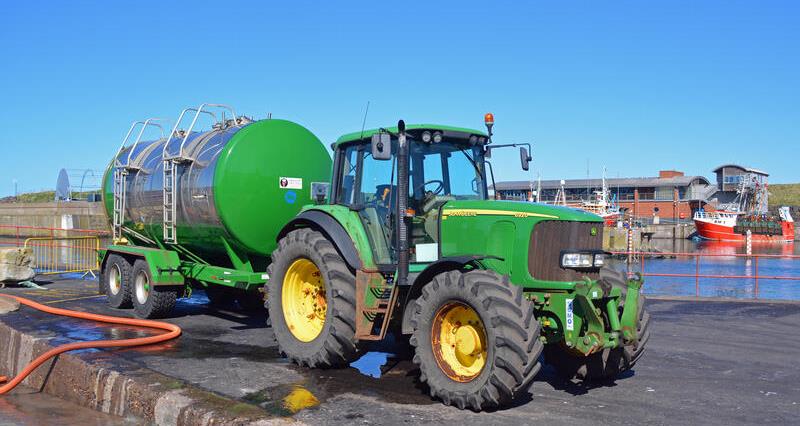
- On 20 May, the government announced it would postpone a 5p increase in fuel duty and cut red diesel duty from 10.18p to 6.48p per litre.
- Extending the freeze on fuel duty has been a key NFU ask since the beginning of the conflict and this is a welcome, well-targeted announcement from government.
Sector analysis – how are different farming sectors affected by rising costs?
Fertiliser
Arable:
- Most growers ‘hedge’ and had already bought their fertiliser for spring planting this year.
- However, it can also be applied later in the growing season, for example some farmers spray in late-April/early May to boost the protein content of milling wheat, meaning many are worried about ongoing costs.
- There are growing concerns about the impact on next season’s fertiliser prices, which are released in late May/early June.
Horticulture:
- Most prominently felt by those planting crops in the spring such as potatoes, vegetables and salads and winter veg where planting starts in Spring and continues right throughout the year to late Autumn.
- Much of the fertiliser for this year has already been bought because planting started early spring. Stocks will start to be used by around mid-summer, particularly for those businesses that plant their crops out on a weekly basis for a long period of time, such as salads (which plant out from early spring to late summer) or winter vegetables (where planting starts mid-summer to late autumn).
Livestock and dairy:
- Helps to sustain grass growth, providing plenty of nutritious food for grazing animals.
- Good grass yield is vital as farmers need to do multiple cuts over the spring and summer to build their stores of silage and hay to feed cattle in the winter months, especially as stocks are low following the dry summer last year.
- However, livestock and dairy farmers aren’t usually able to buy fertiliser in advance due to cash and storage constraints. They buy it when they need it, meaning they are exposed to volatility in global fertiliser markets.
- Availability is beginning to be an issue for some. While orders have been placed, many are still waiting for delivery.
Transparency
- This is a major issue for all sectors.
- The only public UK fertiliser price data comes from the AHDB (Agriculture and Horticulture Development Board). This was previously only updated monthly, but as of 27 March, it has provided weekly reporting.
Red diesel
Arable:
- It’s a fuel-hungry time of year with arable farmers using machinery powered by red diesel to apply fertiliser and crop protection products. It’s also critical in bringing in the harvest and arable farmers are nervous about both costs and availability if the war progresses.
Dairy:
- Unlike many sectors, fuel is a constant input for dairy farms all year round.
Poultry:
- The increasing costs of haulage is an issue as specialist bird movements are critical.
Horticulture:
- For field veg growers the situation is similar to arable farmers. Fuel is needed to apply fertilisers, plant protection products and for harvest.
Transparency:
- This is an issue for all sectors – red diesel pricing is even less transparent than for fertiliser, with no recognised index.
- Many farmers are only being given a price once the product has been delivered to the farm, meaning they’re ordering blind and limiting their ability to plan.
Energy
Horticulture:
- The rise in energy costs comes at a time when horticulture businesses are seeing large increases to their standing charges for electricity use, which saw huge hikes at the start of April.
- The current standing charge tariffs are based on peak demand, which disproportionately affects horticulture businesses as seasonal users of high-consumption equipment, as well as seasonal supplementary lighting, storage and refrigeration. This results in these users paying high standing charges all year round.
Poultry:
- Poultry is a highly automated sector which relies heavily on energy to ensure businesses can run efficiently and optimise bird welfare.
- Natural gas is needed to provide heat for young birds and regulate temperatures in poultry sheds to keep birds comfortable.