The government has said the tariff suspensions will expire on 31 December 2028. The full list of affected items has been published at: GOV.UK | List of tariff suspensions on agricultural goods.
It has also launched a ‘business engagement exercise, with a view to making further targeted cuts to agri-food tariffs, suspending tariffs on more than 100 types of products including biscuits, chocolate and dried fruit and nuts’, according to a statement from the Treasury.
In a statement to the House of Commons earlier in the year, Chancellor Rachel Reeves said she had asked officials to look at where “targeted reductions to agri-food tariffs can help bring down food prices, balancing this against the implications for domestic producers and food security”.
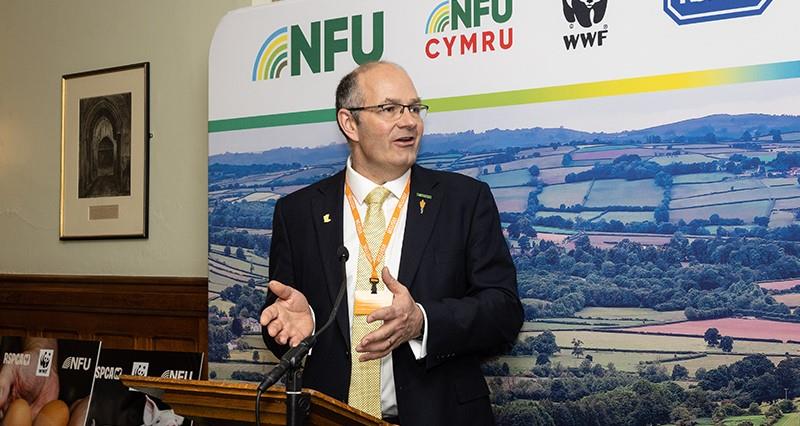
NFU President Tom Bradshaw said that, given almost 90% of the UK’s food imports are already duty free, “we are not convinced that removing more tariffs will help curb food price inflation”.
“Rather than looking at further tariff reductions, this is the time for government to back British food and farming.”
NFU President Tom Bradshaw
“As consumers are facing the prospect of higher food prices, farmers too are bearing significant cost increases due to the conflict in the Middle East,” he added.
“The government’s decision to remove tariffs on a selection of imported grocery products sends a worrying signal – that at times of crisis, its instinct is to look overseas rather than to strengthen domestic food production and reduce exposure to global shocks.
“The government’s new Farming and Food Partnership Board has been created to build resilience and confidence across the farming sector – that’s what needs our focus.”
Chasing cheap food in the short-term undermines long-term resilience
The Chancellor announced details of on the tariff reductions during a debate last week. She told the House these reductions are being targeted at products British farmers do not produce a lot of, aiming to protect the industry as best as possible. Read more about the debate.
NFU President Tom Bradshaw said: “Rather than looking at further tariff reductions, this is the time for government to back British food and farming. Alongside adopting immediate measures that would help keep on-farm cost inflation under control, we urge Ministers to back efforts to boost resilience in our food systems.
“Supporting our food producing businesses will ensure a strong domestic supply of food, with farmers and the public less vulnerable to global price shocks, meaning food price stability and long-term affordability. Chasing cheap food in the short-term threatens to undermine our long-term domestic food production and the shared ambition for a sustainable food system.
“We will examine the full list of products to fully understand its impact on our members’ businesses and will ensure farmers’ and growers’ voices are represented once the engagement exercise opens.”
Level playing field
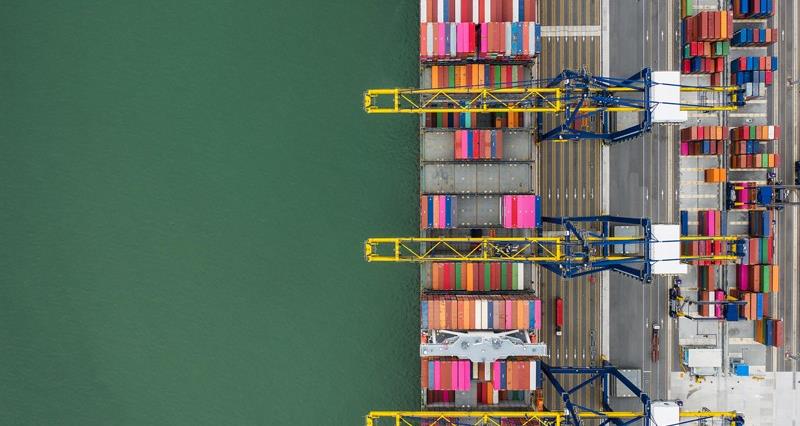
The UK imports more than £64 billion worth of agri-food and drink products. Almost 90% of that enters duty-free, with the vast majority coming from the EU and other countries where a trade deal has been negotiated, or under the special arrangements offered to developing countries.
In every trade negotiation, there is consideration for the impact of giving preferential access to our trading partners. In some of those agreements, sectors such as beef, lamb, pork, poultry, crops, sugar and dairy are excluded because they are considered ‘sensitive’.
Outside of a preferential arrangement, such as a Free Trade Agreements, the UK applies the same tariff to imports coming in, irrespective of where they have been produced. This gives domestic producers some protection from facing unfair competition from products that don’t meet the same standards that UK farmers are expected to adhere to.
Reduction risks lower standard imports
Alongside maintaining tariff protections for sensitive sectors, introducing a set of statutory core production standards would ensure our standards are upheld by both domestically produced and imported food sold in the UK – this has been a longstanding ask of the NFU and was the focus of our joint MP event with WWF and the RSPCA earlier in the year.
In the absence of any core standards, tariffs help to level that playing field by preventing the lowest-priced competitors around the world from flooding the UK market with product that doesn’t meet UK production standards.
Minimal impact on consumer food prices
The NFU has also questioned the extent to which a reduction on the level of applied tariffs would actually translate into reduced pressure on food price inflation. In a report from March 2018, The Institute for Fiscal Studies estimated that “under some quite optimistic assumptions about the price changes that are likely to follow tariff reductions, we estimate that complete abolition of all tariffs would reduce prices faced by households by about 0.7–1.2%.”
Along with uncertainty about the degree of translation between tariffs and reduced food prices, this also highlights that currency fluctuations are just as, if not more, likely to have an impact on prices across the economy.
The NFU is urging the government not to reduce agri-tariffs on goods produced here to the UK’s high standards. As demonstrated above, it will have a marginal impact on inflation and could have a devastating impact on domestic producers.