The combinable crops sector is in the middle of one of its most challenging times in living memory.
Input costs continue to rise, while grain prices refuse to follow. Last month Defra released its forecasts for farm business income, anticipating a drop of two thirds to a measly £17,000.
It paints a stark picture for what the near future holds.
“The risk is that prices won’t come down anytime soon, but it is likely that I will be looking at making a loss before I’ve even put the crop in the ground.”
NFU Combinable Crops Board Chair Jamie Burrows
Price rises come at busiest time
The conflict in the Middle East has significantly worsened the situation for farmers, with costs of fuel and fertiliser rising exponentially in recent weeks. It makes it increasingly hard to justify planting next year’s crop and taking on the risk of committing all of the up front costs to bring a field of wheat or barley through to harvest.
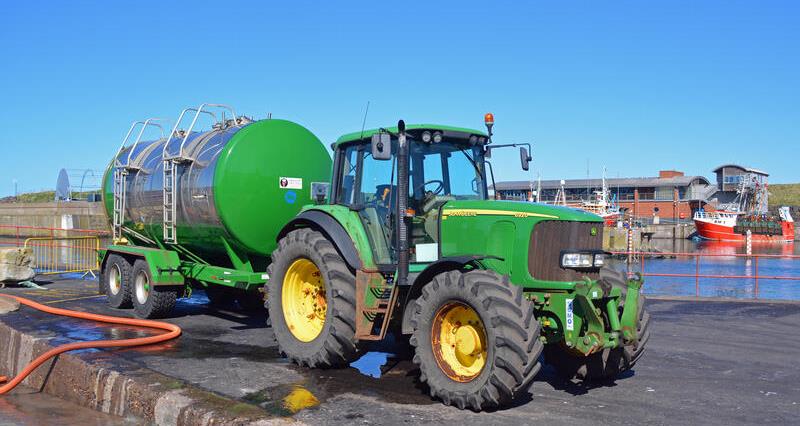
On my own farm, the impacts are already being felt. The conflict sent fuel prices rocketing up just as my time sat in a tractor reached one of its peaks of the season. Securing fuel to enable me to continue to plant spring crops, apply nitrogen to cereals and spray pesticides has proved to be a big frustration.
In an act of desperation, I have even resorted to taking the tractor to a roadside fuel station.
Strategy needed from government
To mitigate this risk as much as I can, I have been planning fuel deliveries as far ahead as possible. It seems clear that, even when the Iran conflict ends, it will be a long time afterwards until prices and availability return to more normal levels.
As such, I’m putting measures in place to anticipate a harvest where I cannot get the fuel deliveries on farm as quickly as I usually would. It’s another burden in already difficult times, but it feels necessary.
Before we get to harvest, I’m also thinking about new season fertiliser. I’m worried about how high the first release price is going to be, but also the pressure I’m going to be put under to commit to buying early to avoid price increases in the future.
Again, the risk is that prices won’t come down anytime soon, but it is likely that I will be looking at making a loss before I’ve even put the crop in the ground if I commit to prices we are seeing today.
It is clear that we need a comprehensive strategy for the combinable crops sector from the government to support UK farmers to produce domestic food in the coming years.