In my experience, if you mention neurodiversity among the farming community you’re likely to be stared at blankly, while if you utter ADHD, you’ll be met with “ah yes I’ve heard of that – naughty child syndrome”.
I hope in sharing my story on being neurodivergent, the farming community might gain a better understanding of what it’s like to have a mental disability and that we’re not ‘victims’ or attention seekers – we just want you to understand and accept that we’re different.
Diagnosis
“I’m passionate about raising awareness of the prevalence of neurodivergence and how it shows up in everyday life.”
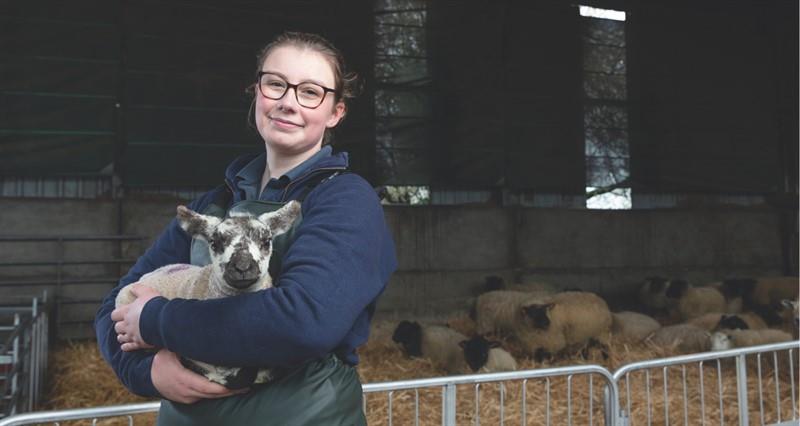
SYFAP alumni Molly Mead
Since primary school, I’ve never fitted in. I struggled making and keeping friends. At 19, I had an initial assessment for autism and was told it was highly likely I was autistic.
This revelation meant that after years of doctors attributing my mental health struggles to hormones and adolescence, and being prescribed various antidepressants, I finally had an answer to why I was different.
What had previously been diagnosed as panic attacks were meltdowns. My hypersensitivity and reactions were due to poor emotional regulation because I was autistic. My obsessive hyperfocus on subjects of interest was because I was autistic. It was all starting to add up.
Following my consultation, I became hyper focused on autism itself, gaining a much wider knowledge of what it meant to be autistic and the different neurotypes.
As my knowledge expanded, I began to suspect I might also have ADHD – something that was confirmed at age 22.
‘A massive shift in the conversation’
I’m passionate about raising awareness of the prevalence of neurodivergence and how it shows up in everyday life.
It doesn’t necessarily mean we can’t do things, but it might be harder for us to achieve tasks that others find easy.
It’s essential we are open about our needs so we can function effectively, and it’s important employers are open to discussing these needs and what accommodations can be put in place.
When I interviewed for my current job, I didn’t disclose my mental disabilities because I was worried I wouldn’t be hired.
This is why we need to de-stigmatise neurodivergence; so we don’t feel scared to talk about it.
In a time where the farming industry desperately needs more workers, we must ensure it’s an accommodating and safe environment for people to become part of.
There has been a massive shift in the conversation around mental health within the rural community over the past 10 years or so, and I hope my drive to raise awareness of neurodiversity will only expand this.
Adapting the way you work
I’m constantly facing challenges because of being autistic and ADHD – I’m fortunate that I’ve been able to hold a full-time job.
This isn’t something everyone is able to achieve.
Some people might challenge us and say we’re using our neurotype as an excuse, but I don’t think that’s a fair comment. I’d like to think I’m a reliable and hard-working person, but equally I know I have limits so I have to adapt the way I work (for example, wear headphones or take more regular breaks) to ensure I’m working most efficiently.
Because of my neurodivergence I have suffered with poor mental health massively for all my life, with depression, anxiety, self harm, and suicidal ideation being huge problems. These are not things that are easy for me to talk about, but it’s important I do so that others can relate and know that they are not alone.
There are also the daily challenges of poor working memory, making multiple attempts to leave the house in the morning (because I’ve forgotten various things), and the chronic exhaustion of trying to keep up and lead a ‘normal’ life.
Routine and variety are essential
I currently work as a farm vet technician and bTB tester. This mostly involves TB testing cattle, but I also work with sheep, goats and alpacas, as well as disbudding calves and conducting faecal egg counts for clients.
My neurodivergent traits make this job ideal for me as there are set working hours which give me the comfort of having a routine. Equally, as I get bored easily and need variety, visiting farms and meeting different people helps to keep things interesting.
I also get to help vets, where time allows, which means I get to see some interesting cases that I wouldn’t usually have the opportunity to. It’s nice to work in the agricultural sector without being a full-time farmer as my struggles with fatigue mean it’s essential I make time to switch off and recharge.
It can, however, be challenging because being on farm and TB testing is usually a very loud environment which can sometimes be difficult to work in, and farmers are often understandably very stressed while their test is being done.
Talking to new people so frequently can also be challenging but at the same time, is also one of the best things about working in the sector – along with learning how people farm differently.
I’ve had to learn to switch off from work when I’m not there, I really love having a nice hot bath to relax and recharge after a day at work.