NFU puts issues to animal health minister during bTB visit
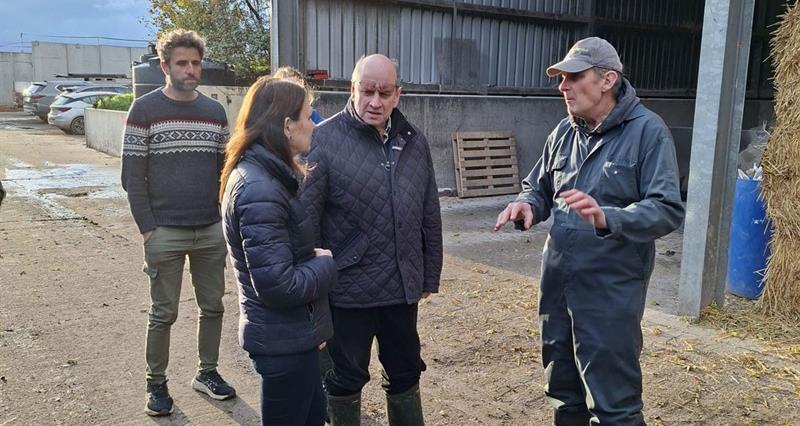
The future of bTB policy, local delivery, data and culling were all on the agenda when Baroness Hayman joined the NFU on farm for an open discussion on tackling bTB.
The NFU hosted Baroness Hayman, the minister responsible for animal health, on an NFU member's farm, to discuss the government’s refreshed approach to bTB (bovine tuberculosis).
In a meeting chaired by NFU Dairy Board Chair Ian Harvey and joined by farmers, vets and industry representatives, the Minister acknowledged the severe impact of bTB on farming families and businesses.
She confirmed that the government would accept the recommendations of the recent bTB review in full and reiterated its ambition to achieve TB freedom by 2038.
“There is strong support for a practical, evidence-based approach to tackling bTB, but farmers need confidence that local delivery groups will have the authority, resources and flexibility to make a real difference on the ground.”
NFU Dairy Board Chair Ian Harvey
Local delivery
Discussions highlighted the potential for Local Ownership Groups to lead activity tailored to local disease patterns.
Farmers stressed that these groups will need a clear purpose and scope, appropriate funding, and sufficient authority to deliver meaningful action.
Participants also emphasised that farmers must be confident their involvement can lead to practical and measurable results.
Data and communications
Better access to timely and meaningful data was a recurring theme.
Farmers and vets supported access to more detailed historic testing information, including skin test measurements, to inform herd management decisions.
Attendees also called for clearer and more timely communication from APHA, particularly about TB testing, results and disease risks.
Improved knowledge transfer was considered especially important in the Low Risk Area.
Badger culling
Participants expressed concern that the refreshed strategy does not sufficiently acknowledge the contribution of badger culling or retain options for its future use.
Farmers stressed that the strategy must remain flexible enough to respond to changing local disease patterns and emerging evidence, particularly where progress in reducing bTB may be slowing.
Cattle vaccination
The meeting concluded with a discussion about the practical challenges of cattle vaccination, including:
- Cost and frequency.
- Veterinary capacity and on-farm delivery.
- Lifetime identification and traceability of vaccinated cattle.
- Integration with existing testing, movement and trading systems.
Baroness Hayman did not envisage vaccination becoming mandatory. Although she described the 2030 timeframe as ambitious, she considered it achievable with effective governance, farmer education and industry involvement.
Looking ahead
Reflecting on the meeting, NFU Dairy Board Chair Ian Harvey said: “The discussion on farm with Baroness Hayman was a valuable opportunity for our members, vets and industry representatives to share their experiences directly with the Minister. There is strong support for a practical, evidence-based approach to tackling bTB, but farmers need confidence that local delivery groups will have the authority, resources and flexibility to make a real difference on the ground.”
Looking ahead, the NFU will continue to work constructively with the minister, Defra, APHA and alongside the bTB Strategy Steering Group to ensure that future policy remains practical, achievable and focused on delivering measurable progress in reducing bovine TB.
As an active member of the Cattle Vaccination Core Working Group, we will continue to represent farmers' interests as vaccination plans develop, while also supporting the Local Ownership Groups as they develop, enabling collaboration and farmer-led solutions to drive progress where it matters most: on the ground.