Bluetongue – NFU highlights 4 key asks in Efra Committee evidence session
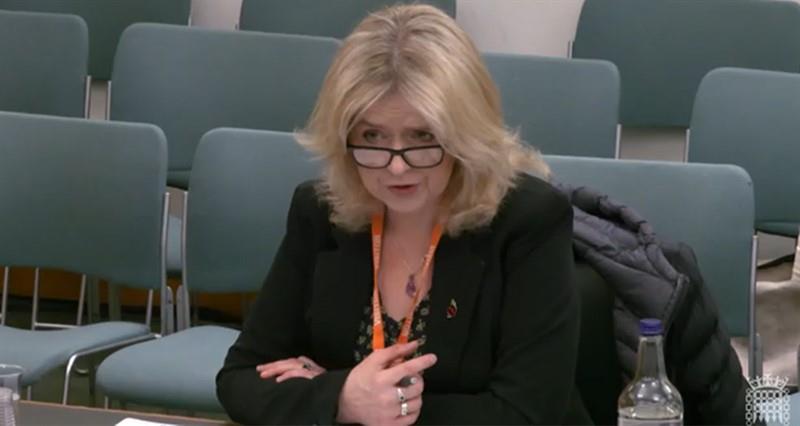
Photograph: Parliamentlive.tv
Find out what NFU Chief Adviser (Animal Health and Welfare) Cat McLaughlin told MPs about the impact of bluetongue on livestock businesses, why vaccination remains the best long-term defence and what lessons need to be learned from this year's outbreak.
NFU Chief Adviser (Animal Health and Welfare) Cat McLaughlin appeared before the Efra (Environment, Food and Rural Affairs Committee) to discuss the impact of this year’s bluetongue outbreak on livestock businesses.
She reiterated the NFU message that vaccination was the most effective long-term defence against bluetongue and other viruses, while emphasising the need for industry and government to work together in communicating the practical, financial and emotional consequences of virus outbreaks to livestock businesses.
The committee, made up of MPs across the political spectrum, heard evidence from two panels, consisting of veterinary representatives and industry and government officials.
The session sought to learn lessons after criticism of poor vaccine and testing availability.
What did the NFU ask for?
Greater recognition of the long-term impacts on livestock businesses
Early into the session, Cat highlighted that the long-term impacts of the recent bluetongue outbreak had not yet been fully realised. She pointed to the immediate impact of livestock deaths, alongside veterinary costs and unforeseen additional labour requirements.
However, she also illustrated the huge disruption to livestock farmers’ breeding programmes and losses to productivity.
Reflecting on the emotional burden placed on both vets and farmers who are dealing with significant numbers of fallen stock, Cat told the committee that “the emotional turmoil that this has caused on farms has just been really stark", highlighting the strain placed on livestock businesses already operating in challenging circumstances.
The NFU is calling on government to help with disposal costs, alleviating some of the financial burden from fallen stock.
Continued support for vaccination and effective communications
Throughout the session, Cat reinforced the importance of vaccination in protecting livestock businesses from future disease outbreaks.
Responding to questions from Sarah Bool MP (Conservative, South Northamptonshire), Cat said there had been improvements in communication but acknowledged it was impossible for “one truth” to completely dominate in the public domain.
She highlighted the value of heat maps in helping farmers visualise disease risk, who would always seek to quantify the risks of bluetongue.
To access the APHA bluetongue heatmap, visit: APHA| Bluetongue Cases and Zones
Vaccine supply and future preparedness
Witnesses also examined the lessons that should be learned from this year's outbreak.
Henry Tufnell MP (Lab, Mid and South Pembrokeshire) questioned what the outbreak had revealed about the relationship between industry and vaccine manufacturers and how sufficient vaccine supplies could be secured in future.
Officials acknowledged that demand had outstripped vaccine availability at points during the outbreak, although improved communication between industry and manufacturers helped secure nearly five million additional vaccine doses from mainland Europe.
The committee also heard how climate change is increasing the risk of vector-borne diseases spreading into new areas, highlighting the need for the UK to be prepared for future disease threats.
Building a more resilient disease-response system
The NFU used the session to emphasise the importance of learning lessons from this year's outbreak and ensuring livestock businesses are better protected in the future.
The NFU will continue to call for improved disease preparedness, clearer communication on vaccination, sufficient vaccine availability and better support for affected farmers.
Alongside this, we believe government and industry must work together to build a more resilient disease-response system capable of responding quickly and effectively to future outbreaks.
The consensus across the session was clear: vaccination remains the best long-term defence against bluetongue and other emerging viruses.
You can watch the full session on Parliamentlive.tv