The NFU has raised significant concern for unintended consequences that may arise if government proposals to outright ban enriched colony cages were to go ahead, in its response to Defra's consultation.
The government's proposals for a UK-wide ban would include enriched colony cages and any other caged systems, including combi/convertible systems.
Speaking after the NFU submitted its response, NFU National Poultry Board Chair Will Raw said:
"Our message is clear. The NFU opposes a ban on enriched colony cages.
“All current production systems in operation in the UK can deliver good welfare when properly managed and enriched colony cages provide an affordable and nutritious source of protein to a growing population meaning eggs produced in these systems positively contribute to wider food security and environmental goals.
“These are areas which sadly do not appear to have been acknowledged sufficiently by the government in their proposals.
“Policy change should be designed to advantage domestic production, ensure import equivalence, and avoid offshoring welfare concerns and we urge the government to reconsider their proposals otherwise the future for egg producers in the UK looks very uncertain.”
NFU National Poultry Board Chair Will Raw
Core standards
"A ban on Enriched Colony Cages for laying hens in the UK would simply increase the import of eggs, some of which are produced to standards already illegal here, such as eggs produced by hens kept in old-style battery cages which remain in use in some countries outside the UK.
“Furthermore, the government has applied minimal impact analysis on the outcome of their proposals and member feedback suggests that conversion and build costs are significantly higher than the estimates included in the consultation which means if not updated, decisions are being based on outdated and potentially misleading information.
Unfit planning system
"There are also significant barriers that need to be unlocked by the government in tandem with the animal welfare strategy, such as the planning system which is currently prohibitive to sector growth - growth that is imperative to meeting increasing consumer demand for British eggs.
"In our response, the NFU stresses that government policy change should be designed to advantage domestic production, ensure import equivalence, and avoid offshoring welfare concerns and we urge the government to reconsider their proposals otherwise the future for egg producers in the UK looks very uncertain."
NFU position - key points
The NFU opposes a ban on enriched colony cages and is clear that all current production systems can deliver good welfare when properly managed.
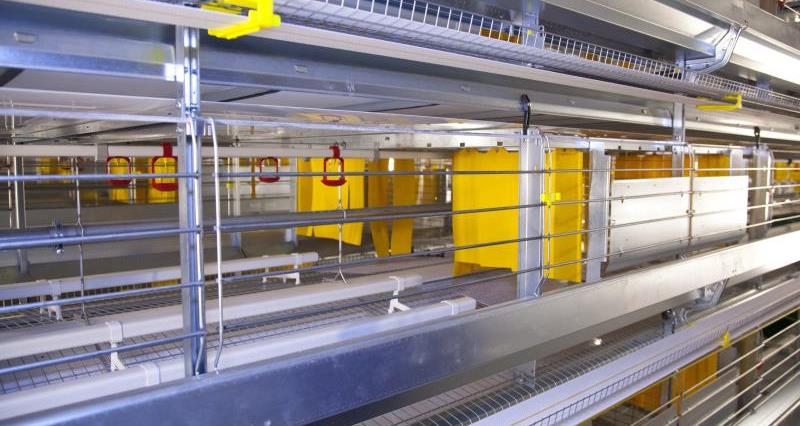
Enriched colony cages already provide enhanced space, nest boxes, perches and scratch areas, enabling key natural behaviours.
A ban would most likely lead to an increased reliance on imported eggs, produced to lower welfare and food safety standards, undermining UK producers and offshoring welfare concerns.
Reform would reduce consumer choice, especially for value-tier eggs relied on by price sensitive households and the foodservice sector.
NFU members also emphasised the need to avoid pitting production systems against each other; welfare outcomes depend more on management than system type.
Unworkable transition period
In its consultation, the government proposed a five-year transition period for existing colony cage egg producers to either change to a cage-free system or cease production by 1 January 2032. The NFU believes this transition period is unworkable – notwithstanding investment costs, planning permission, permitting, construction, and equipment lead times routinely exceed this.
Furthermore, evidence from NFU members collected during member engagement sessions, indicates a realistic transition period is at least 10 years, aligning with the EU’s transition timetable, and so avoiding competitive market disruption.
Planning constraints and cost
Conversion and build costs are significantly higher than government estimates:
- New free range units: £60–£67 per bird
- Converting colony units: £35–£50 per bird
Many producers cannot transition to free range due to lack of land, planning constraints, or unsuitable sites; some may exit the sector entirely as a result of the proposals.
Risk to standards and growth
In the response, the NFU stresses that policy change should be designed to advantage domestic production, ensure import equivalence, and avoid offshoring welfare concerns.
If the government pursues these proposals, they are putting hard working and successful enterprises out of business. This goes against the government’s own growth agenda which furthermore will have significant and detrimental impacts on national food security.