The UK Government’s intention to dynamically align with EU rules to facilitate frictionless agri-food trade, potentially from as early as summer 2027, is ambitious.
It is vital that expediency does not come at the cost of a suitable agreement, which is fit for purpose and works for British growers.
In order for the UK-EU reset to deliver for the benefit of beet growers it is paramount that risks are mitigated, and potential opportunities realised.
If we get this wrong the costs to growers and industry could be huge. It’s not just about the potential yield losses and financial implications, but what this means for our continued efforts to deliver ‘more with less’.
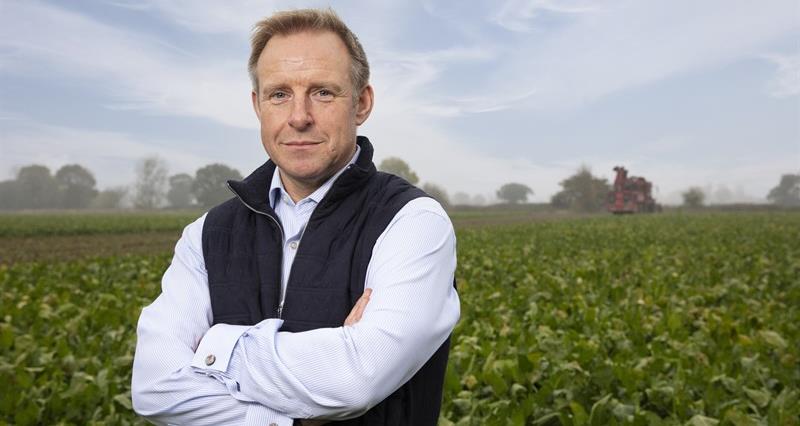
“It is imperative that the opportunities created by the Precision Breeding Act aren’t sacrificed through dynamic alignment.”
NFU Sugar Board Chair Kit Papworth
Mitigating plant health risks
Dynamic alignment will ultimately mean following the EU’s list of approved active substances. This could lead to loss of authorisation for three new active substances, approved post-Brexit, and 17 active substances, authorised at the point of Brexit, that have since lost their authorisation in the EU.
Foremost among these from a beet growers’ perspective is triflusulfuron-methyl, the active substance in Debut- a pillar of herbicide regimes across the majority of the homegrown crop.
With phenmedipham (the active substance in Betanal) also under increasing scrutiny from EFSA (European Food Safety Authority), we face the incredibly concerning prospect of best practice weed control in sugar beet as we know it being pulled from under us.
While dynamic alignment may mean a number of active substances which have received authorisation in the EU post-Brexit becoming available to farmers and growers in GB, there isn’t much here to inspire optimism from a plant health perspective in sugar beet.
However, the next generation of EU sugar beet herbicides are showing some efficacy, and if we are to lose access to triflusulfuron-methyl and potentially phenmedipham, access to these must be switched on in GB as a matter of urgency.
To effectively mitigate the plant health risks posed by dynamic alignment it is vital that we have:
- Suitable transition periods, ideally allowing British farmers to retain access to GB-approved plant protection products until the EU rules are next reviewed, rather than pushing them towards the cliff-edge of an arbitrary deadline.
- Mutual recognition of EU approvals of active substances and products to speed up the rate at which products authorised in the EU but not currently in GB can be brought to market and utilised on-farm. This will require the manufacturers and our regulator to adopt a pragmatic approach and support their introduction to the UK market.
- A decision-shaping role for the UK in EU plant health considerations moving forward to account for the specific challenges associated with farming and growing here in GB.
Safeguarding opportunities for innovation
We remain highly optimistic regarding the opportunities presented by new breeding technologies such as gene editing and have repeatedly commended government on its implementation of first the Precision Breeding Act and subsequently the secondary legislation required to turn these opportunities into realities.
British Sugar, in consortium with Tropic Biosciences and the John Innes Centre, has recently received more than £1m of additional Innovate UK funding to expand its work looking into developing Virus Yellows tolerance in sugar beet through gene editing.
This project is bringing together expertise in the east of England towards synthesising technological solutions tailored to the challenges of growing sugar beet here in the UK.
It is imperative that the opportunities created by the Precision Breeding Act aren’t sacrificed through dynamic alignment. Instead, they should be protected as the EU itself moves towards legislating for the implementation of new breeding technologies, in the hope that we can further accelerate the development of much-needed genetic solutions to some of the key pest, disease, and climate related challenges facing the sugar beet crop.