Board chair Jamie Burrows had said the NFU had called for a “long overdue change of culture” and a “marketplace that operates with integrity and transparency, where data is shared openly and fairness is promoted”.
Among the lead asks, the NFU is pressing for change to the ubiquitous AIC No. 1 Contract.
It says this needs to be adapted to reflect a fairer balance of power, with greater clarity over specific terms and definitions. Importantly, this contract should not be varied by individual merchants, the NFU says, unless expressly agreed by both parties at each point of sale.

No.1 Contract tops concerns
Bad practice is not consistent – and the breakout heard that, as with many of the measures proposed in its response, the NFU is keen not to lose trading flexibility. However, South Crops Board Chair Matt Culley told how in years of evidence from members, not least through the NFU’s rejections hub, “most of the concerns were about how things were working under the No. 1 Contract”.
A waggish member would later ask if “number one was a mark out of ten”.
Senior Policy Specialist Luke Cox said: “As the contract under which almost all grain is traded on farm, it’s integral to transparency and trust. If it is deemed fair and fixed across the supply chain and can’t be varied it provides confidence, but that isn’t currently the case.”
Sampling process
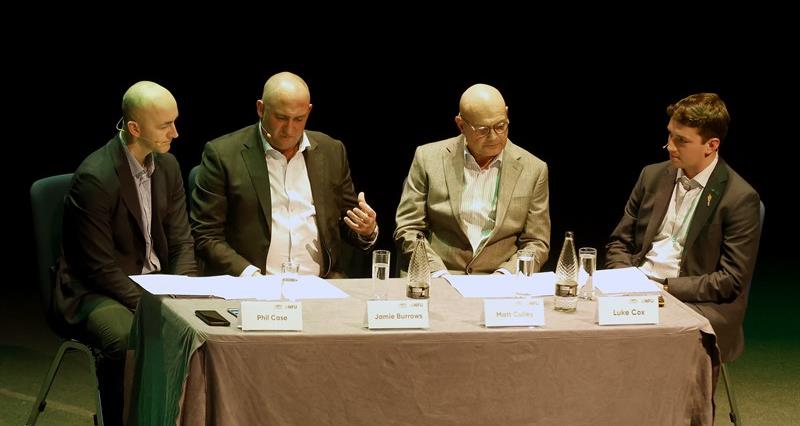
The session, expertly chaired by Farmers Weekly chief reporter Philip Case, heard a string of problems with add-ons and variations.
A tendency for first purchasers operating under the AIC contract to tie growers to end-receiver terms that they may never have agreed to, often with different claims structures – and even different sampling regimes – further muddied the waters.
Some merchants were effectively “writing themselves out of the ISO sampling standards”, it was suggested, compounding mistrust.
Unsurprisingly, then, the NFU is also calling for a sampling process that gives farmers far more agency.
“As the contract under which almost all grain is traded on farm, it’s integral to transparency and trust.”
NFU Combinable Crops Senior Policy Adviser Luke Cox
With most farmers loading grain onto lorries arranged by the purchaser, Jamie said that they need to be able to take a representative sample, either before or at the point of loading. This sample should be used as the basis of payment, or at the very least for independent testing in the case of a dispute.
A quick-fire show of hands later proved the point, with perhaps two-thirds of those present having had two loads of the same grain, loaded in quick succession, return different specifications.
“At the point the farmer loads the lorry, they have lost sight of the basis on which they are paid,” Luke noted. Matt said the current process meant “farmers carry all the risk, yet the first purchaser can take all the reward”.
Powerful case for change
To further boost transparency, the NFU consultation response says there should be a contractual requirement for immediate feedback at intake, not least to allow action if there is a specification issue, before further lorries are loaded and costs incurred. In the event of a potential deduction, the submission says farmers need more control over how their grain is handled, with clear terms and transparent dispute processes that are clearly set out before grain leaves the farm.
“It should be a right to know immediately at what spec grain is tipped,” Matt said. “Quite often it’s a bit of paper that arrives three weeks later – in this day and age that’s not acceptable.”
Elsewhere, delegates heard the NFU submission had raised concerns around the notice provided for loading, and the compensation paid when grain is not collected within the agreed month. And too often, it said, ‘uncontrollables’ like vehicle cleanliness became the farmer’s problem.
The consultation had been a “once-in-a-generation opportunity”, Jamie added, with Philip noting how NFU promotional work had helped to secure about 914 responses from individual member businesses, alongside its own submission.
Defra has heard a powerful case for change. It is expected to offer its initial findings in April and, should it legislate, the onus will return to the industry to determine how a new framework should be met.
Meet the speakers:

Jamie Burrows
NFU Combinable Crops Board Chair
He was first elected as chair of the NFU Combinable Crops Board in 2024.
The partnership grows milling and feed wheat, milling oats, feed and malting barley, peas, beans and oilseed rape.
Having been involved in the NFU locally since returning home from Harper Adams in 2005 Jamie gradually became increasingly involved at a regional level and now, as well as being East Regional Chair, is the National Crops Board Chair.
He is also an ex-Cereals Development Programme participant, and keen to get others involved in these types of initiatives.
Jamie is passionate about achieving the best for cereal and oilseed producers, and proud to represent the cereals interests of combinable crops members.

Luke Cox
NFU combinable crops senior policy adviser

Matt Culley
NFU Combinable Crops Board member | Regional Chair (South)
Wheat is grown for the feed market, with a small area grown for seed. Winter barley is feed and spring barley is for malting. The farming partnership also runs a grain storage business with drying facilities and a soft fruit enterprise.
Matt served as NFU Combinable Crops Board chair from 2020-2024.

Philip Case
Chief reporter, Farmers Weekly
Raised in West Lancashire, Philip developed an early connection to farming by working on local farms as a teenager. His reporting covers agricultural policy, environmental schemes, food production, trade and rural affairs, with a strong focus on explaining complex issues clearly and accessibly.
He plays a key role in agenda-setting, breaking news and in-depth analysis at Farmers Weekly, regularly covering major political and industry events. Widely read by farmers, policymakers and industry leaders, Philip is known for authoritative reporting grounded in a practical understanding of farm businesses.
Outside agricultural journalism, Philip is an active sportsman, an FA-qualified referee, and a keen allotment holder who enjoys growing his own food.