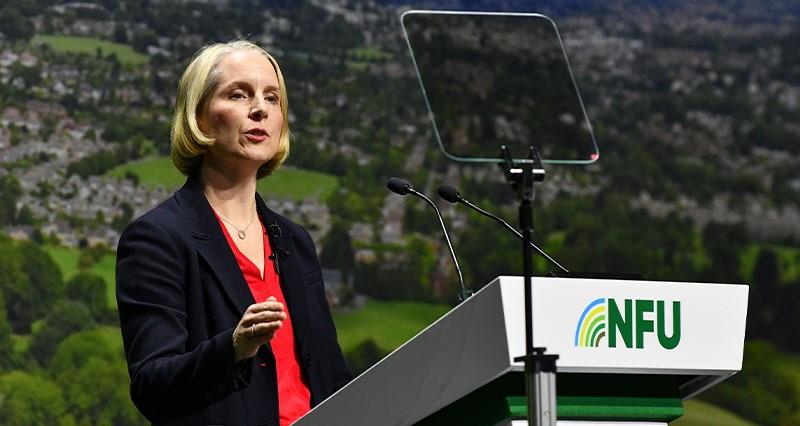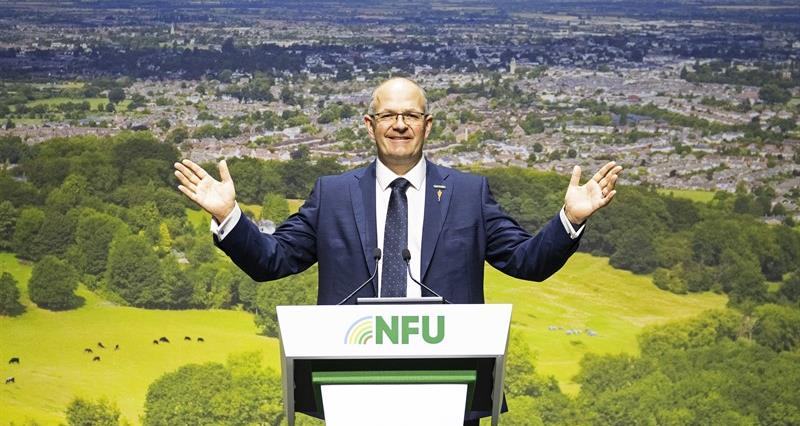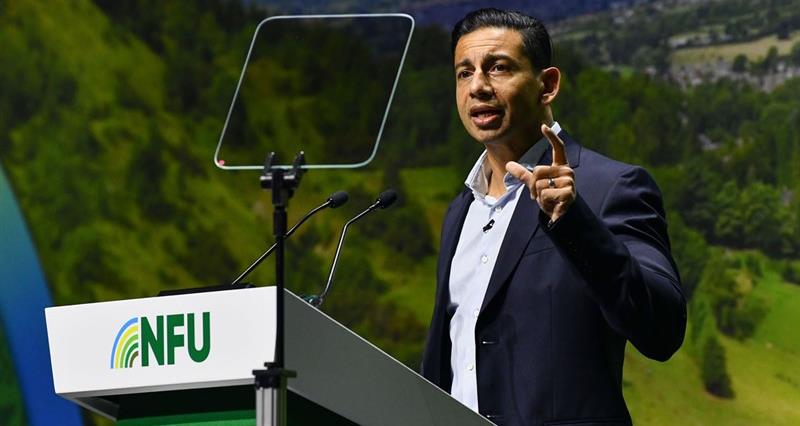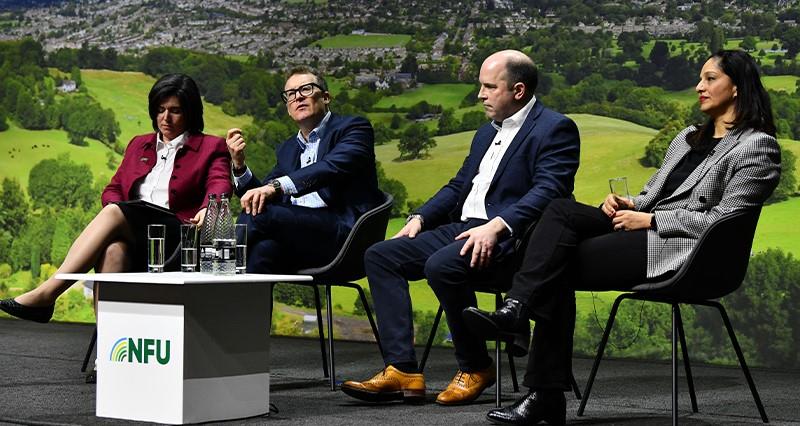
NFU Cymru Deputy President Abi Reader, chairing the ‘What role will data and AI have in resilient farming?’ panel, opened with the upbeat message, though: “There are so many things we could evolve out of this, if we get it right.”
Tim Gordon, Founder and Partner at Best Practice AI, discussed the rapid advance in AI capabilities and how it was already having an impact in the office – helping to accelerate research, and vastly speeding up grant applications and other paperwork by being able to instantly adapt information to fill in forms.
Creating a digital twin
He forecast that AI would be able to integrate with sensors and data feeds to monitor the land, weather, soil health and river levels and use cameras and drones to keep track of stock and crops and provide security, creating a digital ‘twin’ of a farm to help with planning, budgeting and modelling the impact of proposed changes.

However, he added a note of caution about the control of this valuable information which could influence prices charged and negotiations: who should have access to this data and how will it be policed?
David Speller, Founder and CEO of Optifarm, explained that his company creates live links to sensor data from poultry and pig farms worldwide, to deliver AI-derived insights.
“We treat every farm, every barn, every batch as a unique entity and that works really well,” he said. “We get to understand why animals do what they do, using artificial intelligence for both analysis and communication.”
He said that tools need to be designed to introduce automated actions, reduce workloads and free up time for farmers to spend with their animals – not tie them down to the office. “We should develop solutions that do the things farmers don’t want to do, not vice versa,” he said. “We should not simply identify new problems because AI is able to do that – we have enough problems already.”
Using AI as a prediction tool
Prof Jasmeet Kaler, of the University of Nottingham, said AI could improve resilience by helping farms to adapt to survive unexpected shocks and reduce vulnerability to climate change, diseases, market shifts and labour shortages.
Sensors around the farm could send data that AI can process to offer an early warning of issues and help to develop precision actions to combat them, she said.
It will also assist in making genetic advances, dealing with environment and sustainability issues and forecasting economic outcomes to make more informed business decisions.
“AI has read every textbook, but it has never sat in a field or met a cow. AI is a tool that needs to be used by people with knowledge using it to enhance their work – the trouble comes when it is being used as a shortcut by people who don’t know as much.”
Tim Gordon, Founder and Partner at Best Practice AI
However, she warned that progress with AI was being slowed down by ‘fragmented data’ which needs to be combined to be useful, the difficulties in integrating new innovations into existing systems, and the focus on short-term rather than long-term incentives.
Looking at data ownership
She also highlighted AI’s limitations in understanding complex biological systems and trust and governance issues that need to be resolved – who owns data and who is responsible if the models go wrong?
During questions, the panel agreed that an AI robot would never totally replace a farm worker. Tim added: “AI has read every textbook, but it has never sat in a field or met a cow. AI is a tool that needs to be used by people with knowledge using it to enhance their work – the trouble comes when it is being used as a shortcut by people who don’t know as much.”
The panel agreed that farmers own their own data and that it has value. David said the question for farmers was ‘how involved do they want to become in the use of their data?’ If people wanted to collaborate further, then companies would respond and pay accordingly – although farmers had to remain realistic about their information’s value as models are built upon millions of datasets.
Meet the speakers:

Tim Gordon
Founder, Best Practice AI
He has had previous experience in media, consulting and campaigning.
He is a trustee for Full Fact, overseeing their work on AI in fact-checking and co-hosts the ‘Age of Intelligence’ podcast from INSEAD, the business school.
He has a small family farm in Cumbria.

Professor Jasmeet Kaler
Professor of Epidemiology and Precision Livestock Informatics at the School of Veterinary Medicine and Science, University of Nottingham
She leads the Ruminant Population Health Research Group and serves as chair of the Centre for Dairy Science Innovation.
Her interdisciplinary research focuses on the use and development of novel precision technologies for cattle and sheep, utilising cutting-edge predictive analytical tools, including machine learning to understand, predict, and monitor livestock behaviour, disease, welfare, personality, and resilience.
She also explores responsible innovation, particularly stakeholder attitudes and decision-making, especially around technology.
Professor Kaler sits on the BBSRC (Biotechnology and Biological Sciences Research Council) Strategy Advisory Panel for food and agriculture and has authored over 100 publications in the field.
She has secured significant research funding, with a wide portfolio of UKRI grants and research partnerships with various technology companies.

David Speller
CEO, Optifarm Ltd
David is passionate to understand, can artificial intelligence allow us to take readily available farm sensor data and understand the root cause of issues, not just identify an issue, and then can we deliver meaningful insights to the sector and its stakeholders in new interesting ways.

Abi Reader
NFU Cymru President
The farm is home to milking cows, sheep, beef cattle and around 120 acres of arable.
Abi is a co-founder of Cows on Tour, an Open Farm Sunday host and a former NFU Cymru Wales Woman Farmer of the Year.
In 2019 she was honoured by the Queen with an MBE for her services to agriculture.