Growing up on a mixed sheep and arable farm, the rhythms of agriculture were a normal part of my life. I attended Young Farmers, visited Thrapston Market and enjoyed numerous farm walks.
However, I understand that for most young people, this is a world they may never experience.
After studying at Harper Adams University, I chose a career in education and now teach geography and sport at Bedford Greenacre Independent School.
Geography allows me to cover topics including ecosystems, climate change, resource management and urban sprawl, all of which naturally tie into farming and food production.
Yet despite these clear links, agriculture remains largely underrepresented in the national curriculum and that is something that needs to change.
Missed opportunity
While agriculture is touched on in subjects such as geography, biology and food technology, the coverage is often limited, disjointed or lacking relevance.
Given the growing importance of sustainability, food security and environmental stewardship, the case for including agriculture more meaningfully in education is stronger than ever.
Students today care deeply about the world around them. They are aware of climate issues, health trends and ethical concerns.
What they often lack is the deeper understanding of how food is produced, who produces it and how it connects to everything from biodiversity to energy use.
“Given the growing importance of sustainability, food security and environmental stewardship, the case for including agriculture more meaningfully in education is stronger than ever.”
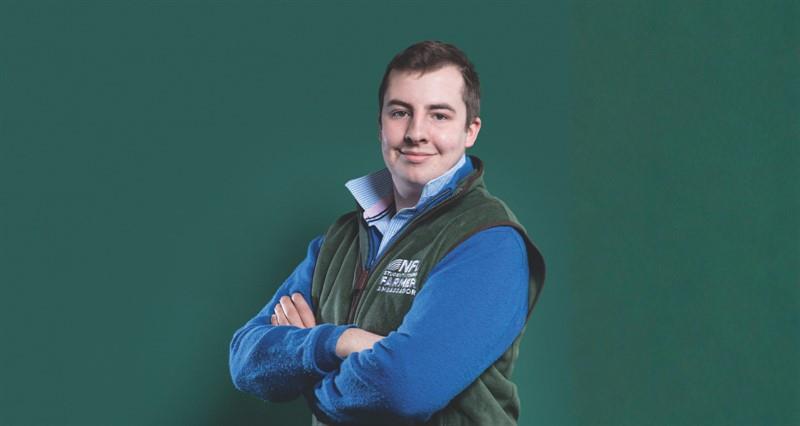
SYFAP alumni Thomas Saunders
We need to bridge that gap. Not by creating an entirely new subject, but by embedding agricultural knowledge throughout existing subjects in a meaningful and consistent way.
Curriculum potential
In geography, there are many opportunities to explore farming systems, global food production systems and the role of technology in modern agriculture.
These topics could be introduced as early as Key Stage 3 or below, not just at GCSE or A Level.
Fieldwork could involve visits to local farms and students could subsequently use geographic information systems to analyse soil quality or land use, thus developing both practical skills and a real-world understanding of farming’s role in land management.
In food technology, lessons on food provenance could go beyond a brief mention of where ingredients come from.
Students should learn about seasonality, sustainable food chains and the farm to fork journey.
Agri-food careers should also be highlighted from robotics and vertical farming to supply chain logistics. This would help challenge outdated stereotypes of farming and show that agriculture is a forward-thinking and high-tech industry.
In biology, there is potential to discuss plant reproduction, improving crop yields, pest management and genetic engineering in more depth. Lessons could explore soil health, nutrient cycles and climate-resilient crops.
All of these topics relate directly to sustainability and the science behind modern agriculture. What is important is ensuring these connections are not occasional or optional but integrated into how these subjects are taught.
Children keen to learn
Earlier this year, I took a group of Year 10 students to Cornwall for a residential trip.
When they visited the shops in the evening I was shocked by what they purchased. They would come out with punnets of raspberries, cartons of milk and packs of chicken. Ten years ago, I am sure my friends would have opted for sweets and chocolate.
This generation is different – they are health-conscious, environmentally aware and they genuinely want to make informed choices.
What they need is accurate and engaging information to aid their understanding. They want to understand why milk is a good source of nutrition, why local British beef is sustainable and why eating seasonally makes sense.
Passion for agricultural education
My own passion for agricultural education was sparked in part by the NFU’s Student and Young Farmer Ambassador Programme, which I joined in 2021.
It was a fantastic opportunity to meet other young people who shared my enthusiasm for making a difference. It also helped me see education as a powerful tool for advocacy and change.
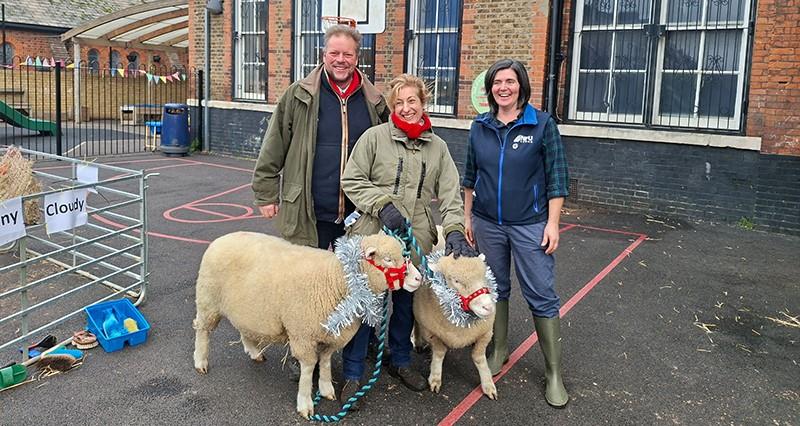
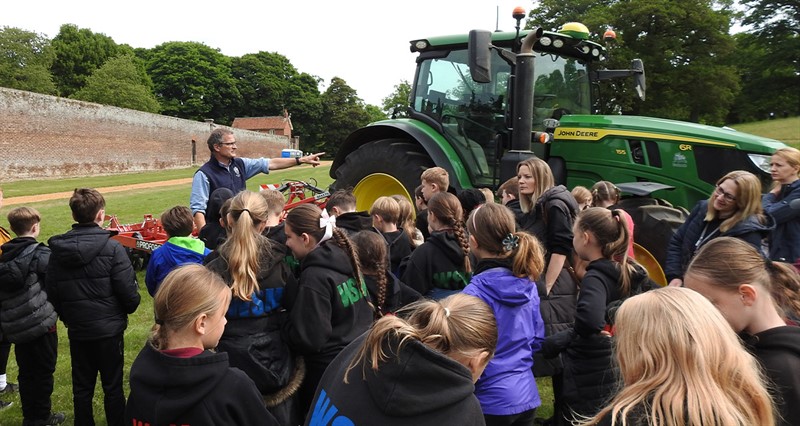
One of my proudest moments was taking part in a Farmers for Schools assembly in London with fellow ambassador Hannah Buisman.
For many of the pupils, it was their first real exposure to farming. Some had never been to the countryside before, let alone seen a tractor. Yet their curiosity was incredible!
One student asked how grain is marketed and another wanted to know how much land is needed to rear livestock sustainably. These questions reminded me that children are inquisitive and more capable of understanding complex topics than we often give them credit for.
Looking ahead
Agriculture does not need to be a separate subject. However, it does need a more prominent and consistent presence in the curriculum.
That means strengthening existing subject content, making better use of industry expertise and ensuring teachers have the confidence and resources to talk about farming.
There is already excellent work happening through programmes such as Farmers for Schools, where farmers bring their stories into the classroom.
More links between schools and local farms are needed, including more farm visits and industry input into curriculum design.
Get involved
If you are passionate about agricultural education, there are practical ways that you can help.
You could speak to your local NFU county adviser, and they can help you connect with schools and other groups.
You could also join the Farmers for Schools programme and pass on your agricultural knowledge, tackle misconceptions and inspire the next generation.
Since Thomas’ article was published in September 2025, the UK government published its 2025 Curriculum Review, which set out recommendations that could shape the future of education across England, including changes to food education and qualifications and a stronger emphasis on sustainability, science, and digital literacy.