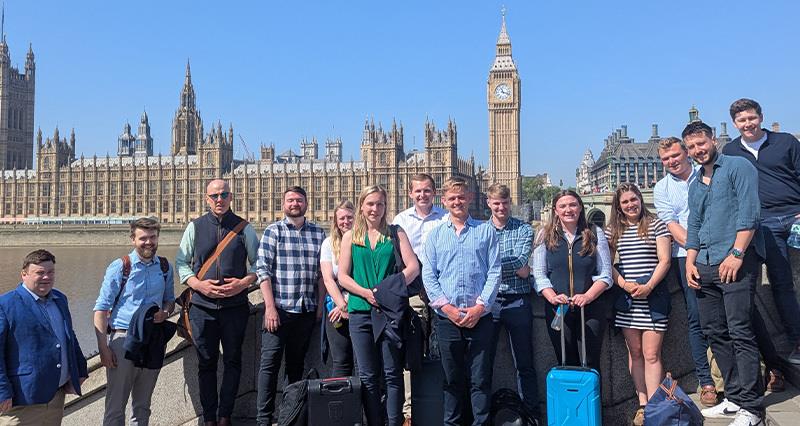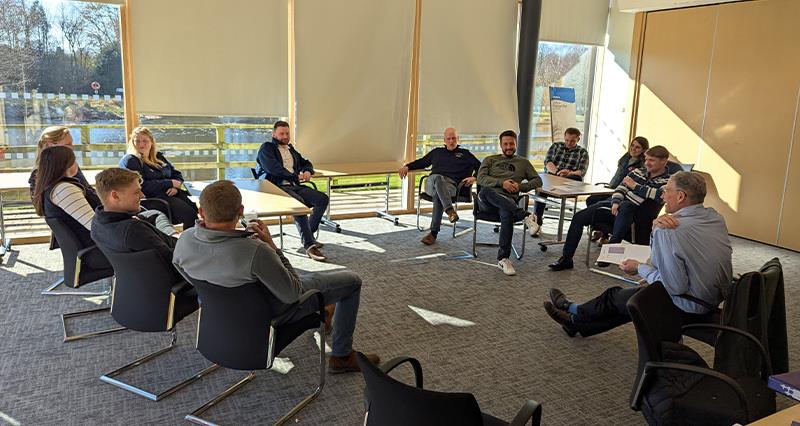
Our base for the first day was the BAB (British Agriculture Bureau) offices.
The BAB represents the 70,000 members of all four UK farming unions, championing UK agriculture in Europe, which remains vital work in the wake of the UK leaving the European Union.
We met with multiple European stakeholders, learning about the work they do for European producers, farmers and animals.
Copa and Cogeca
Farmers’ organisations Copa and Cogeca aim to make sure that EU food production is sustainable, competitive and forward thinking, ensuring food security for more than half a billion Europeans.
Between them, they represent more than 22 million farmers and farming families, alongside 22,000 agri-cooperatives.
European Council of Young Farmers
Being an active member of the National Federation of Young Farmers Clubs, I was excited about the discussion with CEJA (European Council of Young Farmers), which represents almost two million young farmers from across Europe in discussions with policymakers.
“I love to gain insight into other systems and it was especially interesting learning about a modern European hatchery.”
Rosie Finney
It was great to learn that their work stretches beyond EU borders and still includes representatives from the UK, too.
Voice of the European poultry meat sector
Walking across to the AVEC office made us realise that we were in the heart of European policy and decision making, as our journey took us past the European Parliament. AVEC is the voice of the European poultry meat sector, representing more than 95% of poultry meat production, defending the sector and facilitating discussion.
Hearing from Secretary General Birthe Steenberg was refreshingly positive, discussing the opportunities for growth in both the European and British poultry meat sectors.
Animal welfare standards
Our last discussion of the day was with Inês Grenho Ajuda from Eurogroup for Animals, who lobby to improve animal welfare standards. This is an area that often leads to lively debate, and this discussion was no exception, but it was interesting to hear about the lobbying work the organisation does alongside almost 110 NGOs (non-governmental organisations), to improve welfare for all animals, not just those that are farmed.
While there were some differences of opinion, it was clear we were all deeply concerned about imports from lower welfare production systems.
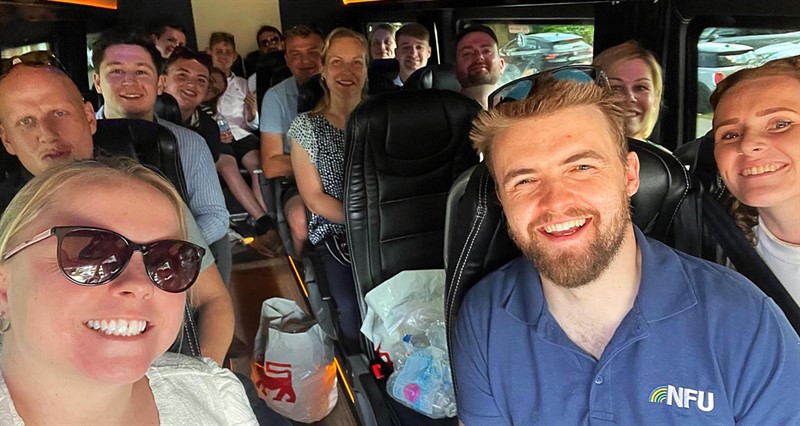
The PIP 2024/25 cohort take a selfie on a coach as they embark on their trip to Europe
Hatchery visit a highlight
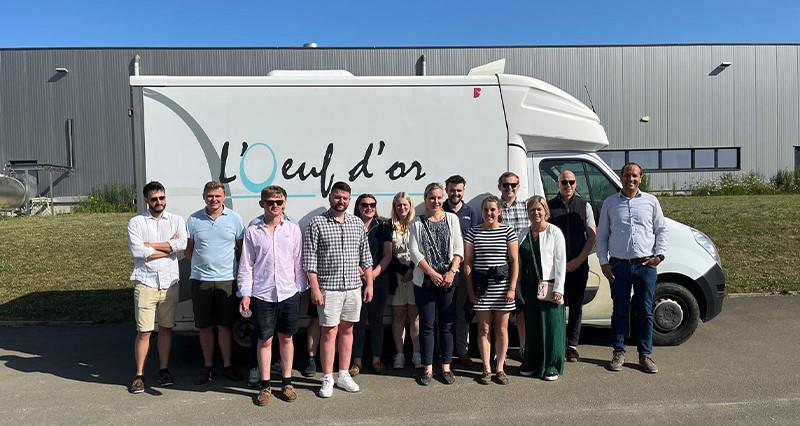
Day two started with a bus ride to L’Oeuf D’Or hatchery. Coming from a hatchery background, this was the highlight of the trip for me, as I love to gain insight into other systems and it was especially interesting learning about a modern European hatchery.
We began with a presentation from Nestborn General Manager Erik Hoeven about the Belgian broiler supply chain, Nestborn and the Yellow Bird hatchery group. The hatchery had a viewing corridor that we could use to see into the different parts of the process without actually entering the biosecure area.
Afterwards, we visited a double-decker Belgian broiler site, rearing Hubbard birds to the European Chicken Commitment (equivalent to the Better Chicken Commitment) standards.
They were using the Nestborn system and we got to see the chicks hatching inside the rearing shed, which was fascinating to experience first-hand.
KU Leuven University
The final visit before we ventured back to Brussels station was an insightful talk and tour at the TRANSFarm research facility at KU Leuven, Belgium’s oldest university.
The diversity of research carried out there was impressive, covering everything from gut health in chicks and positive indicators of animal welfare to methods of in-ovo sexing, and feed additives in broiler rations.
It was a fascinating ending to what had been the most incredible trip. I think I can safely say that the European trip was a massive highlight for me. A big thank you must once again go to the NFU and ABN for arranging the visit, and to Hubbard, Nestborn, KU Leuven and all of the European stakeholders that gave us such insight into the vital and varied work they do.