
For their summer trip, the South Poultry Board visited Cornish free-range egg producers St Ewe. Board members had a look around the company’s packing and processing facilities at Grampound Road.
St Ewe recently featured in The Times’ list of the fastest growing companies on the UK and has just opened a £13m pasteurisation facility, enabling it to launch a new range of liquid egg products.
After their tour, board members had their usual meeting, covering topics including avian influenza, the feed market and labour challenges.
The following day, they visited Cornwall County Chair Ashley Jones’ farm at Pillaton near Saltash.
Ashley showed the board around his award-winning beef, sheep and arable farm – he is currently the Famers Weekly Farmer of the Year – which he runs alongside a contracting business.
The family also runs a popular tourist attraction, with a maize maze and a 150m long ‘slip and slide’ which is the longest in the UK. Sadly, it wasn’t yet open for the season, so board members were unable to give it a try.
Livestock board hears about Irish research
The South Regional Livestock Board has been on a study tour of Ireland.
The trip included a tour of livestock farms, a meeting with the Irish Farmers Association and a look around the Grange Research Centre, which is run by Teagasc, Ireland’s agriculture and food development authority.
The Grange has 230ha of permanent grassland, with state-of-the-art facilities for its 1,300 cattle which are split across suckler, dairy calf and beef herds.
Paul Crosson, the centre’s head of beef enterprise, told the board about the research which is taking place, including ways to increase the efficiency of pasture-based systems, parasite control, controlling greenhouse gas emissions, and improving breeding and genetics.
Mr Crosson also talked about some of the challenges facing the industry – farm profitability, succession and environmental sustainability, all of which were familiar to the board.
South livestock board chair Mark Weekes said: “What has amazed me is how similar, yet how different their farming systems are. There appears to be an amount of standard inequality, their standards are considerably different to ours.
“Their farm assurance, they actually get a pence per kilo payment for it and many, many of their schemes seem to get a direct payment on the bottom line which is completely contrary to what we do in the UK.
“But it has been an incredible trip, they are very hospitable people.”
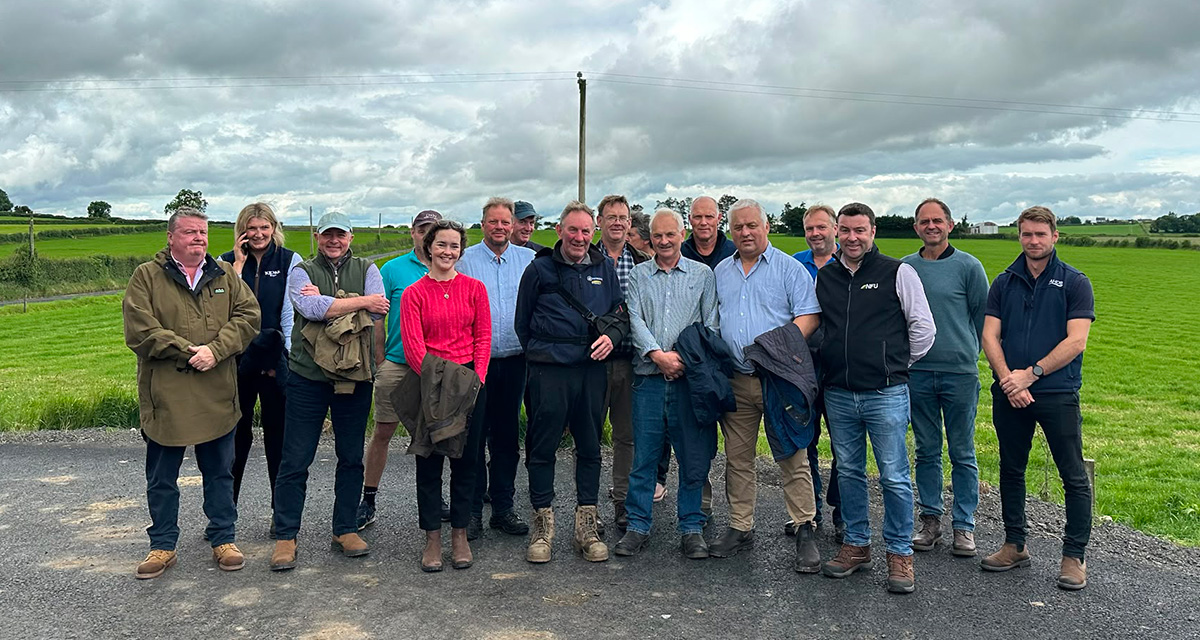
The livestock board during their Irish trip
Mill tour for crops board
Members of the South Combinable Crops Board were joined by NFU staff and National Crops Board Chair Jamie Burrows for their annual away day in West Oxfordshire.
The day started out with a visit to Matthews Cotswold Flour Mill in Shipton under Wychwood (as seen on Clarkson’s Farm) where the board met with the Bertie Matthews, the eighth generation of the Matthews Family to steer the business.
A frank discussion around how hard arable farming is and how that is reflected in the milling industry led to a wider discussion about regenerative practices used by farmers supplying Matthews. The business wants to steer towards selling British, regeneratively-grown flour and are looking to expand their operation over the coming years from the current 36,000 tonnes they currently handle.
A tour of the mill, including many parts which are original mill construction followed. A really useful part of the day.
The delegation then headed to FarmED for a quick lunch and crops board meeting where harvest, autumn drilling intentions and concerns around the fertiliser market were raised, in the wake of the publication of the NFU Fertiliser Resilience Plan.
After lunch, the board toured FarmED, and saw how since the purchase of Honeydale Farm in 2012 to now, what has been done to demonstrate what does, and doesn’t work when looking at regenerative farming practices.
FarmEd grows a control plot every year, farmed by their neighbour as conventional. This is then used as a benchmark for the eight, one-acre test plots which showcase different trials in regenerative farming. This, alongside a strong showing from a large plot of the farm given up to 40 heritage wheat varieties planted together, drew a lot of attention.
Alongside this, the group got to see the natural flood management, the orchard containing over 100 varieties of apples, pears and other fruits and the growing kitchen garden, which feeds both guests to FarmEd and those buying direct from farm.
It was a really educational day out, which showcased how some parts of the farming industry are adapting their farming practices to balance food production with nature restoration.
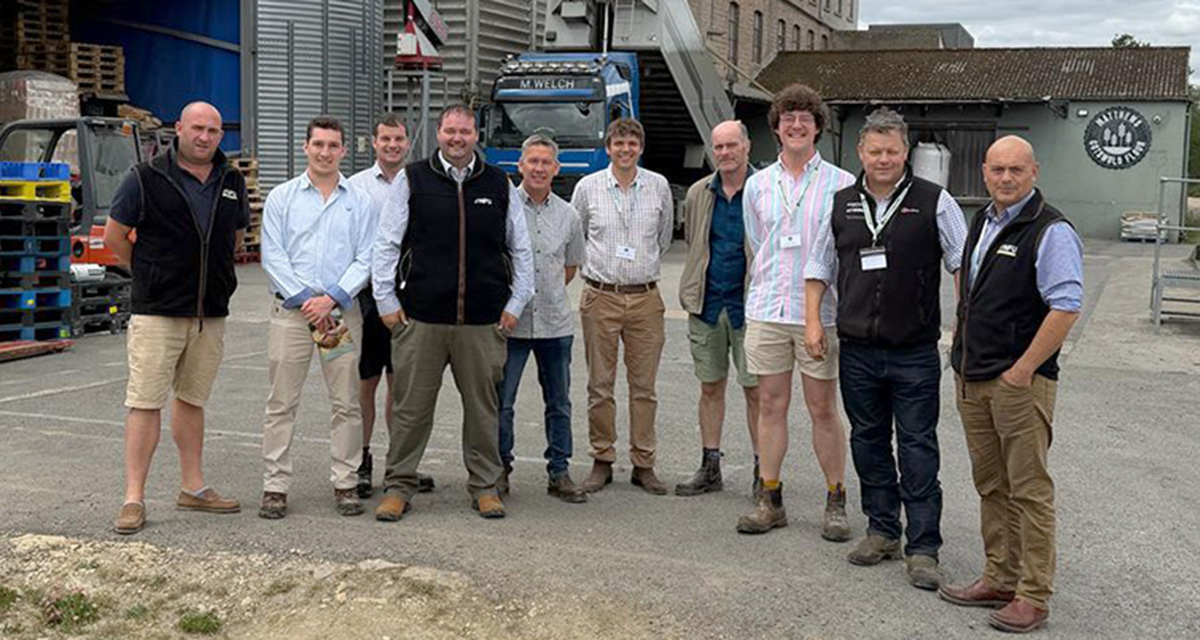
Crops board members at Matthews Cotswold Flour Mill