NFU launches sustainable protein action plan

Field beans

The NFU's sustainable protein action plan is aimed at de-risking and incentivising the uptake of protein crops within arable rotations. Stay up to date with the latest developments as we continue to engage with government on this crucial area.

Background

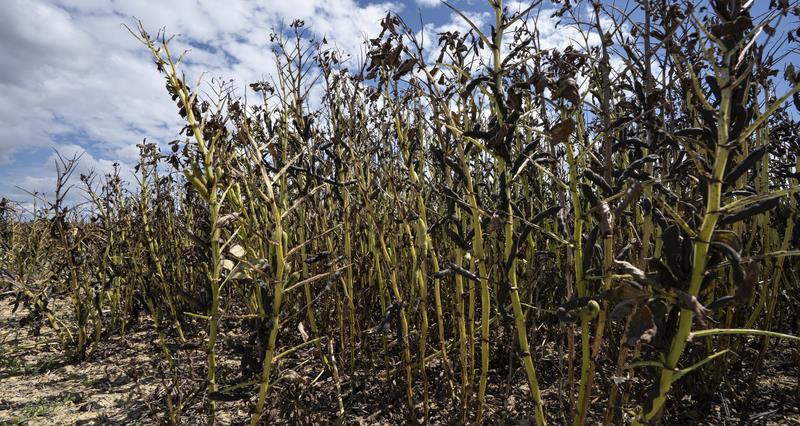
Many growers think that crops such as peas and beans are too risky with not enough return. 

But as we face increasing costs of production across the sector, these crops not only offer a valuable domestic source of protein but also bring agronomic benefits improving soil health, reducing pest pressures, and enhancing biodiversity.  

By diversifying rotations, growers can optimise their use of inputs and improve long-term sustainability. This creates an opportunity to boost profitability, particularly when aligned with crops such as milling wheat, to utilise sequestered nitrogen from the preceding protein crop. 

23 September 2025

NFU launches sustainable protein action plan

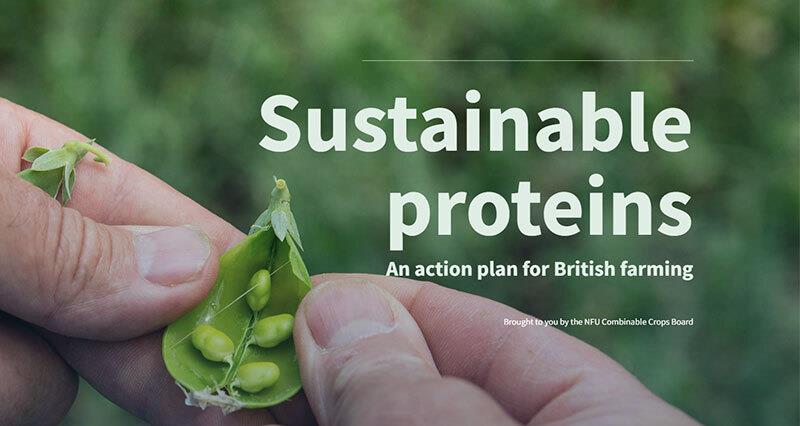
The NFU has published its sustainable protein action plan, setting out measures to de-risk and incentivise the production of homegrown protein crops within UK arable rotations.

If the UK is to meet ever-increasing demand for improved soil health, lower input costs and increase diversity within crop rotations, we need to not only look again at the versatility of this crop, but also bring the supply chain with us on the journey.

Our plan makes the case for how protein crops can help restore soil health, reduce usage of artificial fertilisers, improve pest and disease management, and provide a high-quality, low carbon, environmentally friendly protein source for the feed and food industries.

Supporting research and knowledge exchange

The UK leads in varietal research; we must see continued investment in research, the promotion of knowledge exchange. We will continue to lobby for government investment in tools such as the NCS (Nitrogen Climate Smart) project and Pulse PEP, which will help growers optimise establishment, intercropping and seed rates for UK conditions.

Education and awareness

Peas and beans fix atmospheric nitrogen, meaning growers can cut back on one of the biggest costs of each rotation, they also improve soil health, promote biodiversity, and help with pest and support disease management.

Our objective is to raise awareness of these benefits and promote PGRO (Processors and Growers Research Organisation) guided best practice, promote webinars and workshops to arable farmers, agronomists and advisers.

Reducing risk of crop failure

We will work with research bodies and the government to promote the adoption of pulse varieties which can adapt to local conditions and are resilient to pests, diseases, drought and waterlogging; enable industry bodies to facilitate knowledge exchange on extended rotations to disrupt pest and disease cycles; and collaborate with the government to promote soil health practices that improve nitrogen-use efficiency and strengthen crop resilience.

Incentivising adoption and investment 

We must also identify and explore the options for financial incentives and support mechanisms made available through government funding to encourage farmers to incorporate protein crops into their rotations. 

This can be achieved either as part of wider environmental schemes to reduce risks for farm business as well as exploring the appetite for price guarantees from the supply chain to ensure demand and financial stability for trade.

We are actively lobbying the government to understand the opportunities for investment in protein crops for the future, providing significant opportunities for the environment, soil health and the decarbonisation of the supply chain.  

Building supply chain demand

We must focus on building stronger, more transparent supply chains that support growth through long-term partnerships between arable farmers and the supply chain to ensure consistent demand and farm-level confidence to invest in pulses.

Policy and regulatory support

Pulses deliver public goods, lower greenhouse gas emissions, improve soil structure and benefit pollinators, but current market systems rarely reward those services.

Government policy should stop treating environmental outcomes as separate from commercial crop production and start supporting food production that creates tangible benefits for the environment.

Soybean meal makes up the majority of imported protein crops. Swapping even a fraction of that imported protein for homegrown peas and beans reduces carbon emissions, improves traceability and supports British farmers.
12 June 2025

NFU hosts sustainable protein roundtable

At this year’s Cereals event in Lincolnshire, the NFU Combinable Crops Board took a step towards a more sustainable future for the combinable crops sector with the launch of the Sustainable Protein Action Plan.

NFU Combinable Crops Board Chair Jamie Burrows tells us more about this work.  

When we met with Daniel Zeichner, Minister for Food Security and Rural Affairs in November last year to make the case for homegrown protein crops, we made clear our intention to develop this plan to spearhead the transformation of the role that protein crops can play in UK arable rotations.  

Supply chain transparency

To ensure that growers have the confidence to invest their rotations in protein crops we must see the development of stronger, more transparent supply chains, underpinned by long-term partnerships between arable farmers, feed mills, and livestock producers. 

Ensuring consistent demand is essential to give growers the confidence to invest in protein crops, while also reducing the UK’s reliance on imported soybean meal. 

Support from government

It is also important to note that policy support is a cornerstone of this plan, calling on the government to align future agricultural policy with the industry’s sustainability goals. This includes recognising the public goods delivered by protein crops from carbon savings, to improved water quality and rewarding farmers accordingly.

The environmental benefits are compelling; by incorporating more pulses into rotations, the sector can make meaningful progress towards supply chain decarbonisation. Early findings from the NCS (Nitrogen Climate Smart) project, suggest that if 20% of UK arable land grew pulses, the sector could cut emissions by more than 3 million tonnes of CO₂e annually. 

Research and knowledge exchange

To achieve this, we will need more research and knowledge exchange. For many growers, the use of pulses isn’t top of their rotation choices, but the PGRO’s (Processors and Growers Research Organisation) crop plots at the event demonstrated how intercropping and adjusted seed rates can further optimise protein crop performance under UK conditions.

Continued investment in projects like the NCS and the Pulse PEP digital hub will be vital to support growers with real-time insights and practical tools. 

Next steps

But what next? Our vision is to sustainably increase the uptake of protein crops across the UK arable rotation from their current levels.

Alongside the AIC (Agricultural Industries Federation), AHDB and PGRO we have a clear ambition to build a more resilient, profitable, and sustainable future for UK arable farmers through this action plan which calls upon each link in the supply chain to undertake positive change.

As the sector faces mounting pressure to produce more with less, the sustainable protein action plan offers a timely and practical roadmap.

It’s a call to action for the entire supply chain, from policymakers to processors, to back British protein crops and unlock their full potential for our future. 


27 November 2024

Meeting with the Farming Minister

The NFU Combinable Crops Board met with Daniel Zeichner, Minister for Food Security and Rural Affairs, to highlight the specific needs of the combinable crops sector.

Following extensive analysis, the Crops Board called on the government to provide support which would de-risk and incentivise the uptake of protein crops within arable rotations.

Speaking after the meeting, NFU Combinable Crops Board chair Jamie Burrows said: “There is a growing demand for sustainable protein within UK agriculture, and the government has the opportunity to enhance our food security by ensuring that more of these crops are grown domestically.”

Reducing reliance on PPPs

The Board said that a greater area of protein crops, turning the tide on a crop which is currently falling out of favourability, would help reduce the reliance on unsustainable imported feedstocks. 

Jamie added: “As well as overcoming the barriers, we look forward to continuing our engagement with the government as we seek to drive this sector forward.”

This would also deliver improvements to soil health, supporting the wider uptake of IPM practices, reducing reliance on PPPs (plant protection productions) and generating an abundance of flowering crop area, all in line with broader government ambitions.

This page was first published on 23 September 2025. It was updated on 23 November 2025.


Ask us a question about this page

Once you have submitted your query someone from NFU CallFirst will contact you. If needed, your query will then be passed to the appropriate NFU policy team.

You have 0 characters remaining.

By completing the form with your details on this page, you are agreeing to have this information sent to the NFU for the purposes of contacting you regarding your enquiry. Please take time to read the NFU’s Privacy Notice if you require further information.