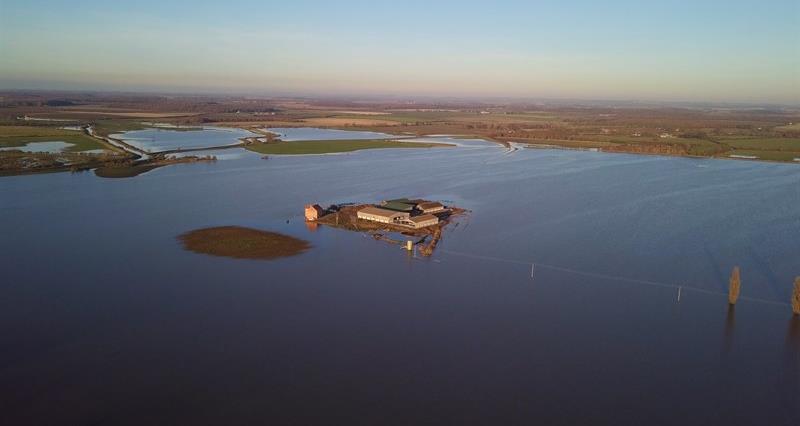
For existing abstraction licence holders, Environment Agency RPS (regulatory position statement) 300 states that where flood warnings and severe flood warnings are in place they can, for a single event, abstract from a source of supply at a time of year that is not included within their licence conditions and at instantaneous, hourly, or daily rates that exceed their licence quantities.
It was introduced following the 2024 NFU Conference and remains in force. It allows growers to abstract water outside of their licence conditions during flood warnings and severe flood warnings, in certain circumstances, even if their area is officially in drought.
Currently, Yorkshire, East Midlands, West Midlands and parts of Sussex are all in drought.
The EA has said there is an increased chance of flooding particularly across central parts of England. Following drought this year, some farm irrigation reservoirs are at minimum levels.
Conditions stated in this RPS must be met, including that abstractors must not:
- adversely affect or derogate abstraction licences and protected rights
- adversely affect or damage designated conservation sites
- exceed the abstraction rates allowed under their existing licence by more than:
- 60 litres per second
- 216 cubic metres per hour
- 5,184 cubic metres per day (m3d)
- use this RPS if the Environment Agency tells them that total abstraction exceeds 10% of the flow at the abstraction point.
This RPS can only be used to abstract water outside of an abstractors’ licence conditions during one ‘flood warning’ or ‘severe flood warning’ event. If you believe you may regularly need to abstract water at a higher instantaneous rate or at different times of year than allowed by your licence, you should contact the Environment Agency to apply to change you licence.
The RPS will no longer apply once the ‘flood warning’ or ‘severe flood warning’ has been lifted and does not change the legal requirement to comply with the conditions of an abstraction licence.
It is important to note that flood water is likely to be of poor quality and may contain raw sewage, oils, sediment, and other contaminants. It is the abstractor’s responsibility to make sure that the water is suitable for its intended use.
Remember: working near rivers in flood conditions is dangerous, please prioritise your health, safety and wellbeing.
Sign up for flood alerts
You can sign up to get flood alerts in England by phone, email or text message if your home or business is at risk of flooding. The service is free. When you register, ‘opt in’ to receive flood alerts as well as flood warnings.
Sign up at: GOV.UK | Get flood warnings by text, phone or email.
Conditions which must be complied with
The abstractor must:
- have a valid abstraction licence
- comply with the conditions of their licence relating to:
- points of abstraction
- means of abstraction
- eel and fish screening
- purposes of abstraction
- annual abstraction quantity
- notify the Environment Agency by email at [email protected] with the subject ‘RPS 300: floodwater abstraction’ and the licence number within 2 days of starting abstraction under this RPS
- submit a record of the hourly and daily quantities abstracted within 5 days of stopping abstraction under this RPS
- make it clear how much water was abstracted under this RPS when the annual abstraction returns are submitted
- keep records for 6 years to show that they have complied with this RPS and make these records available to the Environment Agency on request.
When can the RPS be used?
Anyone is allowed to abstract water for the sole purpose of flood alleviation under Section 29(1) of the Water Resources Act 1991.
But if they want to abstract more than 20m3d from a source of supply (river, stream or groundwater) for an additional licensable purpose (such as reservoir storage and subsequent irrigation), the Environment Agency position is that they must have an abstraction licence.
However, the Environment Agency will not normally take enforcement action against the abstractor if they do not comply with this legal requirement provided that:
- their activity and the circumstances meet the description set out in this RPS
- they comply with the conditions set out in this RPS
- their activity does not cause (and is not likely to cause) pollution of the environment or harm to human health.
The Environment Agency issues ‘flood warnings’ and ’severe flood warnings’ for areas affected by flooding in England and provides notice when these have been lifted.
Flood warnings are issued on the check for flooding service. You can sign up to receive text alerts which will tell you when a ‘flood warning’ or ‘severe flood warning’ has been issued and when it has been lifted.
This RPS can only be used to abstract water outside of your licence conditions during one ‘flood warning’ or ‘severe flood warning’ event. If someone believes that they may regularly need to abstract water at a higher instantaneous rate or at different times of year than allowed by their licence, they should contact the Environment Agency to apply to change their licence.
Working in or close to rivers in flood is dangerous. Health and safety is the abstractor’s responsibility.
Flood water is likely to be of poor quality and may contain raw sewage, oils, sediment, and other contaminants. It is the abstractor’s responsibility to make sure that the water is suitable for its intended use.
If an abstractor operates under this RPS but can no longer comply with it, they must stop the activity to which this RPS relates.
Future changes
The RPS is valid until October 2026.
This RPS remains in force until it is removed from GOV.UK or is otherwise identified as having been withdrawn. You can subscribe to email updates about this RPS. These will tell you if the RPS has changed and when it has been withdrawn.
If you have any questions about this RPS, email [email protected].