With a lot of focus in the strategy on poultry production, the NFU poultry team has dissected the key areas of interest for members.
It is good to see the government recognise the excellent work of British farmers in their animal welfare strategy and their commitment to working together to maintain and enhance world class standards. There are, however, many questions raised for the poultry sector who have specific actions in most of the sub-sections of the document, outlined below.
“There are some good examples referred to in the government’s strategy which highlight both the government and poultry sector’s role in collaborative working.”
NFU Poultry Board Chair Will Raw
What has Defra announced?
The use of cages
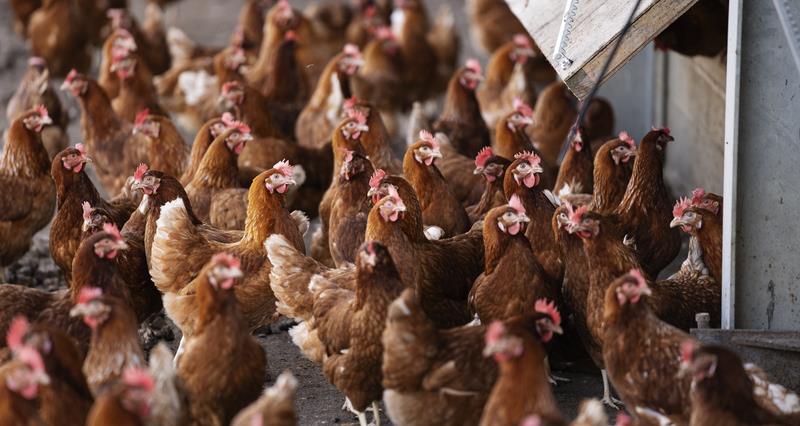
Due to it featuring in Labour’s election manifesto, it is not surprising to see the mention of cage production within the strategy on animal welfare. It is, however, disappointing to see a lack of acknowledgement for the important role enriched colony cage systems play in providing consumers with choice and access to an affordable source of protein.
NFU Poultry Board Chair Will Raw said: “The quality of the stockperson and bird management are the greatest factors determining animal health and welfare, not system of production. British poultry producers have already made great strides in improving bird welfare and although it is disappointing to see this hardly recognised in the government’s strategy, we will continue to do so as it is the right thing to do.
“As a largely unsubsidised sector, poultry farmers have had to invest and deliver improved outcomes off their own backs, and we continue to strive to provide choice to consumers who we know enjoy British poultry meat and eggs.”
A ban on colony cages is set out as a government priority within the strategy, with a consultation expected in the new year. The NFU will gather member views to input into its consultation response and will be outlining the need for an impact assessment both for the sector and for food security as a whole.
Male chicks in the laying hen sector
Each year, approximately 40 million male chicks are culled domestically, with a similar number imported from third countries. This means we are not self-sufficient in feed material for animals in zoological collections and birds of prey, and any ban on male chick culling in the laying hen sector could have unintended consequences. This could result in a shift towards alternative food sources for animals in zoological collections which would have lower welfare standards and a higher environmental impact such as the mass breeding of mice, and this brings its own issues.
The government has set out an ask to encourage the poultry sector to end the practice of male chick culling in the laying hen sector. There is ongoing research looking at alternative options but as yet there is no ‘one-size-fits-all’ approach and the NFU will continue to engage with the sector on what is an ethical issue.
Management practices
The government has an ambition to end beak tipping of laying hens by working with the sector through the LHWF (Laying Hen Welfare Forum). Poultry producers have already progressed in this area, adopting different management techniques and taking part in trials which have previously shown the devastating impacts which can result from not using infrared beak treatment when chicks are one day old, which is standard practice in the UK.
The NFU is part of the LHWF, a cross-government and sector group looking at reducing injurious pecking and sharing best practice among farmers. The government recognised the good work of the forum in its strategy.
NFU Poultry Board Chair Will Raw commented that “there are some good examples referred to in the government's strategy which highlight both the government and poultry sector's role in collaborative working such as the LHWF. However, for some of the direction of travel the government indicates within this strategy, poultry producers feel well and truly left behind”.
Breeding
One of the areas producers may feel left behind on is the government’s desired advancements in breeding. It is disappointing to see the government’s blinkered view on welfare for broilers with a persistent push towards slower-growing breeds despite caution being shared over unintended consequences.
Continuous improvement is a key aim of the sector and something it takes very seriously. But it is important that this is achieved through a scientific approach and considers customer demand. Shoppers want to buy affordable and nutritious sources of protein and chicken is the nation’s favourite meat.
According to independent research, the standards outlined in the Better Chicken Commitment, which the government appear to be advocating, would have both environmental and economic implications without a demonstrable improvement in bird welfare. Therefore, it is imperative that the science and evidence underpinning any decisions impacting poultry production is shared without delay and we are asking that a full impact assessment is carried out before any commitments are made.
Referring to the need for an impact assessment, Will said: “This is an important step in regaining producer confidence so we can continue producing nutritious and versatile protein sources and meet the UK’s food security goals, without being undermined by products produced outside of the UK which in some cases are produced to standards illegal here.”
Other areas of interest and next steps
There are several mentions of poultry specifically throughout the strategy and also many areas which would impact the sector more holistically. As well as those outlined above, specific areas related to poultry include:
- the publication of a review of WATOK regulations,
- a continuation of monitoring EU proposals on welfare in transport regulations,
- consideration of the impacts of climate change on farm animals and how these can be mitigated, and
- the desire for the government to gain a better understanding of gamebird welfare.
More generally, there are also mentions of food labelling, public sector procurement policy and enforcement within the 48-page strategy.
The NFU will be looking to better understand the government’s intentions in the coming weeks and months and will be actively gathering member feedback for areas of consultation which are expected to start as early as January 2026.