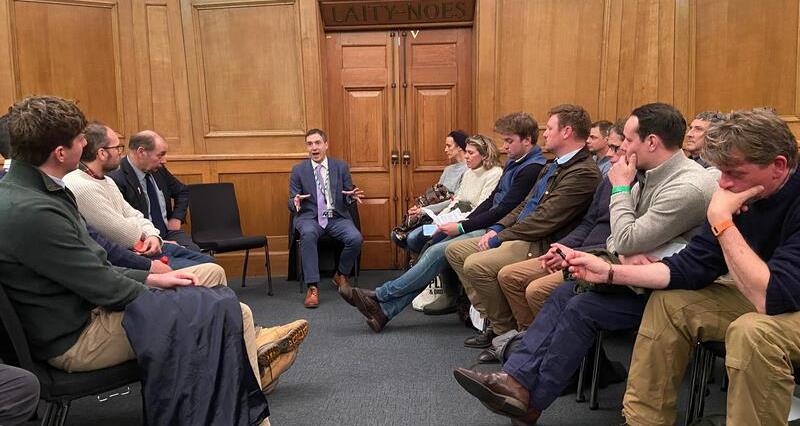
British farmers and growers are angry and concerned by the government’s decision to introduce the family farm tax.
While the prospect of the tax is already having an impact on farmers’ confidence and their willingness and ability to invest, it is not expected to be legally in force until April 2026. The NFU will continue to use all its influence to campaign for the government to overturn the reforms to APR and BPR.
Before the new changes come into force, a significant number of legislative steps need to take place. The government can largely decide when they happen so the NFU is keeping a very careful eye on proceedings so we can interject when we need to.
See a handy timeline below to find out when the key dates are, and jump further down the page for more analysis.
Legislative timeline
It's important to note that these are projected times, and it is the government who will decide the final timetable.
- Early 2025: The Treasury carries out a small, technical consultation on the changes, which the NFU responds to.
- 26 March 2025: The Chancellor delivers her Spring Statement. This was another opportunity for her to change course, and the NFU called on her to do so, but she did not.
- 21 July 2025: The draft legislation for the family farm tax is published. The NFU calls out the Chancellor for refusing to meet before publishing the legislation, adding that “when you undermine farm businesses, you undermine a vital part of our national infrastructure. If this legislation goes ahead, it will unquestionably have devastating and irreversible impacts on the country and it is so poorly designed that it will inevitably have to be changed in the future.”
- 26 November 2025: Autumn Budget. This will be another opportunity for the government to push through the new law and for the NFU to make representations against it. The NFU has written to the Chancellor again, telling her that “at any farm kitchen table, the biggest worry is your proposed changes to inheritance tax”.
- November 2025: ‘Ways and Means’ motion passed by the House of Commons, giving the family farm tax temporary legal affect until the Finance Bill passes. The Second Reading of the Finance Bill must happen 30 days after the Budget, and this is the first opportunity to formally table amendments.
- Late 2025/early 2026: Third reading. The final vote on the Finance Bill in the House of Commons and a last chance to make amendments. The Finance Bill does go to the Lords, but the Lords historically do not amend Finance Bills.
- April 2026: Bill receives Royal Assent and becomes law.
Autumn Budget 2025
The Budget, due to be announced on 26 November, will outline the government’s economic strategy and present detailed tax and spending plans for the upcoming financial year. It is a blueprint for how the government intends to raise revenue (through taxes and other means) and how it plans to allocate spending across various sectors and government departments including those relevant to farming such as Defra and the Department for Business and Trade.
The Chancellor has warned that the government must bring inflation and borrowing costs down, and that this will be done through her two “non-negotiable fiscal rules”:
- Day-to-day spending must be matched by tax revenue.
- To reduce debt as a share of the economy.
The Finance Bill 2025
The NFU is well-versed in lobbying on parliamentary Bills. If the family farm tax makes it to the Finance Bill 2025, the NFU will continue to lobby against it.
The first step is usually a formality. A ‘Ways and Means’ motion is passed by the House of Commons, giving the family farm tax temporary, legal affect until the Finance Bill passes.
However, it does not mean that the new law will come into effect at this stage – the government still plans to introduce the family farm tax in April 2026.
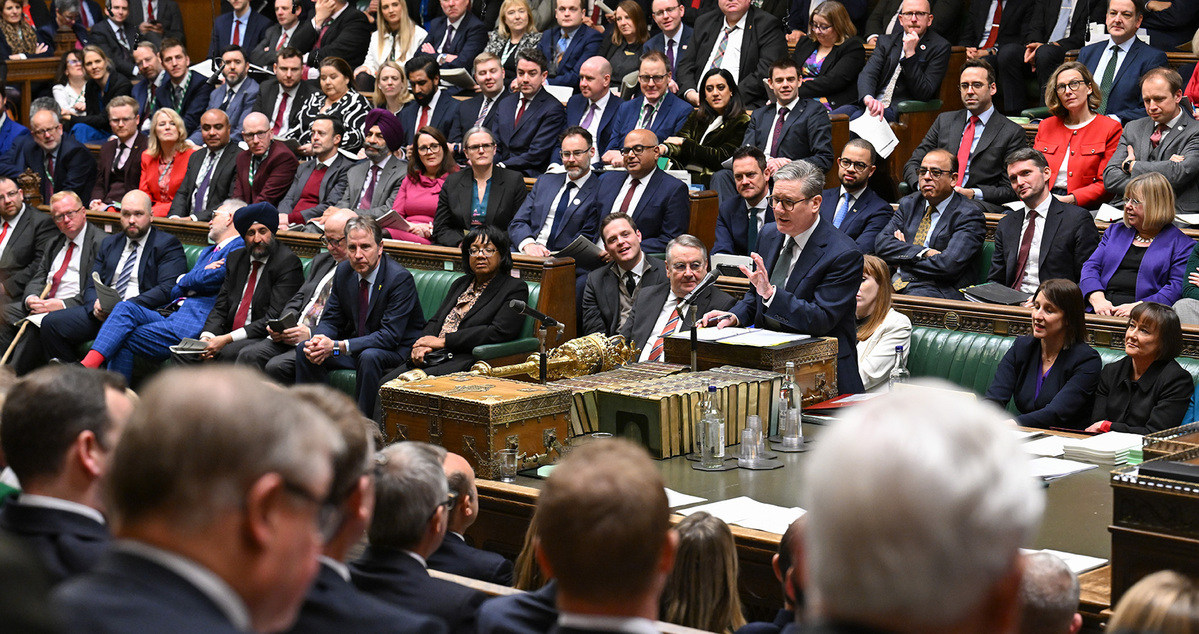
MPs debate in the House of Commons. Photograph: House of Commons
The Finance Bill must have its ‘Second Reading’ 30 days after the Budget, so we would expect that to happen in November 2025.
A Finance Bill goes through parliament like most other Bills, but there are a few differences. With most Bills, a committee (on which the government has a majority) scrutinises the Bill line by line.
However, the most controversial elements of a Finance Bill, which the family farm tax would certainly be, are also considered by the whole House of Commons.
Normally, the NFU works very closely with the House of Lords on scrutinising legislation. However, another key difference with a Finance Bill is that the House of Lords cannot amend it and they do not scrutinise it line by line.
The key moment
For the family farm tax to become law, the House of Commons must hold a final vote on it and there must be a majority.
If the government is confident it will win the vote it will press on. The NFU is doing everything it can so that the current family farm tax plans are not voted into law at this point. If it does pass into law then it is extremely difficult to make any changes or reverse it.
The final stage of any Bill's progress in Parliament is when the King gives royal assent. The Bill then becomes an Act of Parliament.
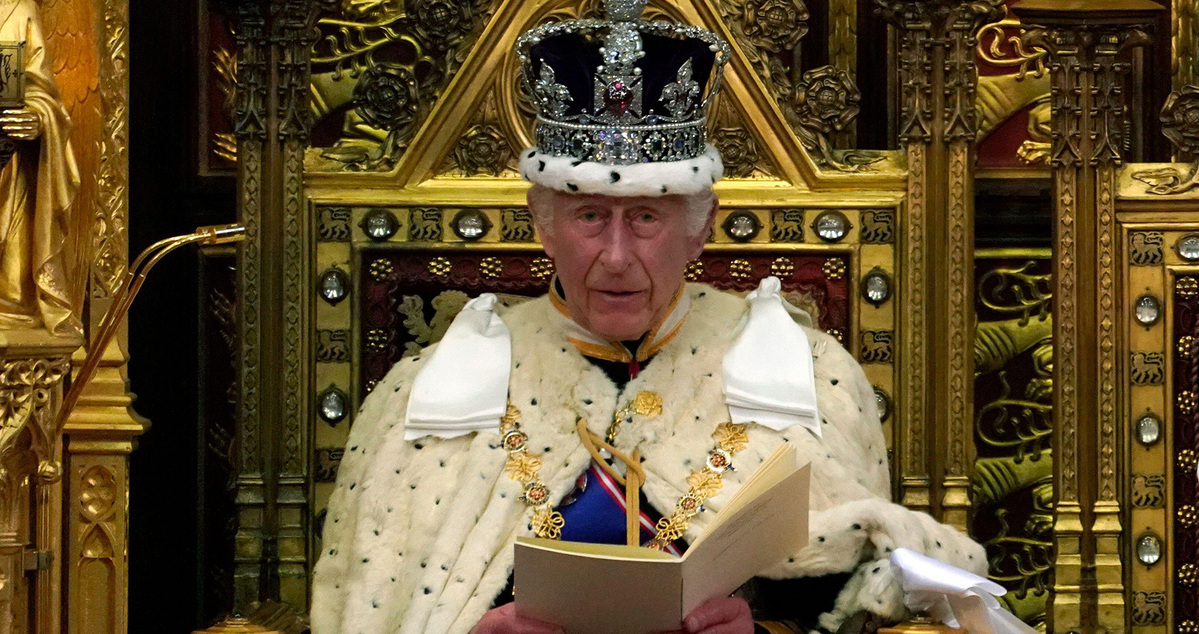
King Charles III reads the King's Speech in the House of Lords Chamber during the State Opening of Parliament. Photograph: PA Images / Alamy
The farming fight continues
We know the general public is behind the British farming community and has backed NFU calls for a u-turn on the family farm tax.
The NFU will be keeping up the pressure in Parliament, in Whitehall and in the media about the hammer blow this tax will deal to farming families, after decades of tightening margins, record inflation, extreme weather and increased production costs.
And we are not alone. Dozens of MPs, including Labour MPs, continue to demand fairness on the tax.