This increases the area with burning constraints to 676,628 hectares of deep peat.
The licence regime to allow burns for specific circumstances in these areas is being reformed with the introduction of accredited fire training for applicants.
The NFU has said Defra must recognise the local knowledge and understanding of the land that farmers have in evaluating wildfire risk and be receptive of that when granting burning licences.
Defra has announced the changes to the rules for controlled burning will come into force from 30 September.
This follows the Defra consultation in the spring, which the NFU responded to saying that increased restrictions on controlled burning would significantly increase wildlife risk and undermine the sustainability and profitability of upland grazing livestock businesses.
“We are reiterating our calls for these proposals to be put on hold and for an impact assessment to be carried out into wildfire risk, food production, and the viability of upland farm businesses.”
NFU Deputy President David Exwood
Wildfire risk
Defra has said that burning licences will be available only when there is a clear need, including for the purposes of reducing wildfire risk.
Defra must not use the expansion of licencing to decrease the number of controlled burns. Controlled burning is a vital tool in managing vegetation against wildfire risk, especially in the wake of increasingly low moorland stocking rate options in SFI and CS.
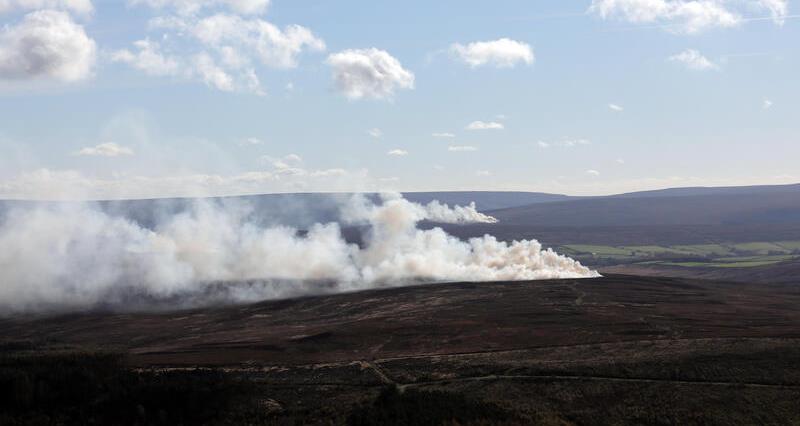
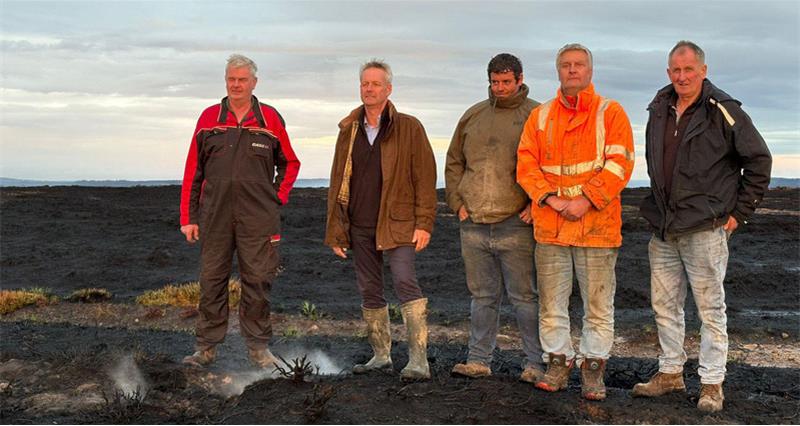
NFU members have reported that the areas of the North York Moors which have faced largescale wildfires over the past month and have been managed through grazing, controlled burning and cutting, appear to have experienced very little damage to the peat.
Vegetation is expected to start regrowing in the next few weeks. In contrast, in those areas which have not been managed by controlled burning, the damage to the peat is extensive.
Summary of the changes
The government has made some changes to the requirements around heather and grass burning on deep peat. Land within Less Favoured Areas that has deep peat is caught by the burning restrictions. Peat over 30cm will count as deep peat.
Under certain circumstances it is possible to burn with a licence from Defra. The licence requirements are being updated, with added safeguards for heritage and an interactive application form being introduced.
The licence requirements can be found at: GOV.UK | Heather and grass burning: rules and when you need a licence.
Licence applicants will usually be expected to complete, or have already completed, accredited fire training as a condition for licence approval, though this will not be a blanket requirement for all licences. Defra must provide clarity on this urgently so that a lack of training does not restrict burning as we approach the burning season.
The government will publish the Heather and Grass Management Code in the autumn. This follows sector workshops to review the code that the NFU participated in.
Uplands farmers facing huge challenges
Upland farmers already face threats on several fronts, including government decisions on inheritance tax, a lack of access to Environmental Land Management schemes and accelerated cuts to delinked payments, as well as proposals in the recent Land Use Framework.
NFU Deputy President David Exwood warned that the decision could “significantly increase the risk of wildfires breaking out in iconic upland areas, putting people, livestock and the environment in danger, as well as undermining the sustainability and profitability of upland farming businesses”.
He added: “Careful management of our most iconic landscapes such as livestock grazing and controlled cool burning of heather and grass clearly works, and despite the devastating wildfire on Langdale Moor, we understand there has been little damage to the deep peat where controlled burns have taken place, and the vegetation is expected to recover within weeks. We must do all we can to ensure the scenes on the North York Moors don’t become common place.
“The government’s ambition is to restore peatland, through creation and restoration of blanket bog. Banning burning will not deliver this on its own and this is why more research is needed on the ability of these areas of deep peat to be rewetted.
“We are reiterating our calls for these proposals to be put on hold and for an impact assessment to be carried out into wildfire risk, food production, and the viability of upland farm businesses.”
NFU asks
The government’s response to the consultation can be found at: GOV.UK | Summary of responses and government response. It is very disappointing that the importance of livestock grazing in wildfire risk management is not included in this response.
The NFU’s response to the consultation contained asks of government which the government's subsequent response does not address.
The NFU continues to call on the government to:
- Carry out a risk and impact assessment of these proposals on wildfire risk, food production, and upland farm business viability.
- Fund research into cool burning to understand its impacts on our environment and its importance in managing wildfire risk. Cool burning could be an alternative to the burning ban proposed in this consultation.
- Assess all moorland in England as to its potential for rewetting and becoming a fully functioning bog.
- Ensure that there is adequate government funding for national roles in wildfire prevention that will support national wildfire preparedness.